
Botta's pocket gopher
Thomomys bottae
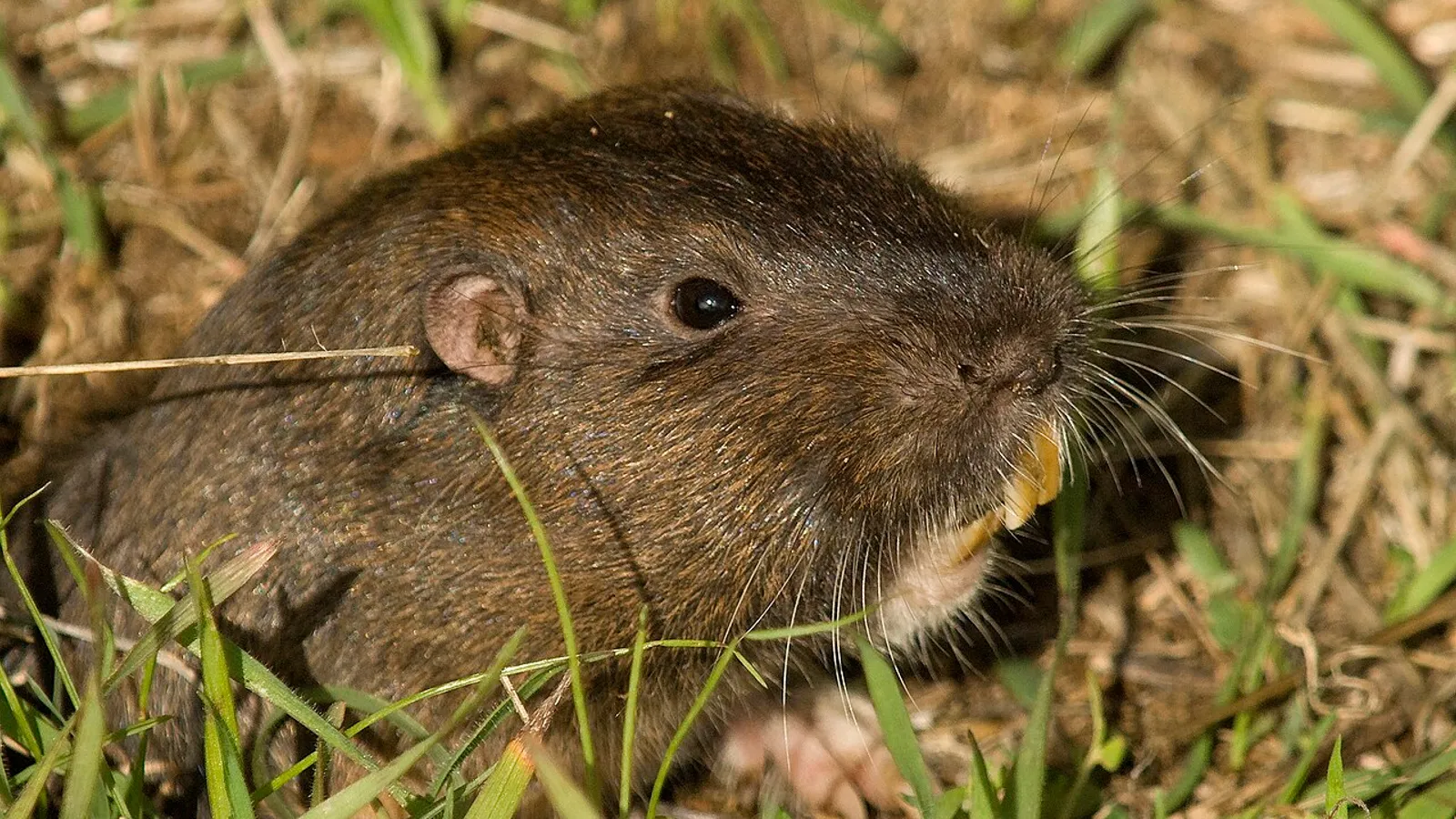
— Where the name comes from
Thomomys is “mouse of the heaps”, from the Greek thōmós, the mound: the cones of turned earth that mark the passage of its tunnels. The epithet recalls Paul-Émile Botta, a ship’s doctor and naturalist who collected specimens in California and who a few years later, as French consul at Mosul, would excavate Khorsabad and bring to light the palace of Sargon II. The gopher and the Assyrian winged bulls bear the same name.
— Facts
- Group
- Mammals · Mammalia
- Order
- Rodents
- Habitat
- Loose deep soils: meadows, deserts, gardens, orchards
- Range
- The western United States and northern Mexico
- Size
- 12–30 cm including tail, 70–250 g
- Diet
- Roots, tubers, bulbs, stems pulled down into the tunnel from below
- Lifespan
- 3 years in the wild
— Characteristics
- 01
It has fur-lined cheek pouches that open outside the mouth.
- 02
Its lips close behind the incisors, so it can dig with its teeth without swallowing earth.
- 03
It lives alone: two adult gophers in the same tunnel end by fighting.
— What sets it apart
The fact that every individual lives isolated in its own tunnel system has made it a factory of subspecies: nearly two hundred have been described, more than for any other mammal, because populations separated by a river or a ridge of rock stop exchanging genes almost at once. For taxonomists it is a nightmare and for evolutionists a laboratory: speciation observed while it is happening, in an animal that never crosses the road.
