
Yellow-necked mouse
Apodemus flavicollis
— Where the name comes from
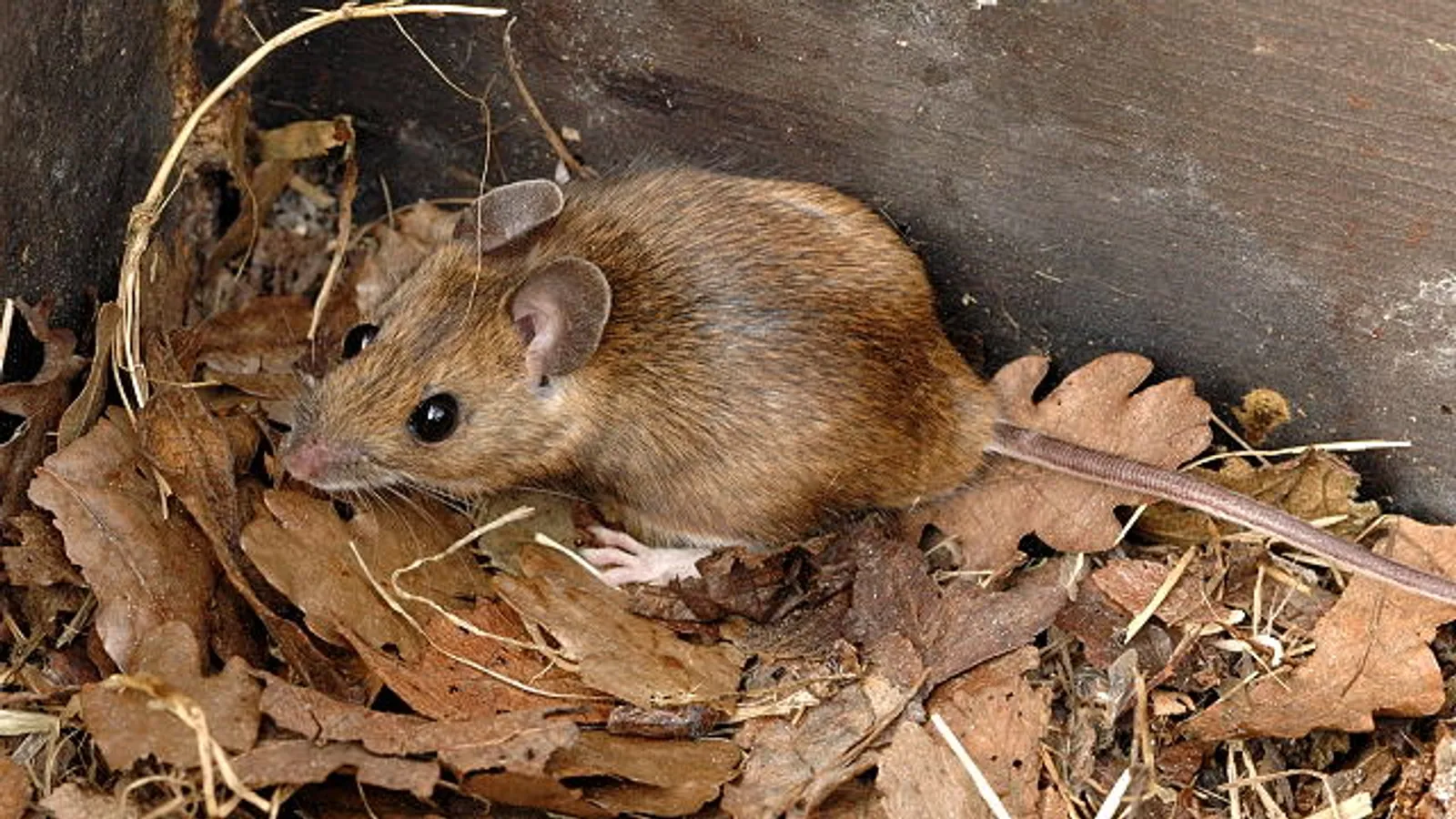
Apodemus comes from the Greek apódēmos, “away from home”, one who lives outside the walls and the villages: it is the mouse of the woods, the one that does not live with people. Flavicollis is “yellow-necked”, for the tawny collar across its throat, the quickest way to tell it from the common wood mouse, in which that patch is broken.
— Facts
- Group
- Mammals · Mammalia
- Order
- Rodents
- Habitat
- Mature broadleaf woodland, beech and oak forest
- Range
- Europe, from the Pyrenees to the Urals and the Near East
- Size
- 8–13 cm of body, tail as long or longer, 22–48 g
- Diet
- Acorns, beech mast, seeds, buds, insects
- Lifespan
- 2 years in the wild
— Characteristics
- 01
It leaps like a small gazelle: up to a metre horizontally.
- 02
It climbs trees and nests in cavities several metres up.
- 03
In mast years the population can rise tenfold within months.
— What sets it apart
By planting acorns and then forgetting them, it remakes the wood that houses it. In a European beech forest, most of the seedlings that appear away from the parent tree come from this mouse’s underground caches, which it makes by the hundred and only partly recovers. Studies with marked seeds show that acorns it buries germinate better than those that simply fall, because they end up at the right depth and safe from fungi: the dispersal of Europe’s oaks depends on a rodent weighing thirty grams.
