
White-footed mouse
Peromyscus leucopus
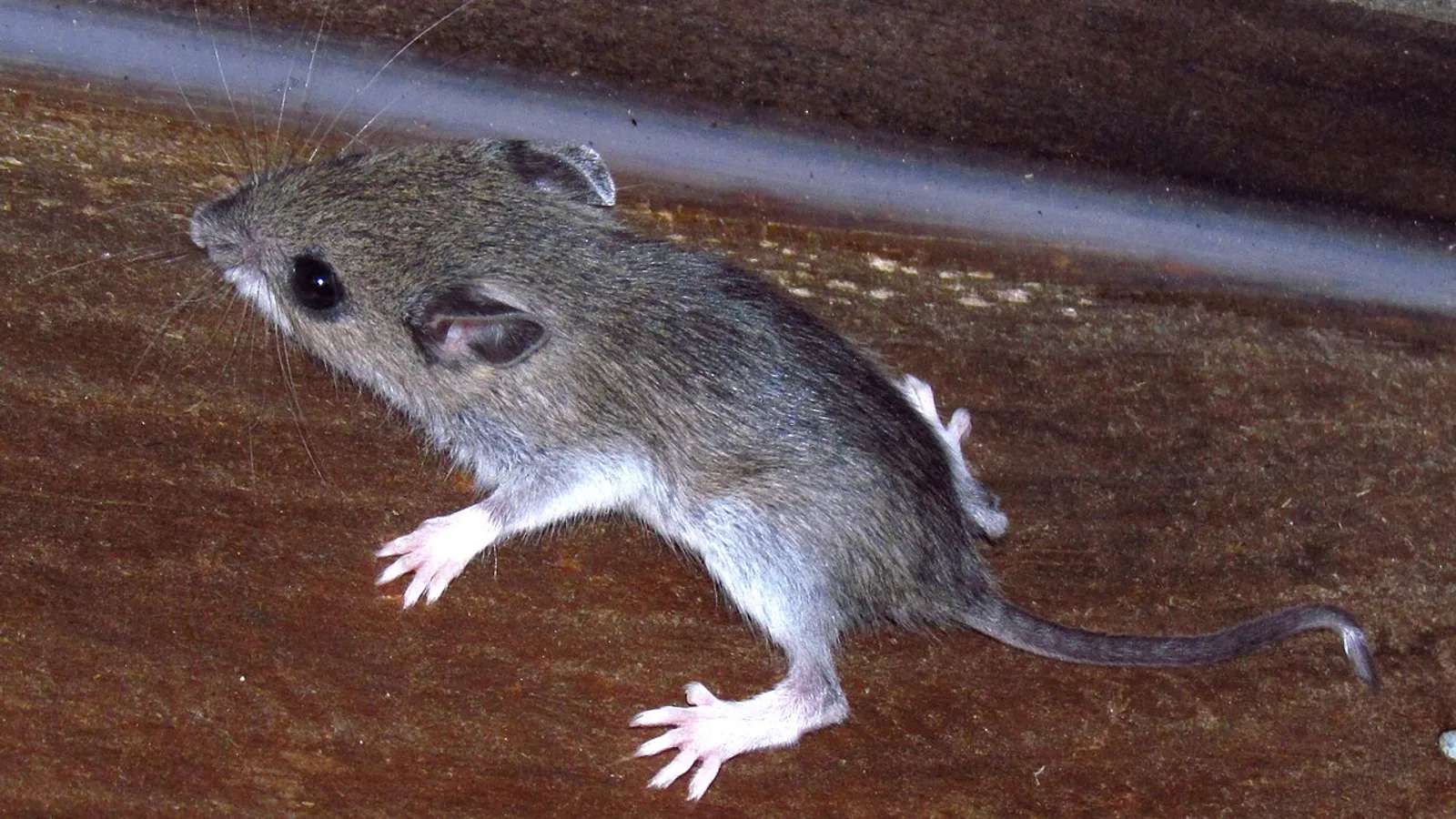
— Where the name comes from
Leucopus is “white foot”, from leukós and poús: the pale feet that stand out against the tawny coat. It is one of the most frequently repeated scientific names in the medical literature of the last thirty years, for reasons that have nothing to do with feet.
— Facts
- Group
- Mammals · Mammalia
- Order
- Rodents
- Habitat
- Broadleaf woodland, scrub, hedgerows, wooded suburbs
- Range
- The eastern and central United States, southern Canada, Mexico
- Size
- 9–11 cm of body, tail 6–10 cm, 15–25 g
- Diet
- Seeds, acorns, insects, fruit
- Lifespan
- 2 years in the wild
— Characteristics
- 01
It thrives in isolated woodlots between housing estates, where large predators do not reach.
- 02
It has several litters a year and the females breed at two months old.
- 03
It hides seeds in dozens of small caches rather than in one larder.
— What sets it apart
It is the principal reservoir of Lyme disease, and the reason forest fragmentation makes people ill. In woodland patches too small to hold foxes, opossums and hawks, this mouse becomes dominant; young ticks feed on it, and it is a poor remover of ticks and an excellent transmitter of the bacterium, so the proportion of infected ticks soars. Less biodiversity means more Lyme: it is the most cited example of the dilution effect, the idea that a rich ecosystem protects us too.
