
Bushy-tailed woodrat
Neotoma cinerea
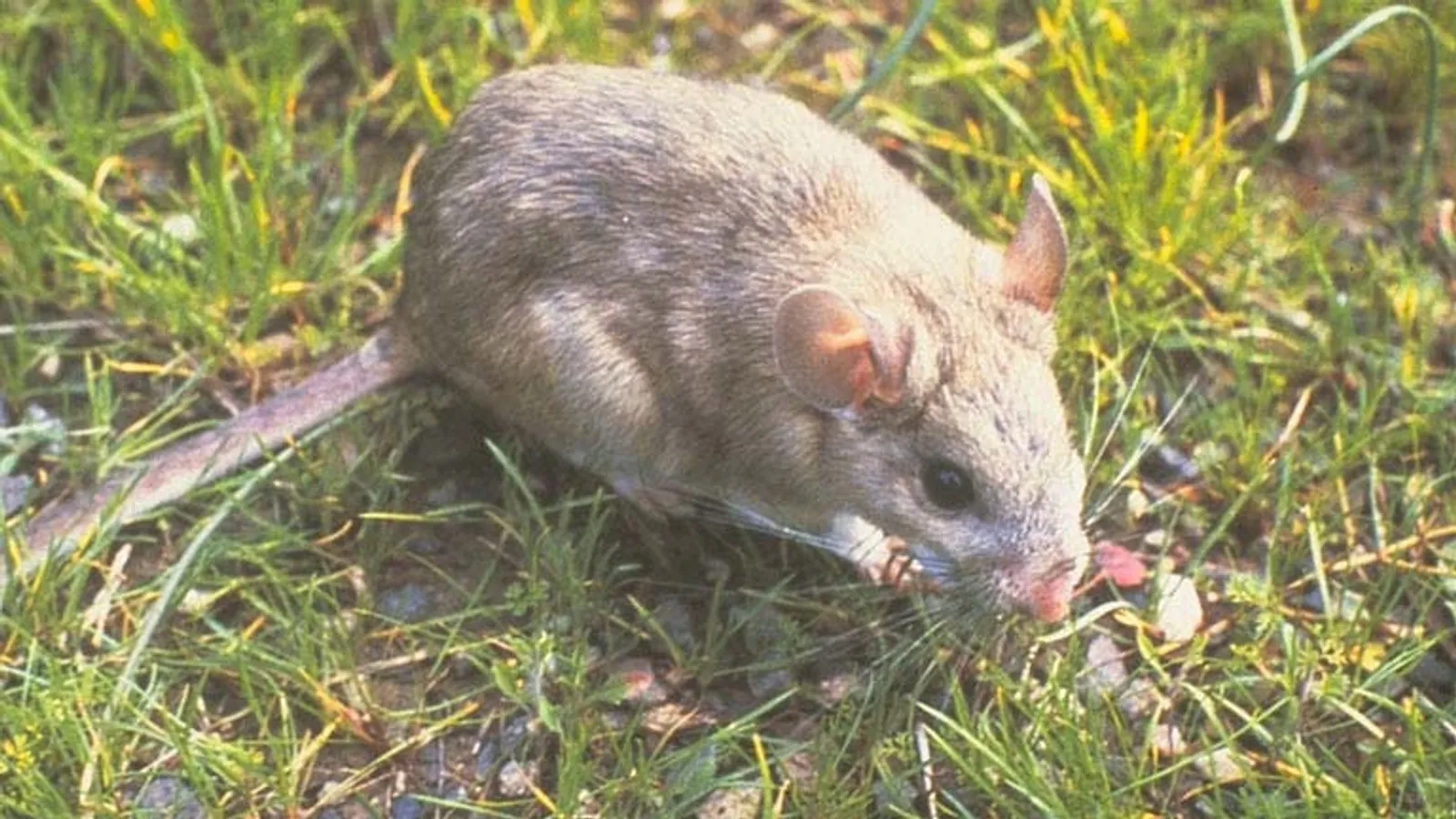
— Where the name comes from
Neotoma is “that cuts anew”, from néos and témnō, for the shape of the incisors. Cinerea is “ashen”. In English it is the packrat, the rat that makes parcels, or the trade rat: if it finds something shinier than what it is carrying, it drops the first object and takes the second.
— Facts
- Group
- Mammals · Mammalia
- Order
- Rodents
- Habitat
- Rock faces, canyons, abandoned mines, cabins
- Range
- Western North America, from the Yukon to Arizona
- Size
- 18–25 cm of body, tail 13–18 cm, 250–600 g
- Diet
- Leaves, needles, seeds, fruit, fungi
- Lifespan
- 4 years in the wild
— Characteristics
- 01
It piles into its nest whatever it finds: bones, cactus, bottle tops, forks, cartridges.
- 02
Its bushy tail distinguishes it from all other Neotoma, which have bare ones.
- 03
Its urine, crystallising on the heap, cements the nest into a hard mass.
— What sets it apart
Its nests are climate archives. The urine that soaks them dries into a glassy substance, amberat, which seals leaves, seeds and insects gathered within a hundred metres and preserves them for tens of thousands of years in the dry caves of the desert. By dating those middens, palaeoecologists have reconstructed the vegetation of the American west back fifty thousand years and discovered that juniper woodland grew where Death Valley now lies. A thieving rodent has turned out to be the best librarian of the Pleistocene.
