
Hispid cotton rat
Sigmodon hispidus
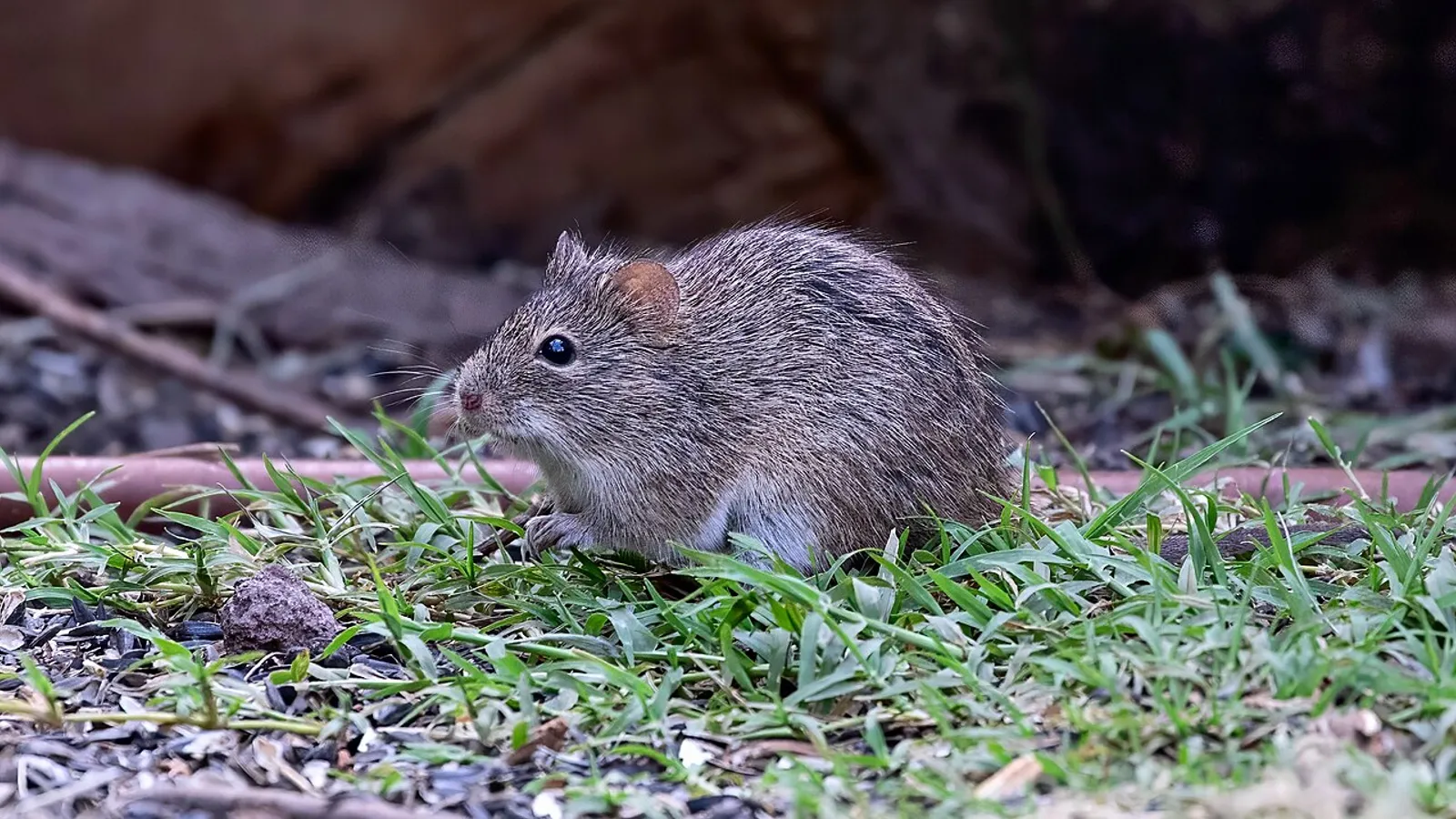
— Where the name comes from
Sigmodon is “sigma tooth”: the ridges of enamel on the molars, seen from above, draw the Greek letter Σ. Hispidus is Latin for “bristly”, the coarse harsh fur that identifies it by touch. The common name comes from the cotton plantations of the southern United States, where it abounds.
— Facts
- Group
- Mammals · Mammalia
- Order
- Rodents
- Habitat
- Tall grass, abandoned fields, field margins, ditches
- Range
- The southern United States, Mexico, Central America as far as Venezuela
- Size
- 12–20 cm of body, tail 7–12 cm, 100–200 g
- Diet
- Grasses, seeds, sugar cane, insects, quail eggs
- Lifespan
- 6 months in the wild
— Characteristics
- 01
It makes beaten runways through tall grass, centimetres wide and tens of metres long.
- 02
The young are born with their eyes opening almost at once and run within days.
- 03
A female can have nine litters a year in good seasons.
— What sets it apart
It is the animal on which the vaccine against respiratory syncytial virus is tested, and the memory of a disaster. In 1966 a vaccine against that virus given to American children made the disease worse instead of preventing it, and two children died; no animal model then in use had shown the risk. The cotton rat, which reacts to the virus as we do, became the standard for understanding why it had happened — and for not repeating it with the vaccines arriving now.
