
Marsh rice rat
Oryzomys palustris
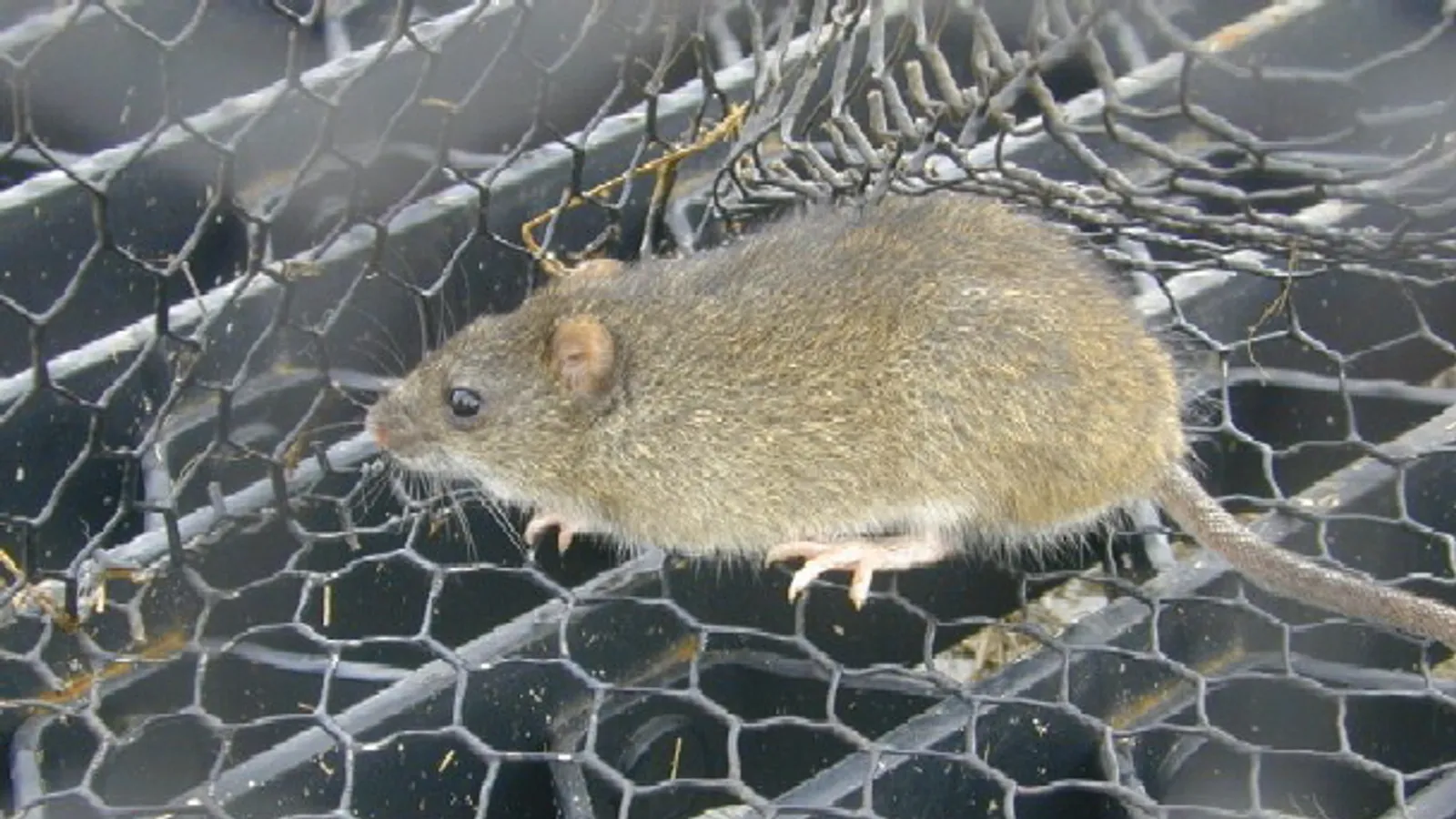
— Where the name comes from
Oryzomys is “rice mouse”, from óryza — a Greek word that came in turn from the Sanskrit vrīhi by way of Persian, and which gave riso, rice and arroz across half of Europe. Palustris, “of the marsh”, states the habitat. It is one of the few rodents whose scientific name is an entire trade route: the word for the cereal travelled from India to America along with the plant.
— Facts
- Group
- Mammals · Mammalia
- Order
- Rodents
- Habitat
- Brackish and freshwater marshes, reedbeds, rice fields
- Range
- The south-eastern United States, from Texas to New Jersey
- Size
- 10–14 cm of body, tail 11–17 cm, 40–80 g
- Diet
- Seeds, shoots, crabs, insects, eggs, small fish
- Lifespan
- 1 year in the wild
— Characteristics
- 01
It swims and dives well, and escapes predators by taking to the water.
- 02
It builds spherical nests of woven grass suspended above the waterline.
- 03
It eats a great deal of animal food for a rodent: fiddler crabs, water insects, eggs.
— What sets it apart
It lives in a habitat the sea is taking back. The salt marshes of the Atlantic coast are retreating between rising sea level and embankments that stop them moving inland, and this species is among the first to pay: one of its subspecies in the Florida Keys, the Silver Rice rat, is already endangered. It is a common animal that serves as a thermometer — while it is there, the marsh is working.
