
Eastern deer mouse
Peromyscus maniculatus
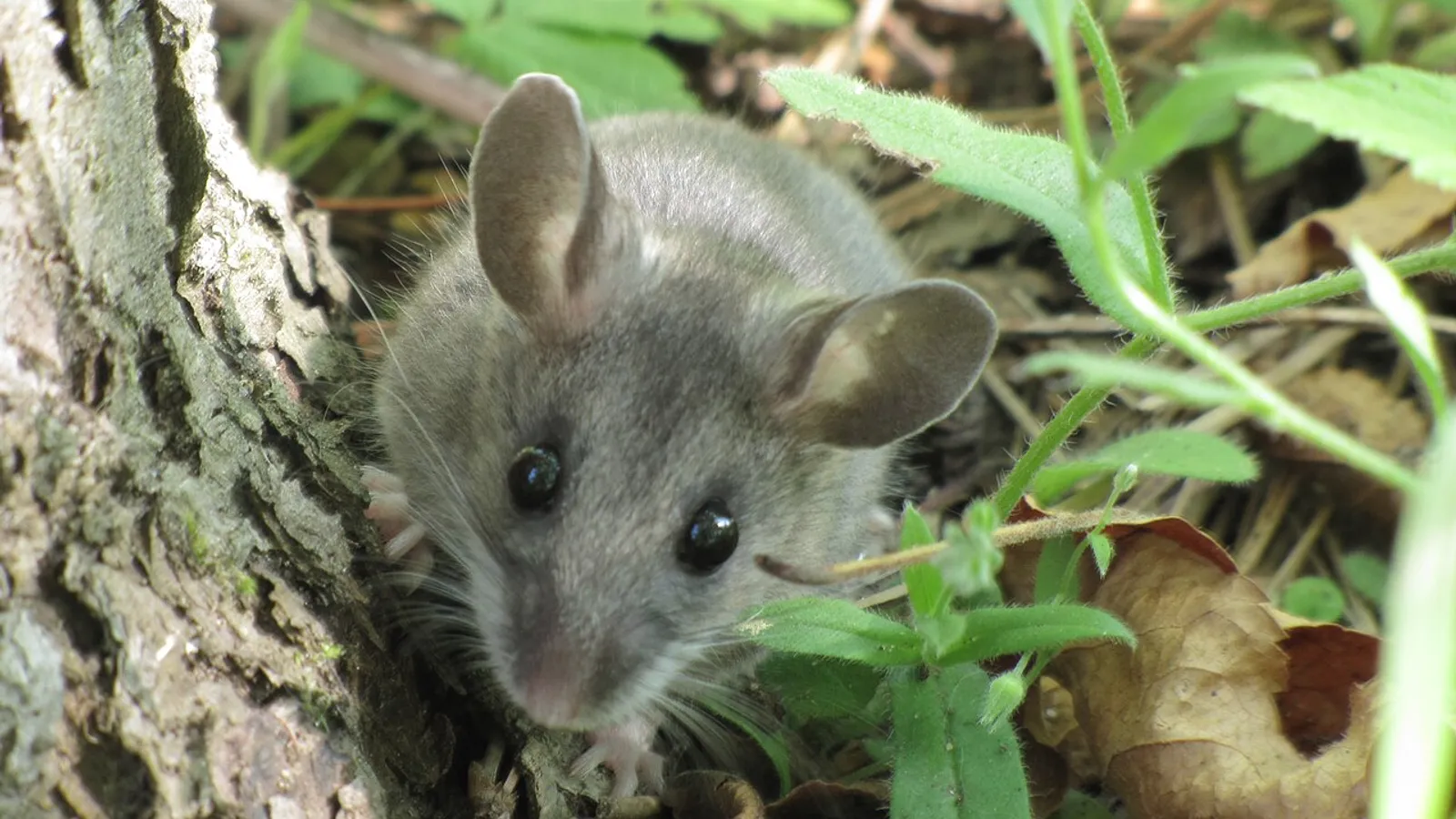
— Where the name comes from
Peromyscus is usually read as “little mouse with a pouch”, from pḗra, the satchel, and myskos: an unfortunate name, because these mice have no cheek pouches. Maniculatus is “with small hands”, from manicula. The English deer mouse comes from the two-tone coat, brown above and white below like a fawn’s.
— Facts
- Group
- Mammals · Mammalia
- Order
- Rodents
- Habitat
- Practically every terrestrial habitat in North America, from tundra to desert
- Range
- North America, from Alaska to Mexico
- Size
- 8–10 cm of body, tail 5–13 cm, 15–35 g
- Diet
- Seeds, fruit, insects, fungi
- Lifespan
- 1 year in the wild, 8 in captivity
— Characteristics
- 01
It is probably the most abundant mammal in North America.
- 02
It occupies houses, sheds and caravans as soon as they stand empty for a few weeks.
- 03
The populations of the Nebraska dunes have pale fur, neighbouring ones dark.
— What sets it apart
In 1993, in the Four Corners, a swift epidemic of respiratory failure killed healthy young adults and the cause proved to be a hantavirus transmitted in its dried droppings. A wet winter had multiplied the piñon nuts, the nuts had multiplied the mice, and the mice had come into the houses. Since then the species has been watched as an epidemiological sentinel, and the practical rule taught in the United States — never dry-sweep a shed shut up for months, but wet it first — comes from there.
