
Yellowfin tuna
Thunnus albacares
— Where the name comes from
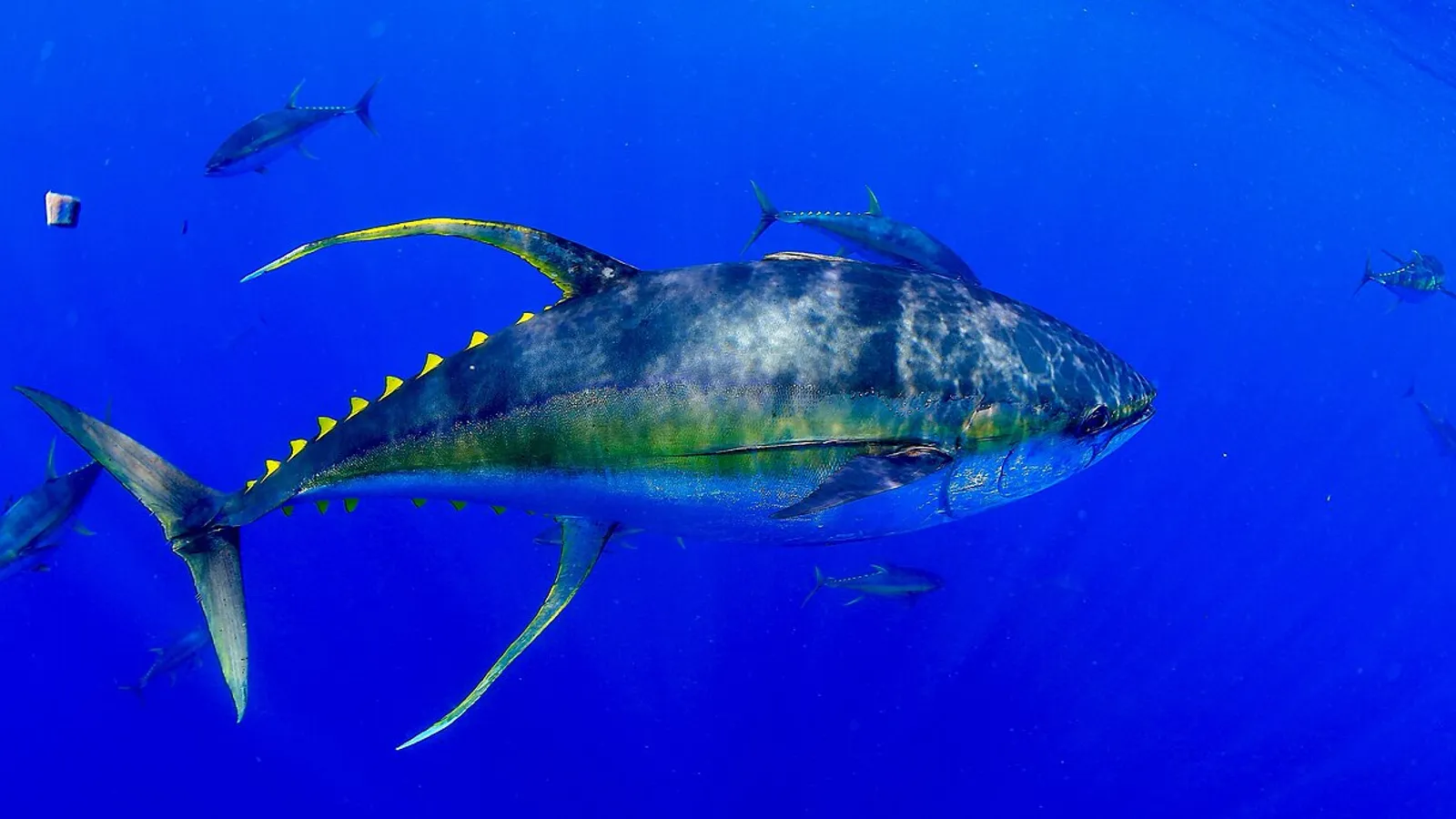
Thunnus comes from the Greek thýnnos, itself derived from thýnō, “to dart”: the ancients named tunas after the way they move. Albacares comes from the Arabic al-bakūra by way of the Spanish albacora; the common name looks at the dorsal and anal fins, which in adults stretch into golden-yellow sickles.
— Facts
- Group
- Fish · Actinopterygii · Chondrichthyes
- Order
- Mackerels and tunas
- Habitat
- Tropical open ocean, from the surface to 250 metres
- Range
- Tropical and subtropical oceans worldwide
- Size
- 150–180 cm, up to 240 cm; 60–120 kg, record 200 kg
- Diet
- Fish, squid, pelagic crustaceans
- Lifespan
- 8 years
— Characteristics
- 01
It sprints at seventy kilometres an hour.
- 02
It must keep moving to drive water over its gills.
- 03
It keeps its muscles warmer than the water with a counter-current vessel network.
— What sets it apart
In the eastern Pacific it swims beneath schools of dolphins, for reasons still not clear, and for decades boats located tuna by finding dolphins and encircling both with their nets: in the 1960s and 1970s hundreds of thousands of dolphins died each year. The reaction of American consumers led in the 1990s to the dolphin safe label and to a change of fishing technique that has cut dolphin mortality by over ninety-nine per cent. It is one of the few cases in which a line of print on a tin changed an ocean.
