
Tench
Tinca tinca
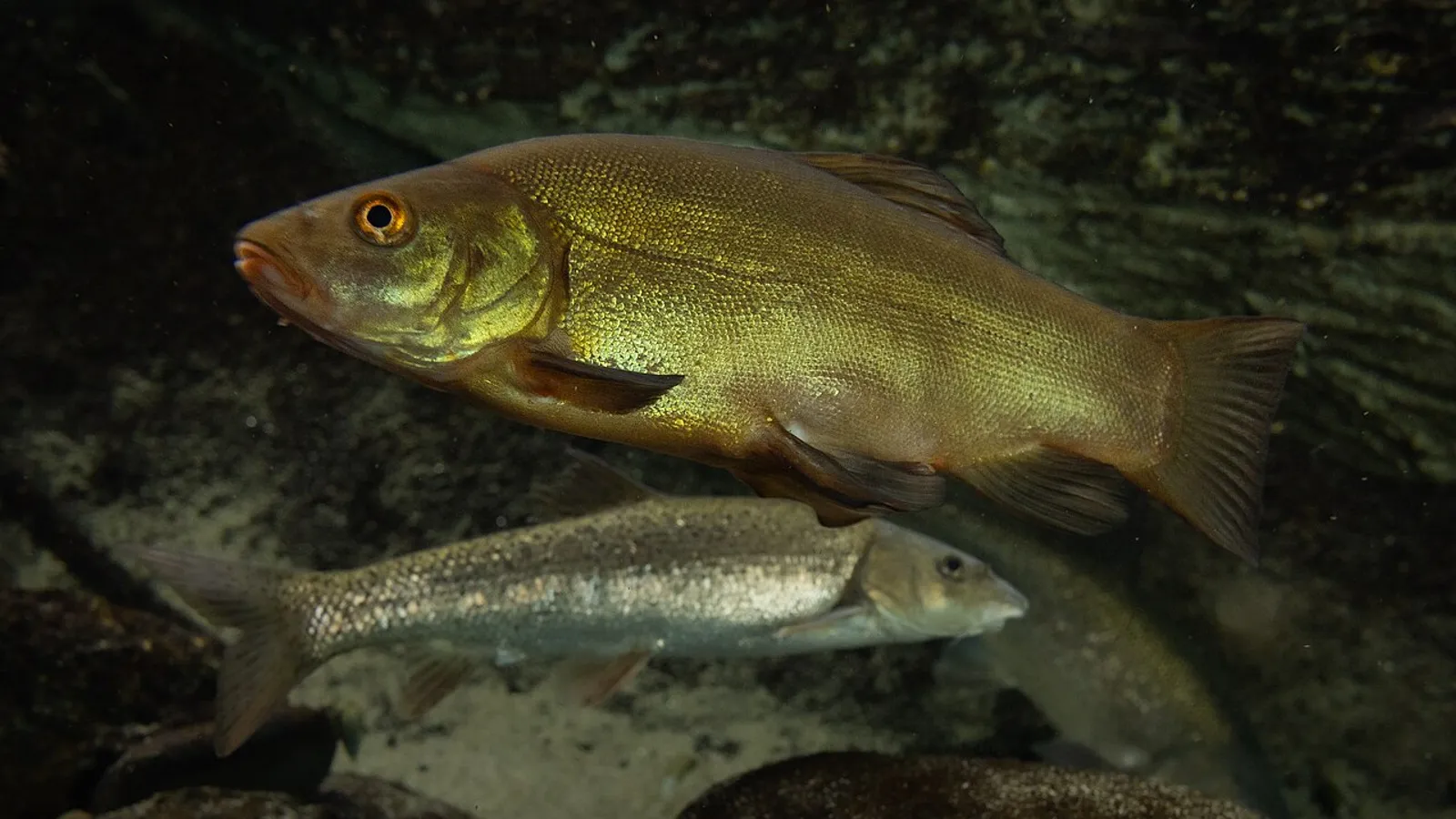
— Where the name comes from
Tinca is the Latin name of the fish, repeated twice, and it reached Italian unchanged. The root is probably pre-Latin, perhaps Gaulish: as with the skylark, the Romans took from the Celts the name of a freshwater animal little known in Rome.
— Facts
- Group
- Fish · Actinopterygii · Chondrichthyes
- Order
- Carps and minnows
- Habitat
- Ponds, canals, oxbows, lakes with muddy bottoms and much weed
- Range
- Europe and western Asia; introduced elsewhere
- Size
- 25–40 cm, up to 70 cm; 0.5–3 kg
- Diet
- Larvae, molluscs, worms, plant matter
- Lifespan
- 20 years
— Characteristics
- 01
The skin is covered in a thick layer of mucus and the scales are minute.
- 02
It tolerates warm water almost devoid of oxygen.
- 03
In winter it works into the mud and nearly stops feeding.
— What sets it apart
For centuries it was called the doctor fish. The belief, already in Pliny and running right through the Middle Ages, was that the mucus covering it healed the wounds of other fish, which would come and rub against it; some herbals advised applying a live tench to sores and diseased eyes. None of it is true, but the premise is: its mucus really is exceptionally thick and rich in antibacterial substances, and it is what lets it live in foul water.
