
Common barbel
Barbus barbus
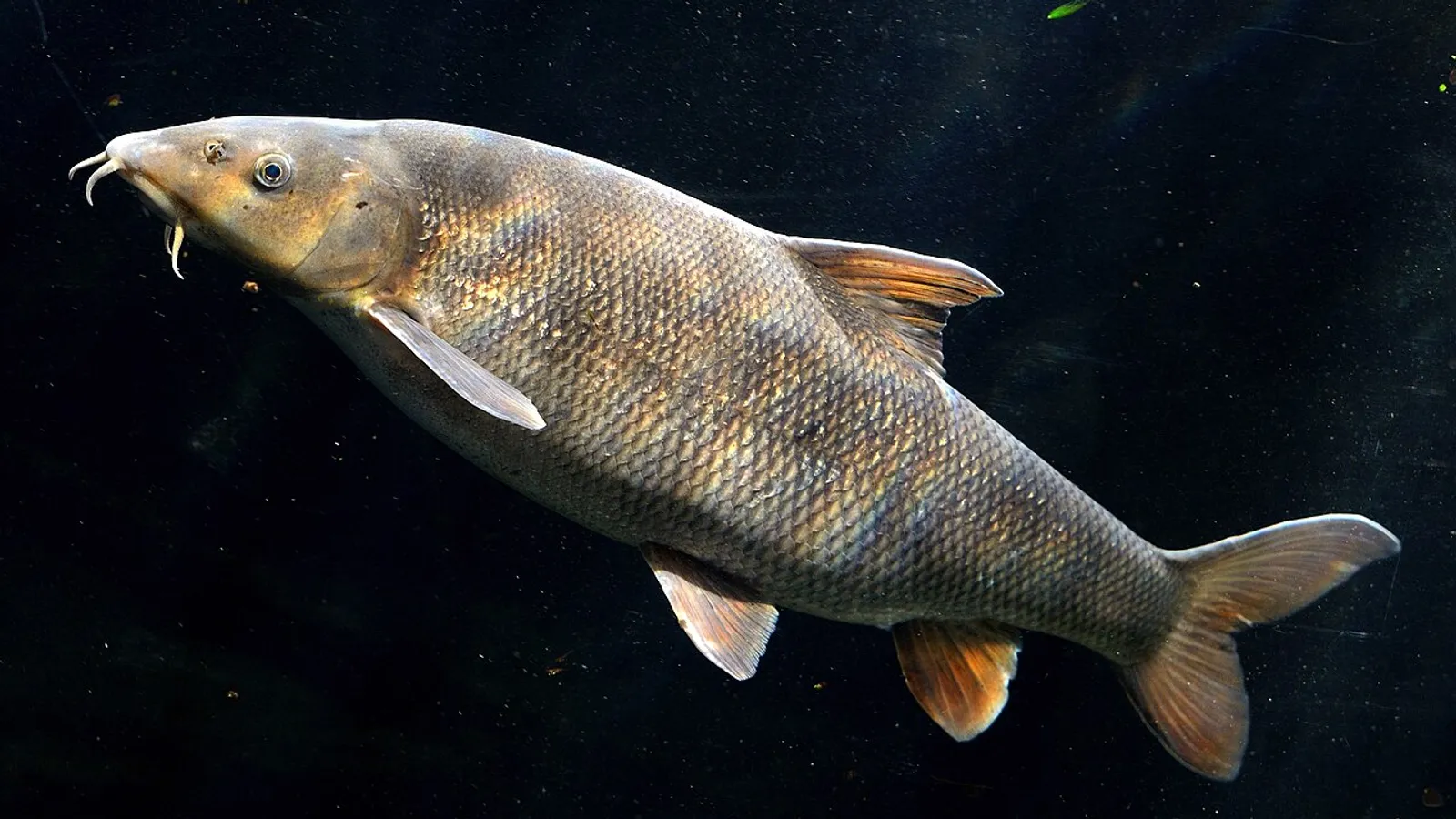
— Where the name comes from
Barbus comes from the Latin barba: around its mouth it carries four fleshy barbels with which it explores the gravel. The binomial repeats it twice. In the classical zonation of European rivers there is a “barbel zone”, the middle reach with fast water and a gravel bed: this fish gives its name to a habitat.
— Facts
- Group
- Fish · Actinopterygii · Chondrichthyes
- Order
- Carps and minnows
- Habitat
- Fast-flowing river reaches with gravel and sand
- Range
- Central and western Europe
- Size
- 40–70 cm, up to 90 cm; 1–4 kg
- Diet
- Insect larvae, crustaceans, molluscs, algae
- Lifespan
- 15 years
— Characteristics
- 01
Its mouth points downwards and it feeds on the bottom.
- 02
It runs upriver in spring to spawn on clean gravel.
- 03
It holds station in the current propped on its pectoral fins.
— What sets it apart
Its eggs are poisonous, and anyone who fishes for it knows. They contain a substance that causes violent vomiting and cramps, so much so that European river cookbooks have advised for centuries discarding the roe in the breeding season; the effect even has a medical name, barbel cholera. It is a defence against the predators that grub about in the gravel, and it protects the eggs during the weeks they lie there, exposed and motionless.
