
Red-bellied piranha
Pygocentrus nattereri
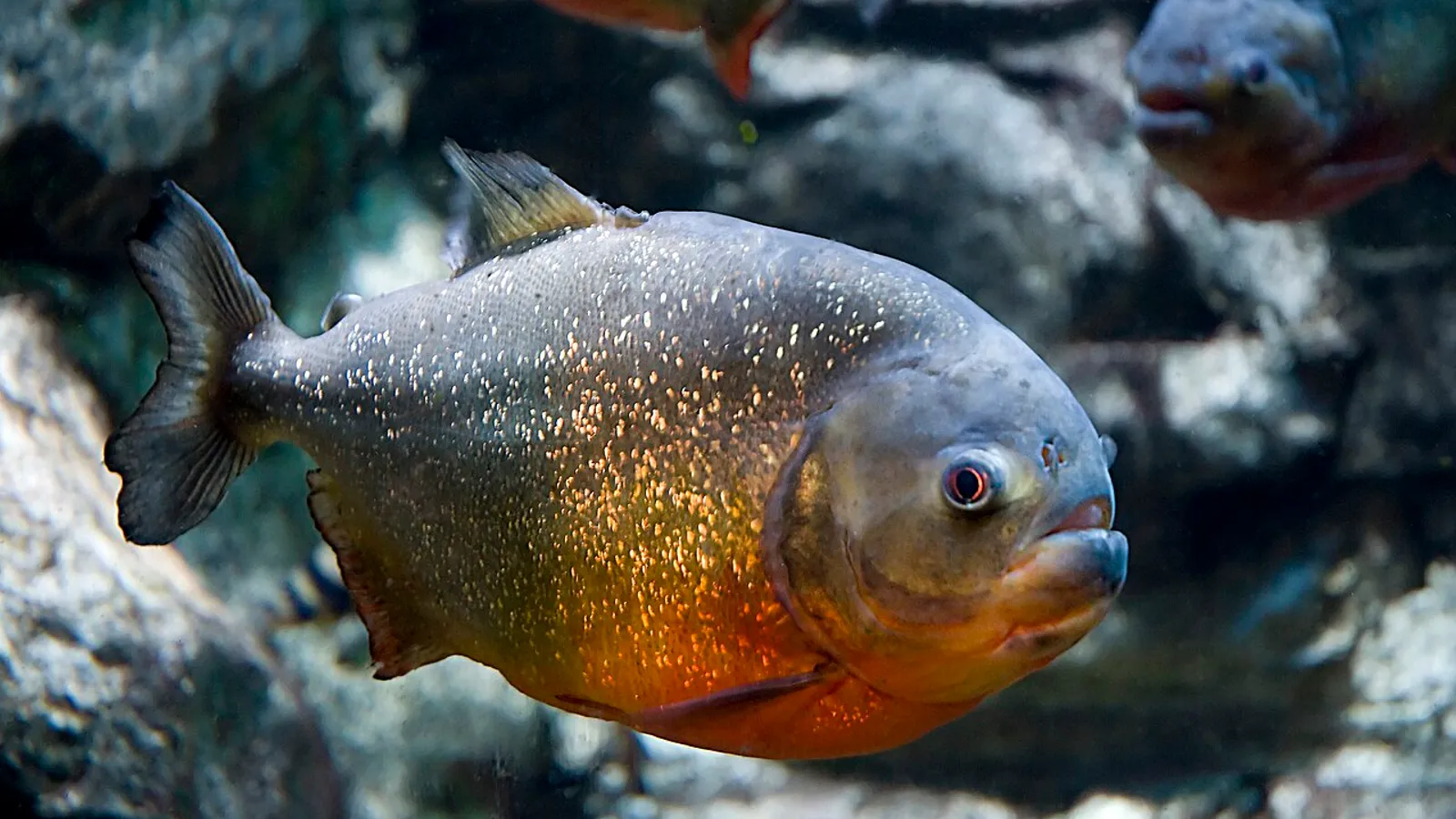
— Where the name comes from
Pygocentrus is “rump spine”, from pygḗ and kéntron, for the row of spines it carries on the belly in front of the tail. Nattereri recalls Johann Natterer, the Austrian naturalist who spent eighteen years in Brazil. Piranha comes from Tupi and breaks into pirá, fish, and sanha, tooth: “tooth fish”.
— Facts
- Group
- Fish · Actinopterygii · Chondrichthyes
- Order
- Characins
- Habitat
- Rivers, oxbows and floodplains of the Amazon basin
- Range
- South America, from the Orinoco and Amazon basins to the Paraná
- Size
- 20–33 cm, up to 50 cm; 1–3.9 kg
- Diet
- Fish, insects, carrion, fruit, fins torn from other fish
- Lifespan
- 10 years
— Characteristics
- 01
The teeth are triangular and razor-sharp, replaced in blocks half a jaw at a time.
- 02
It lives in shoals of dozens.
- 03
Many live largely by biting fins off other fish, which grow back.
— What sets it apart
The reputation comes from an afternoon in 1913: Theodore Roosevelt, visiting Brazil, watched a shoal strip a cow in minutes and wrote it up in a book that sold enormously. What he had not been told was that the piranhas had been penned into a netted stretch of river and starved for days, expressly for him. Later studies showed the shoal is not for hunting but for defence — piranhas are prey to caimans, river dolphins and birds — and that attacks on people are rare and nearly always single bites to a finger or a foot.
