
Tambaqui
Colossoma macropomum
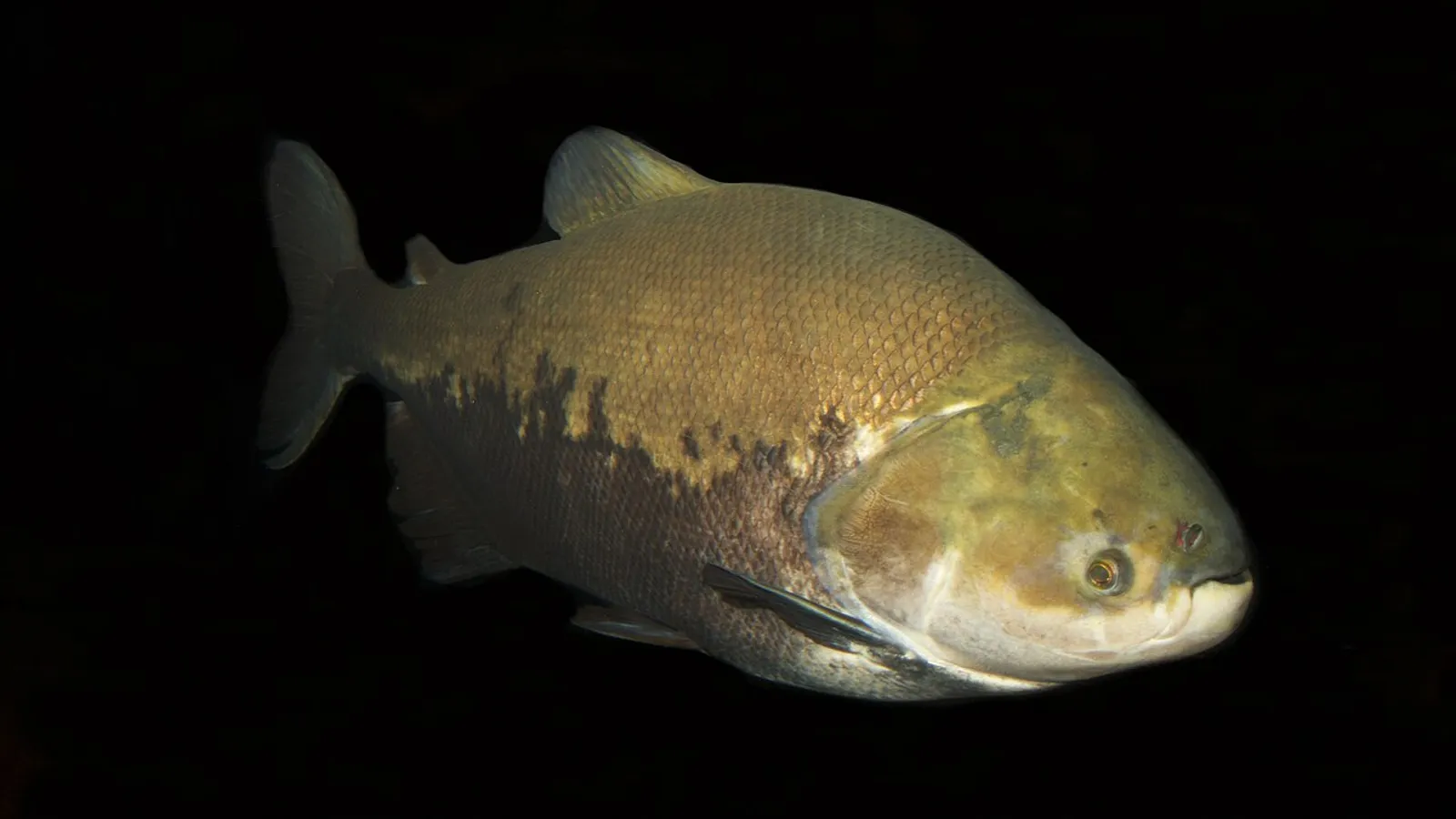
— Where the name comes from
Colossoma comes from the Greek kolossós, the colossus, and sôma: it is the largest South American characiform. Macropomum is “large-operculumed”, from makrós and pôma, the lid. Tambaqui is the Tupi name, and it is the one it is sold under in every market in Amazonia.
— Facts
- Group
- Fish · Actinopterygii · Chondrichthyes
- Order
- Characins
- Habitat
- Flooded forest, oxbows and rivers of the Amazon basin
- Range
- The Amazon and Orinoco
- Size
- 70–90 cm, up to 110 cm; 20–30 kg
- Diet
- Fruit and seeds fallen into the water, zooplankton, insects
- Lifespan
- 20 years
— Characteristics
- 01
It has molar-like teeth that crush the hardest seeds in the forest.
- 02
It fattens in the flood season and lives on reserves in the dry one.
- 03
The young have a black spot on the flank that mimics an eye.
— What sets it apart
When Amazonia floods, the forest becomes a seabed for months and this fish swims among the trunks eating the fruit that falls. It swallows the seeds, carries them tens of kilometres and passes a share of them intact and ready to germinate: measurements made in Brazil place it among the greatest plant dispersers in the whole of Amazonia, on a par with birds and monkeys. It is a case in which the link between forest and river runs through a fish’s stomach.
