
European badger
Meles meles
— Where the name comes from
Meles is the Latin name of the badger itself, of obscure origin. The Italian tasso comes instead from the Germanic dahsuz, the same root as the German Dachs: hence the dachshund, in German Dachshund, “badger dog”, bred expressly to bolt it from its sett.
— Facts
- Group
- Mammals · Mammalia
- Order
- Carnivores
- Habitat
- Broadleaf woodland, hedgerows, field margins
- Range
- The whole of Europe and temperate Asia as far as Japan
- Size
- 60–90 cm of body, 10–16 kg
- Diet
- Omnivore — earthworms above all, then fruit, insects, small animals
- Lifespan
- 6–14 years
— Characteristics
- 01
Digs enormous tunnel systems, setts, used and enlarged over generations.
- 02
Lives in family groups that share the sett and communal latrines at the edge of the territory.
- 03
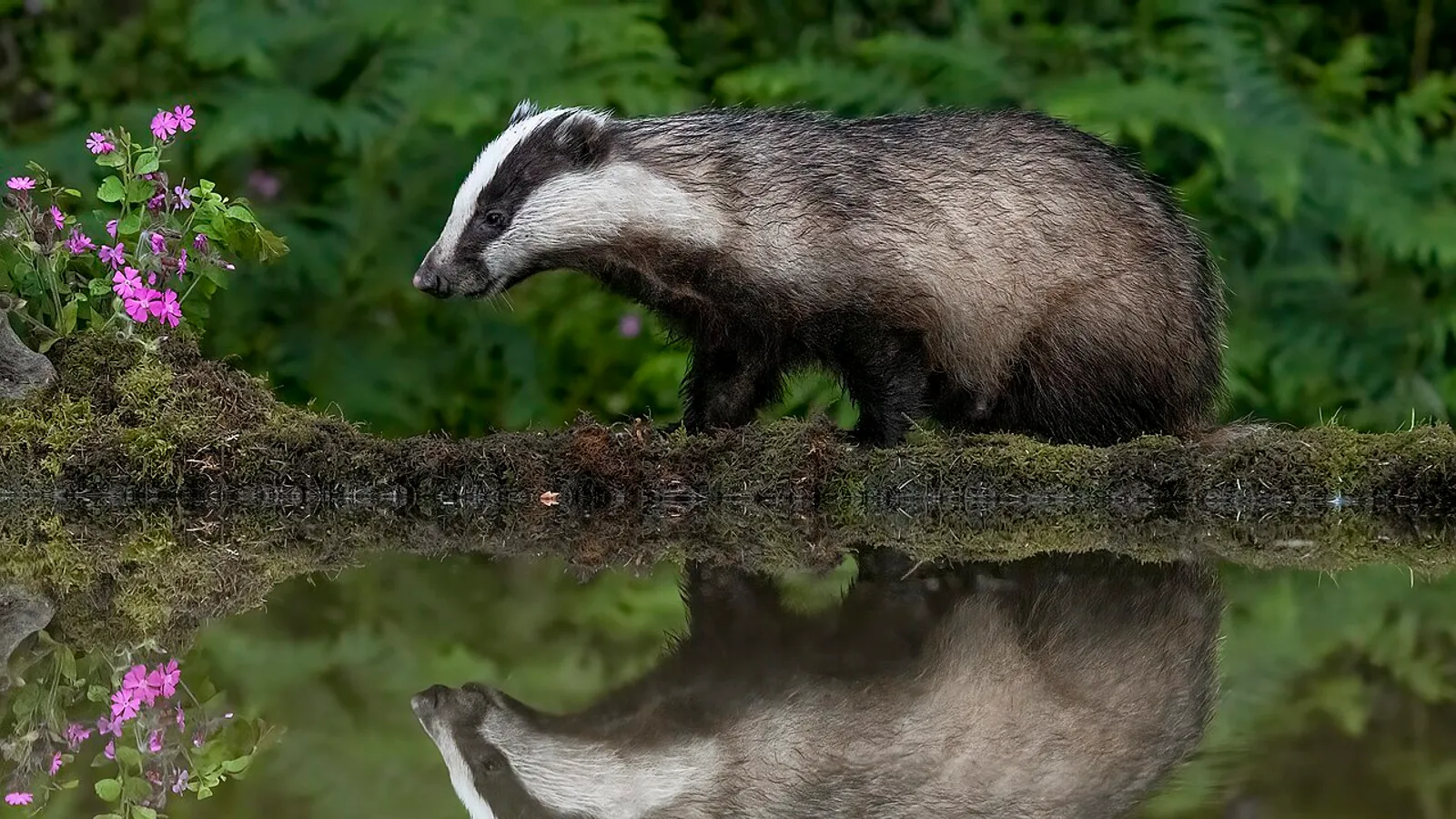
The black and white stripes of the face are among the most recognisable markings in European wildlife.
— What sets it apart
Some setts have been dated at over a century old and contain hundreds of metres of tunnels, dug and redug by dozens of generations. They are inherited houses in the full sense: layer upon layer of animal labour, sometimes shared with foxes and rabbits in separate rooms. A badger does not live in a hole, but in an archive excavated by its ancestors.
