
Wolverine
Gulo gulo
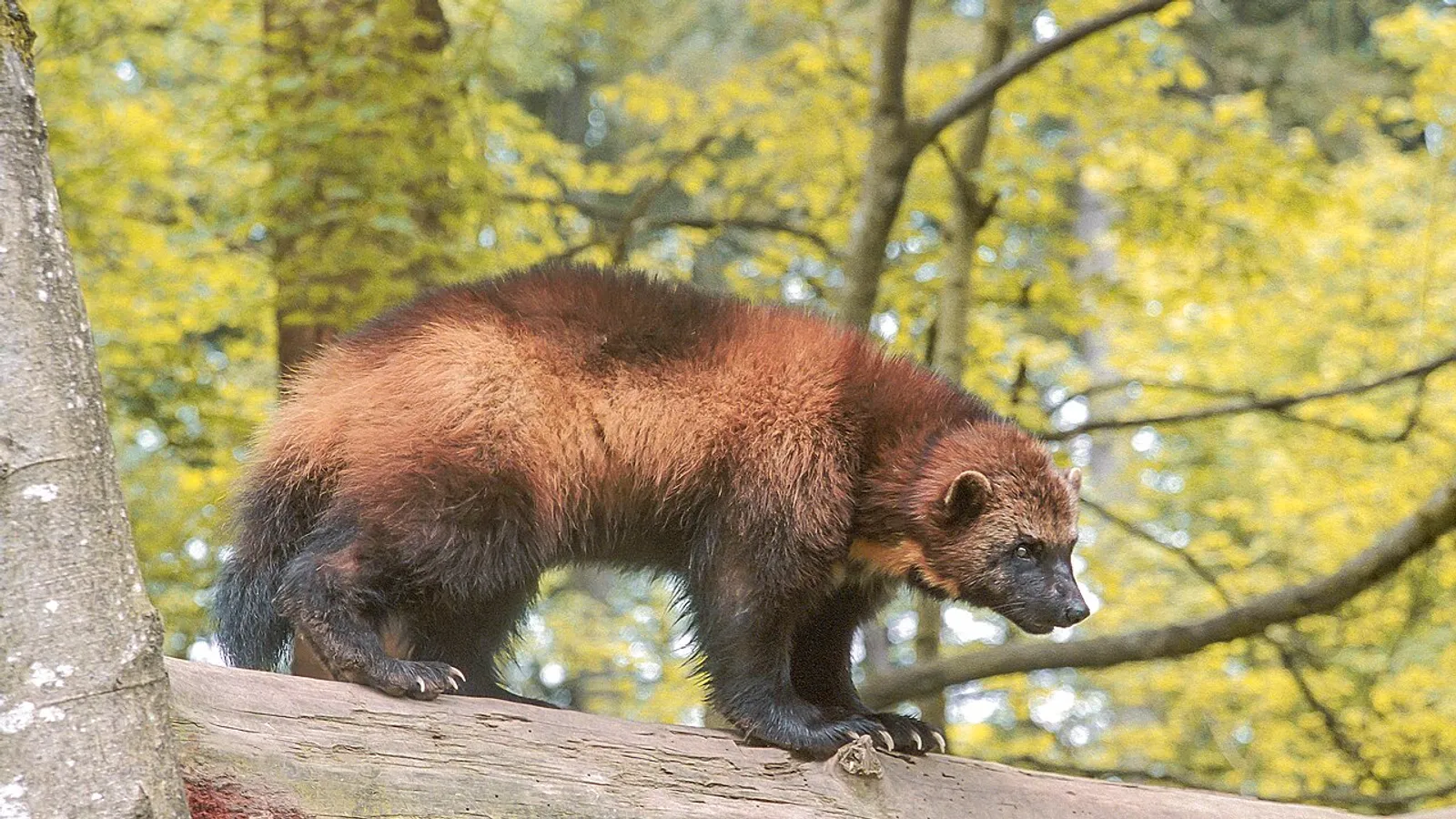
— Where the name comes from
Gulo is Latin for “glutton”, from gula, the throat; the Italian ghiottone says the same. The reputation for greed follows it into every language: in English it is the wolverine, of uncertain origin, and in several Nordic languages its name means “mountain eater”. It is the largest land mustelid, cousin to badgers and martens.
— Facts
- Group
- Mammals · Mammalia
- Order
- Carnivores
- Habitat
- Taiga, tundra, snowbound boreal forest
- Range
- The Arctic and sub-Arctic of Eurasia and North America
- Size
- 65–105 cm of body, 9–25 kg
- Diet
- Carnivore and scavenger — from reindeer carcasses to rodents
- Lifespan
- 7–12 years
— Characteristics
- 01
It has strength out of all proportion to its size: it drives wolves and bears off carcasses.
- 02
Broad, snowshoe paws let it run over snow where ungulates flounder.
- 03
It marks food with an extremely strong musky secretion, hence the nickname “skunk bear”.
— What sets it apart
The wolverine hunts prey far larger than itself by using deep snow: where a moose sinks to its belly, the wolverine runs on the surface on its wide feet. It is a predator that owes its effectiveness neither to speed nor to size but to the season: for half the year winter itself is its weapon, and turns a twenty-kilo animal into a threat to one of three hundred.
