
Asian elephant
Elephas maximus
— Where the name comes from
Elephas is the Greek eléphas, which meant both the animal and the ivory; the root is perhaps Semitic or Egyptian. Maximus, “greatest”, now sounds ironic: it is smaller than its African cousin. The order Proboscidea comes from proboscis, literally “that which serves for feeding in front”.
— Facts
- Group
- Mammals · Mammalia
- Order
- Elephants
- Habitat
- Tropical forest, scrub and grassland with water nearby
- Range
- South and South-East Asia, from India to Sumatra
- Size
- 550–640 cm, 2,700–5,400 kg
- Diet
- Herbivore — grasses, bark, roots, fruit, up to 150 kg a day
- Lifespan
- 60–70 years
— Characteristics
- 01
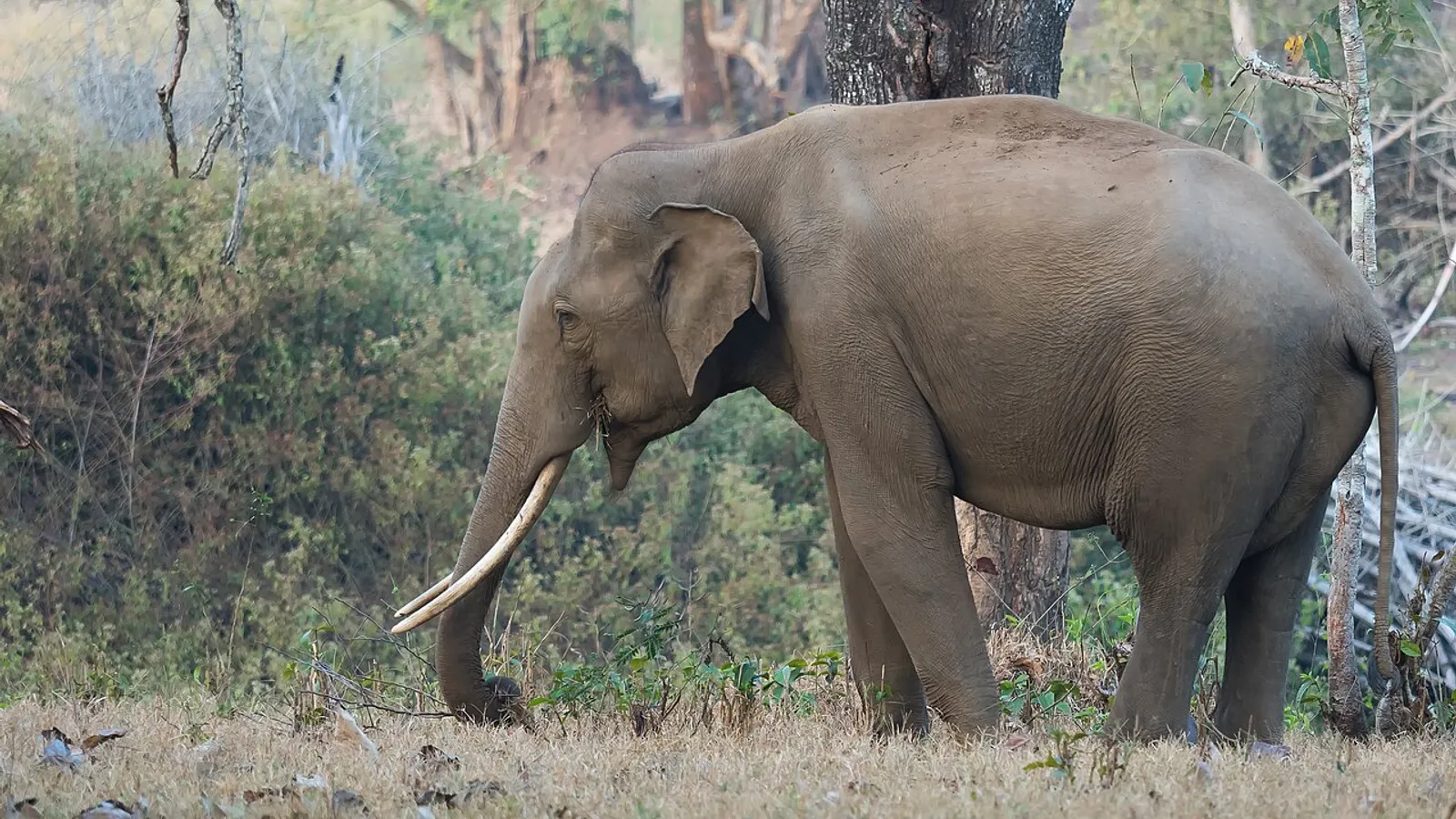
The trunk has a single prehensile “finger” at the tip, against the African elephant’s two.
- 02
The ears are smaller than the African species’ and shaped like India, not like Africa.
- 03
Only some males carry tusks; many females and many males have none.
— What sets it apart
It is the elephant that Asian civilisations have used for over four thousand years — in war, in temples, in forestry work — and yet it has never truly been domesticated: every “working” elephant is a wild individual gentled, not the product of selective breeding. Unlike the horse or the dog, the species has never changed in our hands. Every generation begins again with an animal that is still wild.
