
White rhinoceros
Ceratotherium simum
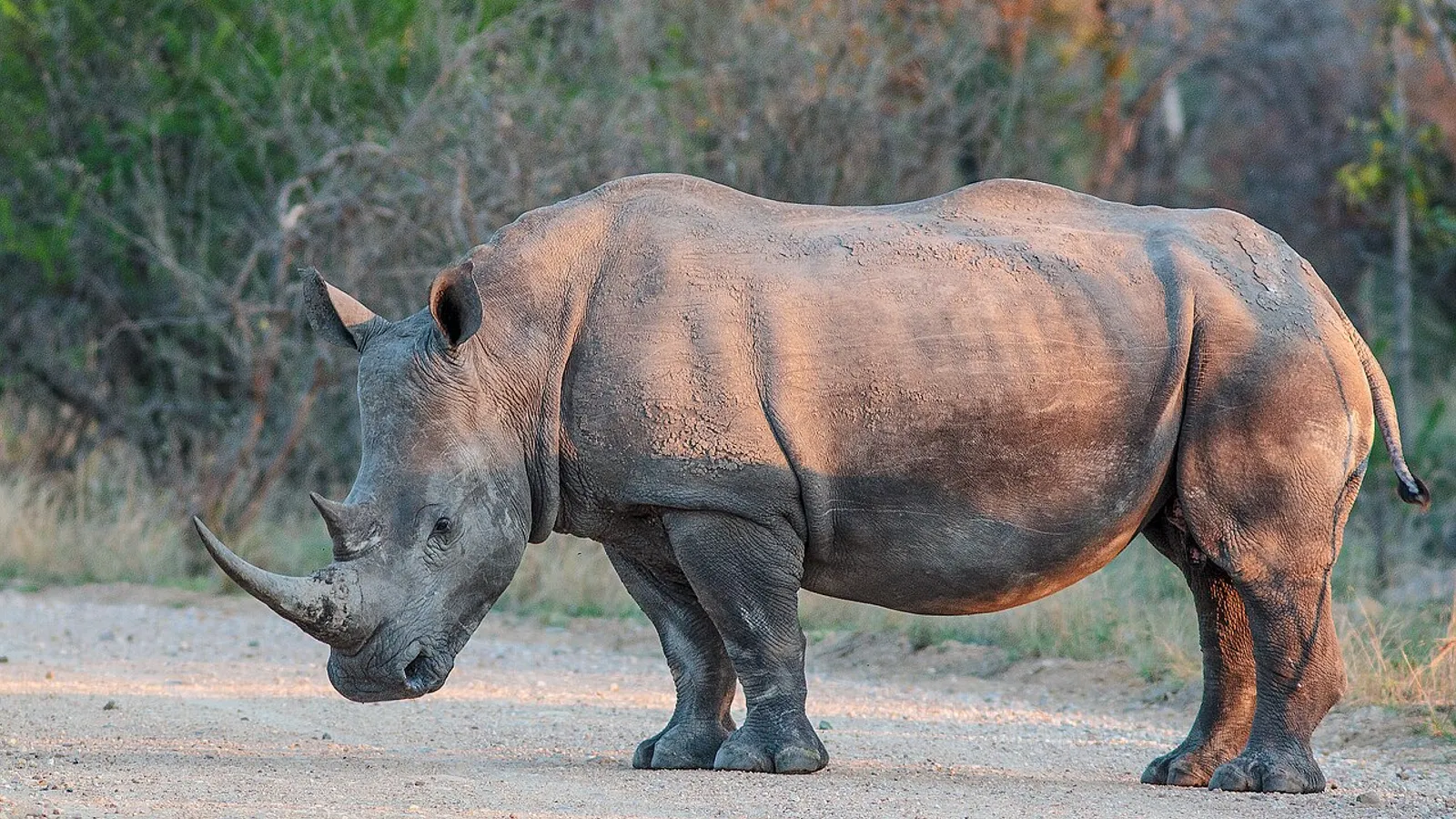
— Where the name comes from
Ceratotherium is Greek for “horned beast”, from kéras, horn, and theríon, wild animal; simum is from the Greek simós, “snub-nosed”. The “white” of the common name has nothing to do with colour: it comes of a misheard Afrikaans wyd, “wide”, describing the square lip, taken for the English white.
— Facts
- Group
- Mammals · Mammalia
- Order
- Odd-toed ungulates
- Habitat
- Grassy savannah and open plain
- Range
- Southern and eastern Africa
- Size
- 340–420 cm, 1,800–2,500 kg
- Diet
- A grazing herbivore — almost nothing but short grass
- Lifespan
- 40–50 years
— Characteristics
- 01
It is the largest rhinoceros and the second largest land mammal after the elephant.
- 02
The wide, square lip is built to crop grass close, like a mower.
- 03
The horn is not bone: it is compacted keratin, the same stuff as nails and hair.
— What sets it apart
The northern subspecies is down to two females, mother and daughter, guarded day and night in Kenya: the last male died in 2018. As a breeding population it is technically extinct, and its only hope is in vitro fertilisation with frozen semen. The white rhino’s name came of a mistranslation; its ending, by contrast, is not ambiguous at all.
