
Dromedary
Camelus dromedarius
— Where the name comes from
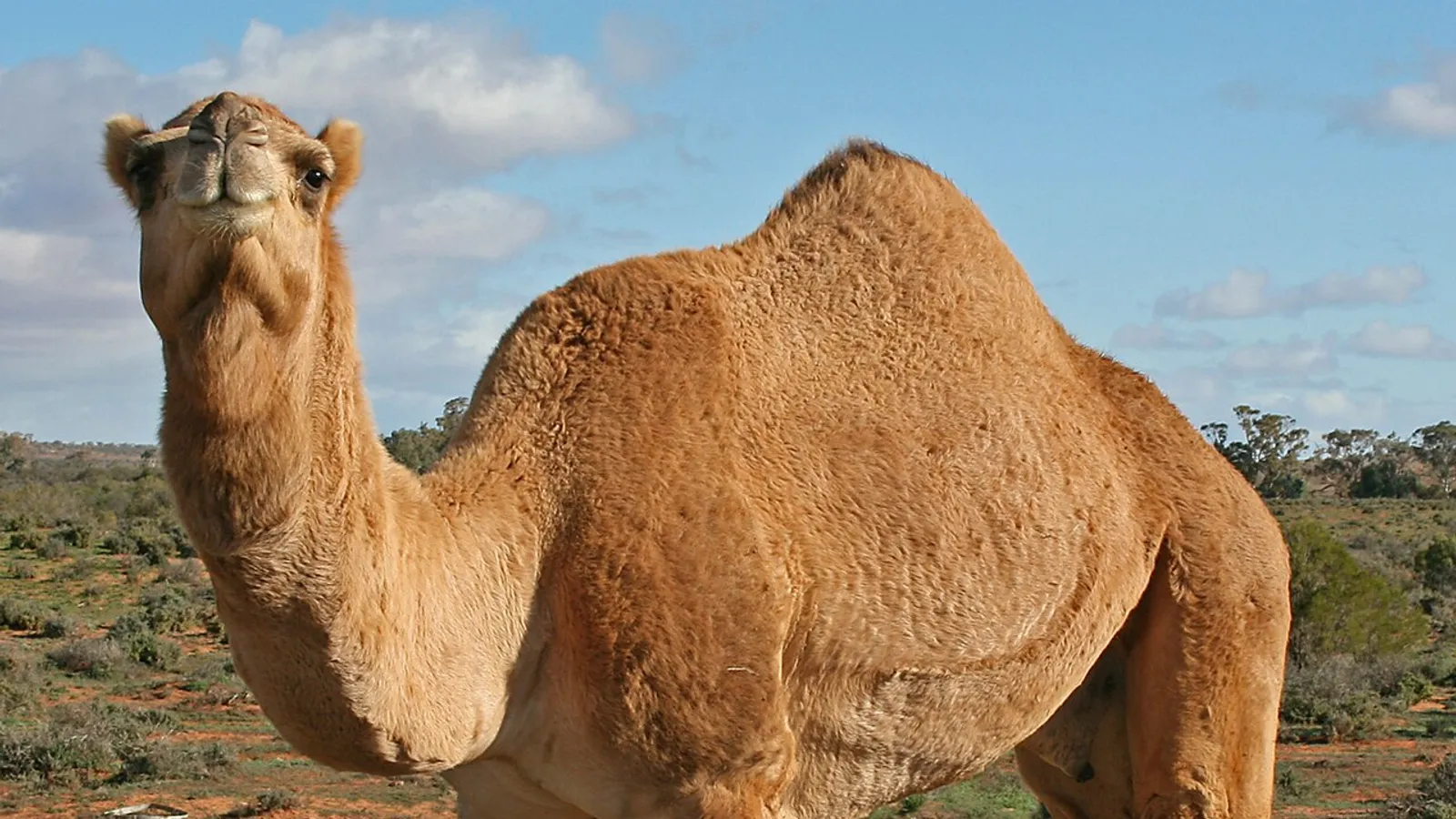
Dromedarius comes from the Greek dromás, “running”, from drómos, the race: the riding camel, the fast one, as against the pack animal. Camelus is from the Semitic gāmāl, the same root as the Arabic jamal. It has one hump, and the way to remember it is the letter: Dromedary, D like a hump lying on its side.
— Facts
- Group
- Mammals · Mammalia
- Order
- Even-toed ungulates
- Habitat
- Hot desert, arid steppe
- Range
- Arabia, North Africa, the Horn of Africa; introduced to Australia
- Size
- 220–340 cm, 400–600 kg
- Diet
- Herbivore — desert plants, thorny and salty ones included
- Lifespan
- 40–50 years
— Characteristics
- 01
The hump holds not water but fat, an energy store that also releases metabolic water.
- 02
It can drink over 100 litres in ten minutes and endure dehydration that would kill other mammals.
- 03
Double rows of lashes and closable nostrils keep the sand out.
— What sets it apart
The wild dromedary has been extinct for millennia: every one alive is domestic, descended from a species that vanished in the wild. Except in one place — Australia, where dromedaries brought in as pack animals in the 19th century escaped and multiplied into the only genuinely wild population on the planet, now hundreds of thousands strong. The one free-ranging herd of dromedaries lives in the wrong hemisphere.
