
Galápagos tortoise
Chelonoidis niger
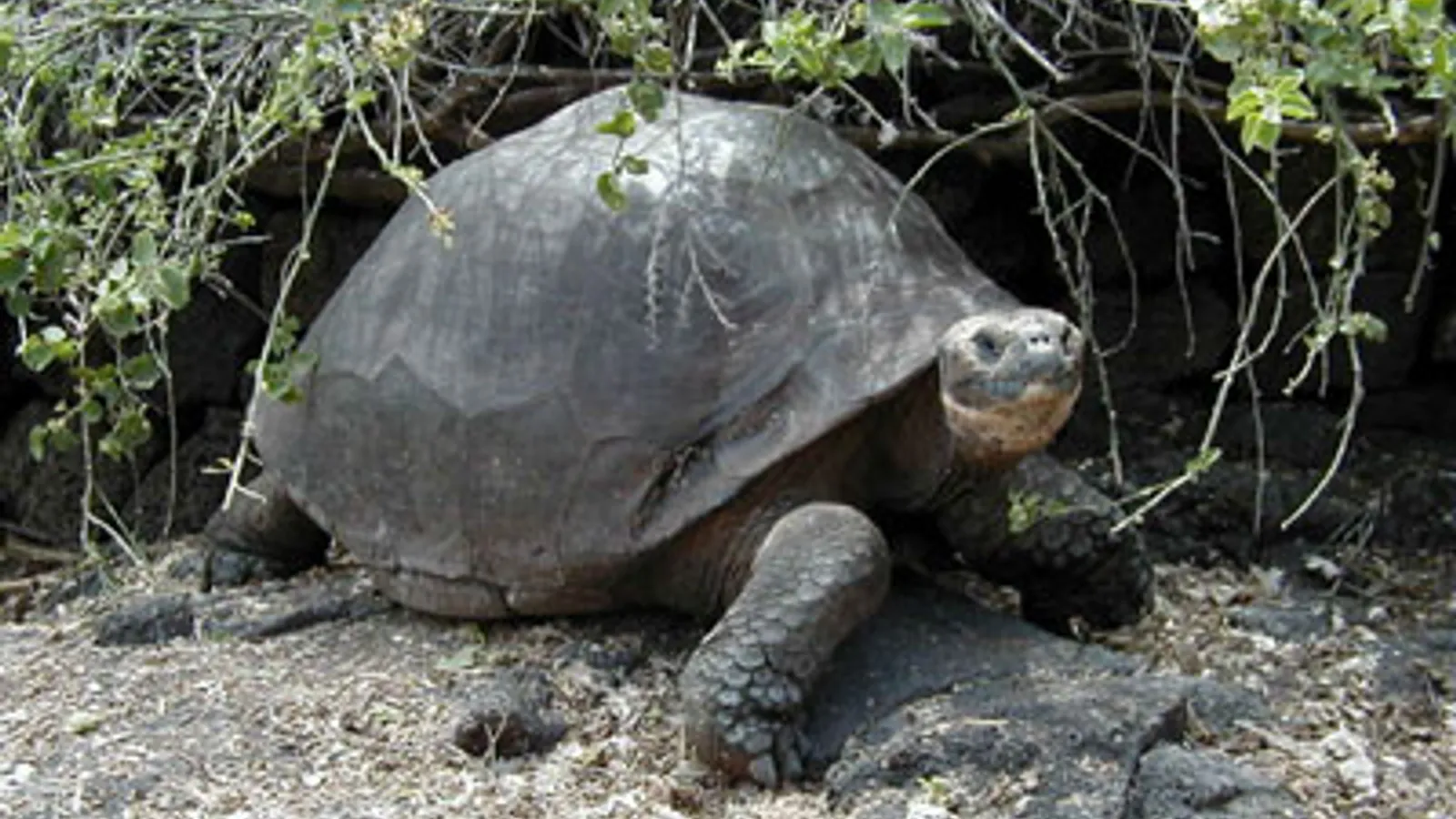
— Where the name comes from
Chelonoidis means “turtle-like”, from the Greek chelṓnē with the suffix -oides; niger is Latin, “black”. The islands themselves are named after it: galápago is an old Spanish word for “tortoise”. Animal and archipelago share, at root, the same name.
— Facts
- Group
- Reptiles · Reptilia
- Order
- Turtles and tortoises
- Habitat
- Humid highlands and arid volcanic lowlands
- Range
- The Galápagos Islands, Pacific Ocean
- Size
- Up to 150 cm of shell, over 250 kg
- Diet
- Herbivore — grasses, cactus, leaves, fruit
- Lifespan
- Over 100 years, up to 170
— Characteristics
- 01
It is among the longest-lived vertebrates: some individuals have passed a century and a half.
- 02
Every island has its own shell shape, matched to the food available there.
- 03
It can survive a year without eating or drinking, storing water in its tissues.
— What sets it apart
The different shell shapes from island to island in the Galápagos helped Darwin towards evolution: where the food grew high up, the shells had the front raised into a “saddle” so the neck could stretch; where it grew at ground level, they stayed domed. Every island had shaped its own tortoise. Many populations were wiped out by whalers, who took them aboard alive as a meat supply; the last of the Pinta Island line, the famous “Lonesome George”, died in 2012, taking a whole lineage with him.
