
Green iguana
Iguana iguana
— Where the name comes from
Iguana comes from the Arawak-Taíno iwana, the name the Caribbean peoples gave the reptile, taken up by the Spanish. It has passed almost unchanged into every European language. It is one of the great tree lizards of the New World, a herbivore despite the dragon looks.
— Facts
- Group
- Reptiles · Reptilia
- Order
- Squamates
- Habitat
- Rainforest, mangroves, always near water
- Range
- Central and South America; introduced to Florida and elsewhere
- Size
- Up to 1.5–2 m including tail, 4–8 kg
- Diet
- Herbivore — leaves, shoots, flowers, fruit
- Lifespan
- 15–20 years
— Characteristics
- 01
It has a “third eye” on top of the head, sensitive to light and shadow, to spot predators from above.
- 02
It drops from trees into water and swims well to escape danger.
- 03
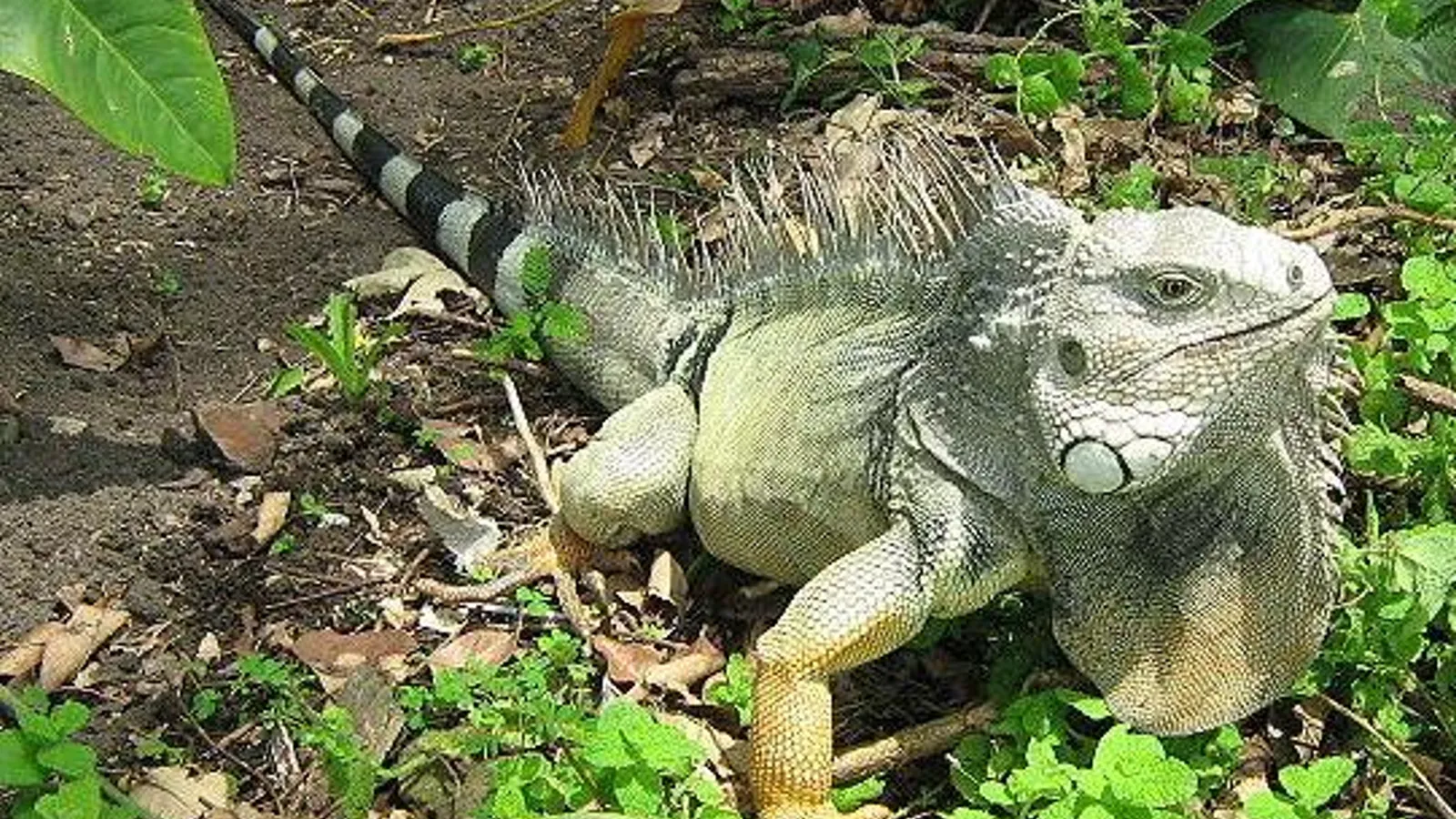
The crest of dorsal spines and the dewlap under the throat serve for courtship and defence.
— What sets it apart
The green iguana has a genuine third eye on the crown of its head: the parietal eye, a pale spot wired to the brain that forms no images but senses light, shadow and movement from above. It is an alarm system against raptors, the legacy of a very ancient organ present in many reptiles. In Florida, where it has been introduced, torpid iguanas literally fall out of the trees during rare cold snaps: the news bulletins go so far as to issue “falling iguana” warnings.
