
Common snapping turtle
Chelydra serpentina
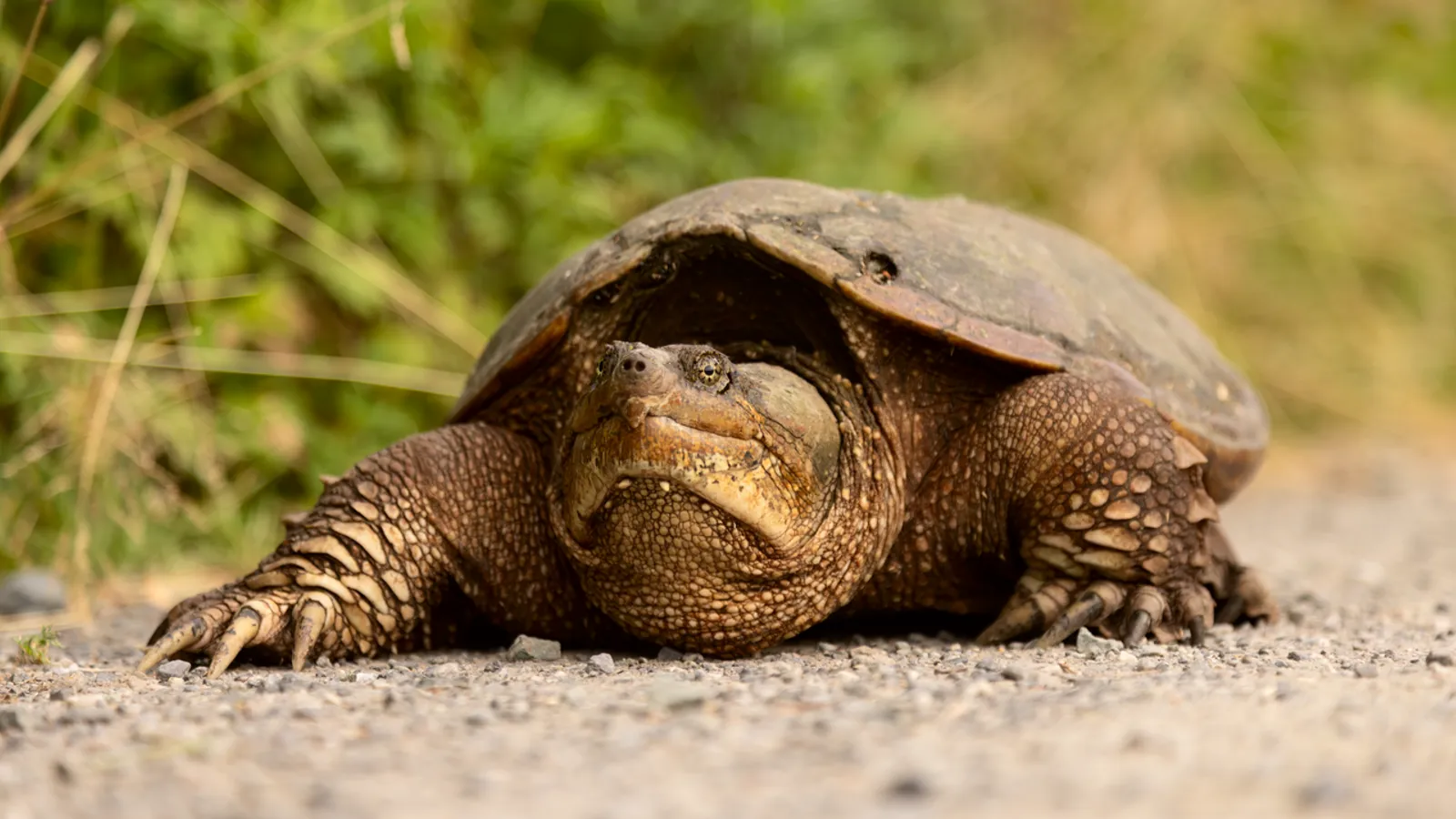
— Where the name comes from
Chelydra was the Greek name of an unidentified amphibious reptile, perhaps a water turtle; serpentina refers to the neck, long and flexible, which the animal shoots forward like a snake. The Italian name and the English one, snapping turtle, both describe the same thing: what happens if you go near it on land.
— Facts
- Group
- Reptiles · Reptilia
- Order
- Turtles and tortoises
- Habitat
- Ponds, slow rivers, marshes with soft bottoms and vegetation
- Range
- Eastern North America, from Canada to the Gulf of Mexico
- Size
- 25–47 cm of carapace, 4.5–16 kg
- Diet
- Fish, frogs, waterfowl, carrion, plants
- Lifespan
- 40 years in the wild
— Characteristics
- 01
The plastron is reduced to a cross: it cannot withdraw into its shell.
- 02
In water it is shy and flees; on land, unable to hide, it attacks.
- 03
It spends most of its life buried in mud with only its eyes showing.
— What sets it apart
Its reputation as a savage beast comes from a design flaw. The plastron is so small that head, legs and tail are always exposed: with nowhere to withdraw to, its only defence out of water is to bite first. In the water, where it can simply swim away, divers describe it as one of the calmest animals there is. It is the same individual with two opposite behaviours, depending on whether or not it can run.
