
Alligator snapping turtle
Macrochelys temminckii
— Where the name comes from
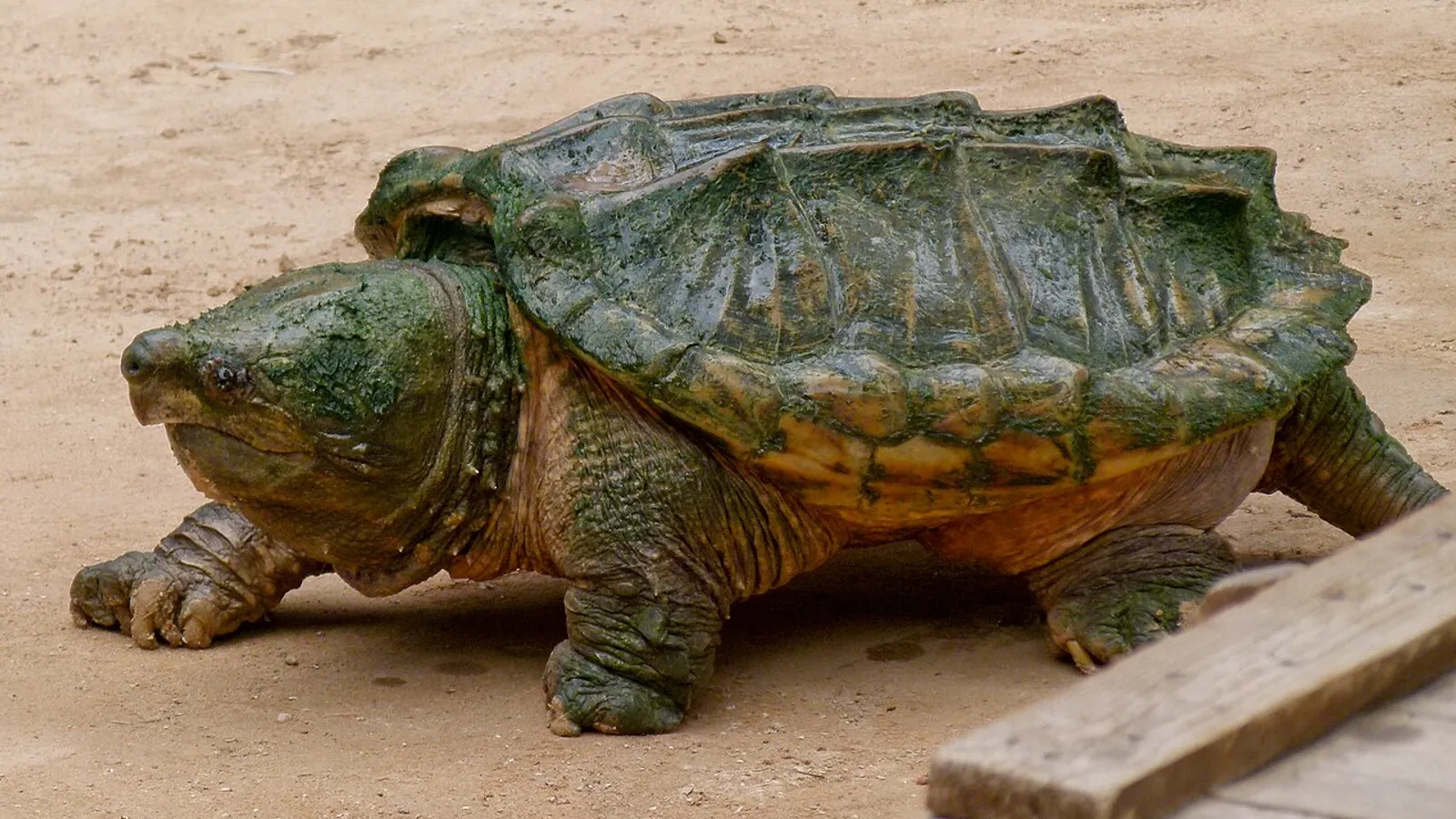
Macrochelys is “big turtle”, from makrós and chélys, the Greek word that meant both the tortoise and the lyre — because the first lyres were made by stringing cords across an empty shell. Temminckii recalls Coenraad Temminck, director of the Leiden museum. The common name comes from the three saw-toothed ridges of the shell, which recall an alligator’s back.
— Facts
- Group
- Reptiles · Reptilia
- Order
- Turtles and tortoises
- Habitat
- Deep rivers, bayous and oxbow lakes of the Mississippi basin
- Range
- The south-eastern United States
- Size
- 40–80 cm of carapace, 70–100 kg
- Diet
- Fish, molluscs, other turtles, carrion, acorns
- Lifespan
- 70 years, perhaps more
— Characteristics
- 01
It is the heaviest freshwater turtle in North America.
- 02
It lies motionless on the bottom for forty minutes between breaths.
- 03
The shell is covered in algae that make it indistinguishable from a stone.
— What sets it apart
It fishes with bait. On the floor of its mouth sits a pink appendage it can engorge and wriggle, which to a fish looks in every way like a worm: the turtle lies still with its jaws wide, works the false worm, and snaps shut when somebody comes for it. It is one of very few non-human vertebrates to use a lure of the kind, and the only reptile in North America that does.
