
Greater wax moth
Galleria mellonella
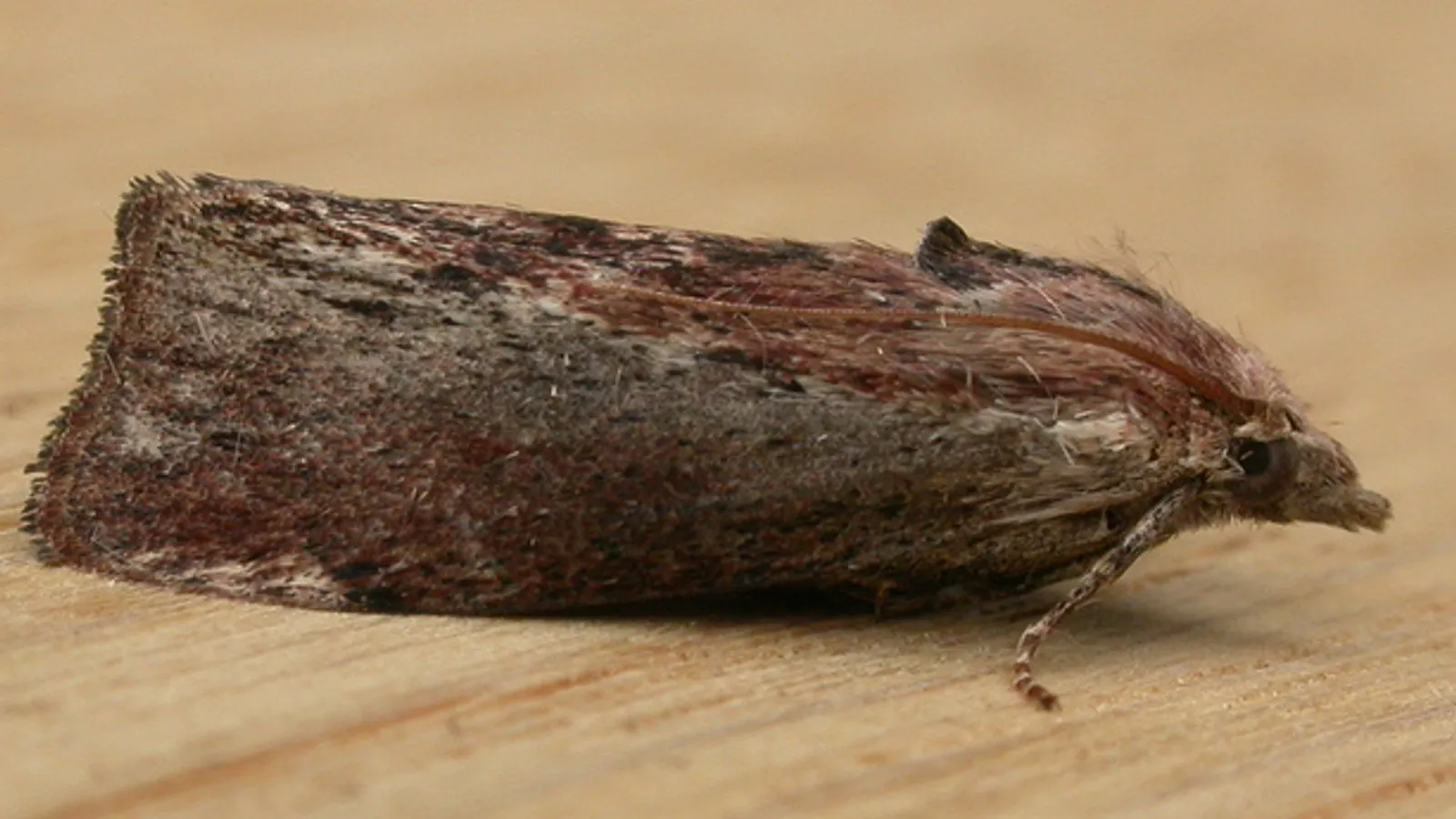
— Where the name comes from
Galleria comes from the mediaeval Latin galeria, the covered passage: the caterpillars tunnel silk galleries through the combs and move along them out of reach of the bees. Mellonella is the diminutive of mel, honey. The name therefore says “the little honey thing that digs corridors” — and for a species now studied in polymer chemistry laboratories it has stayed oddly domestic.
— Facts
- Group
- Insects · Insecta
- Order
- Butterflies and moths
- Habitat
- Beehives, abandoned combs, wax stores
- Range
- Worldwide, in the wake of beekeeping
- Size
- 3–4 cm wingspan
- Diet
- Beeswax, pollen and comb residues
- Lifespan
- 1–3 months
— Characteristics
- 01
It digests wax, which almost no other animal can do.
- 02
It hears ultrasound up to three hundred kilohertz, the animal record.
- 03
In a weak hive it destroys the combs within weeks.
— What sets it apart
In 2017 a Spanish researcher, a beekeeper in her spare time, took some caterpillars off a comb and put them in a plastic bag: shortly afterwards the bag was full of holes. It was not mechanical chewing — the plastic proved chemically transformed, with the bonds of the polyethylene broken. The reason is that beeswax and polyethylene have similar structures, chains of hydrocarbons, and the enzymes the caterpillar uses on one also work on the other. Research on those enzymes is now one of the most concrete routes towards the biological degradation of plastic, and it comes from an insect beekeepers have always regarded as a plague.
