
Eurasian bittern
Botaurus stellaris
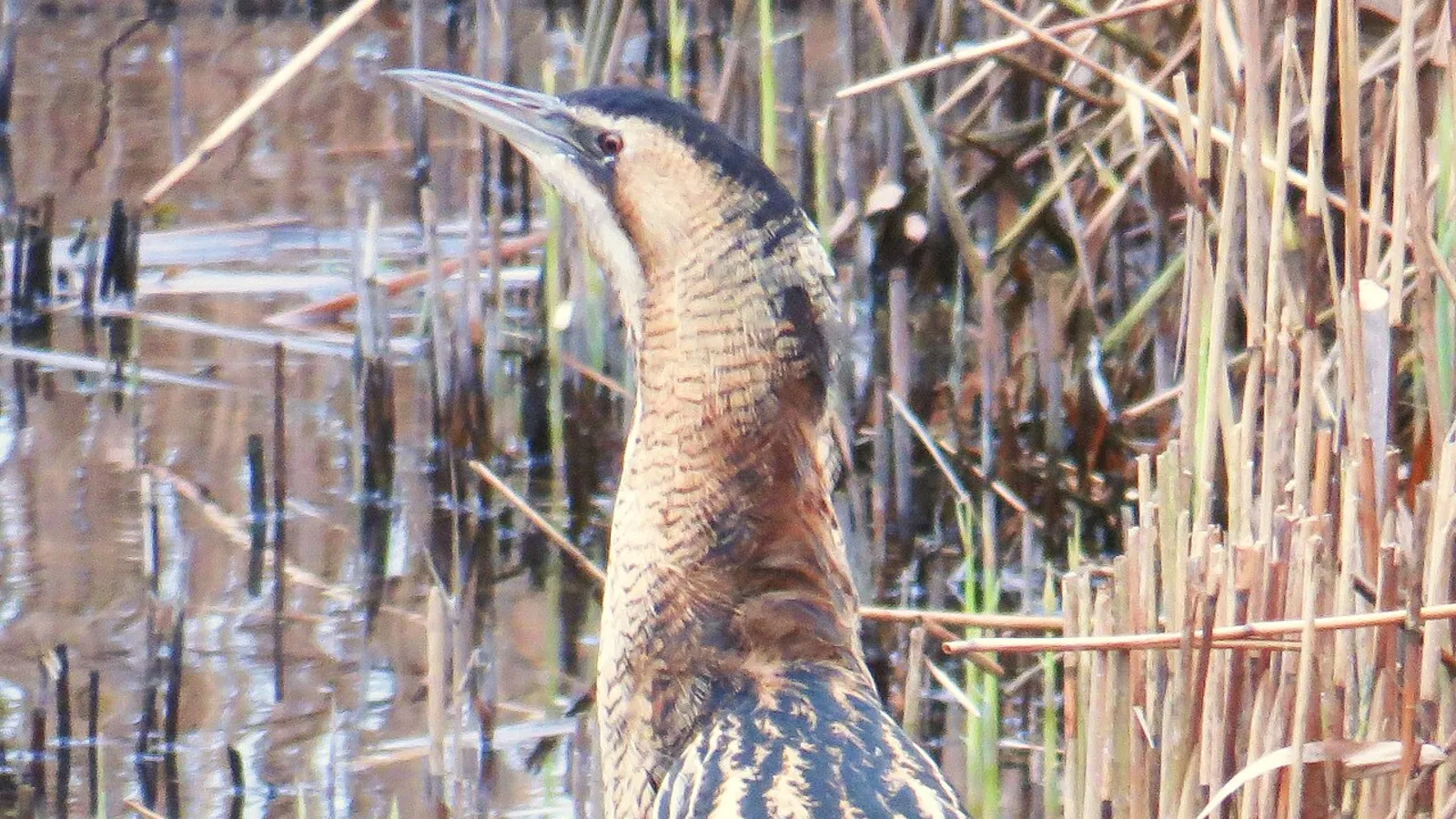
— Where the name comes from
Botaurus fuses bos and taurus, the ox and the bull: the male’s call is a deep lowing that for centuries was put down, in the marshes of Europe, to supernatural beasts. Stellaris means “starred”, for the dense pale speckling of the plumage. The Italian name imitates the sound too, as do the French butor and the English bittern.
— Facts
- Group
- Birds · Aves
- Order
- Pelicans and allies
- Habitat
- Extensive flooded reedbeds, freshwater marshes
- Range
- Europe, temperate Asia and southern Africa
- Size
- 69–81 cm, wingspan 100–130 cm, 0.9–1.9 kg
- Diet
- Fish, frogs, aquatic insects, small mammals
- Lifespan
- 13 years in the wild
— Characteristics
- 01
Threatened, it points its bill at the sky and sways like a reed in the wind.
- 02
The vertically striped plumage makes it invisible in the reeds.
- 03
It walks very slowly over the mud, gripping reeds with long toes.
— What sets it apart
Its boom is the lowest sound produced by any European bird and carries five kilometres: the male inflates his oesophagus and uses it as a sounding box, repeating three or four identical notes. Every individual has a recognisable timbre, so much so that censuses are done by recording the marshes and telling the males apart by voice, without ever seeing one. It is the only bird counted by ear, and in many European reserves none of the ornithologists who study it has ever had one in front of their eyes.
