
Marabou stork
Leptoptilos crumenifer
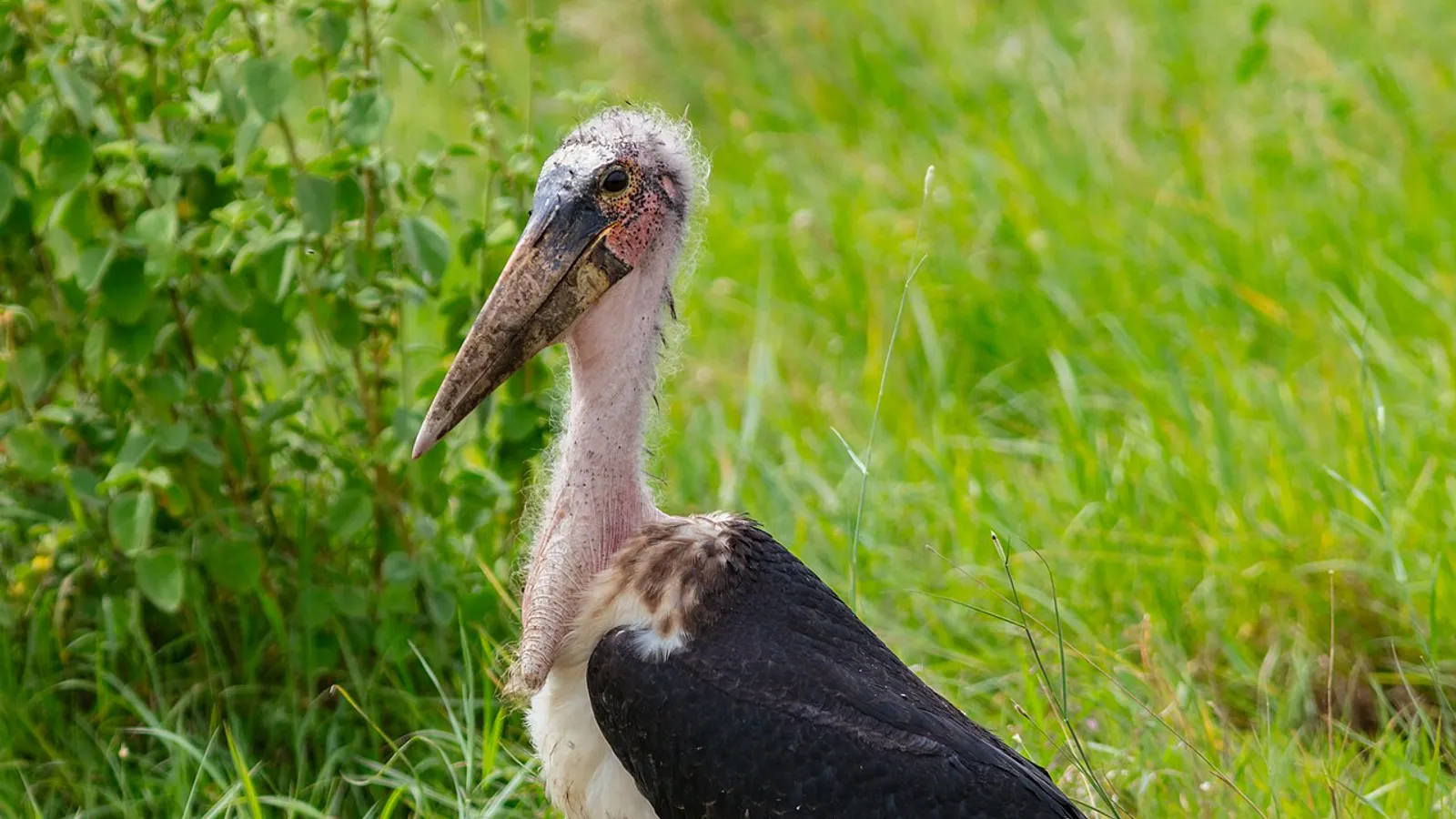
— Where the name comes from
Leptoptilos is “slender feather”, from leptós and ptílon: it refers to the very soft plumes under the tail, sold in nineteenth-century Europe under the name marabou to trim boas, hats and dressing gowns. Crumenifer means “purse-bearer”, for the bare pink sac hanging from its neck. Marabou comes from the Arabic murābiṭ, the hermit: the hunched, silent posture suggested an ascetic.
— Facts
- Group
- Birds · Aves
- Order
- Storks
- Habitat
- Savannah, rubbish tips, river and lake shores, abattoirs and villages
- Range
- Sub-Saharan Africa
- Size
- 110–150 cm tall, wingspan 225–287 cm, 4–9 kg
- Diet
- Carrion, refuse, fish, frogs, birds, insects
- Lifespan
- 25 years in the wild
— Characteristics
- 01
Its head and neck are bare, like a vulture’s, for reaching inside carcasses.
- 02
It soars in very high circles on the thermals, up to four thousand metres.
- 03
In African cities it frequents the rubbish tips in parties of hundreds.
— What sets it apart
The pink sac hanging from its neck is not for storing food, as was long believed: it is an air sac connected to the nostrils, which the bird inflates during display and also uses to shed heat, as elephants do with their ears. In many East African cities it is now an urban bird, and its presence on the tips is why certain districts have far fewer sanitary problems than they otherwise would: it does for nothing the job nobody wants.
