
Macaroni penguin
Eudyptes chrysolophus
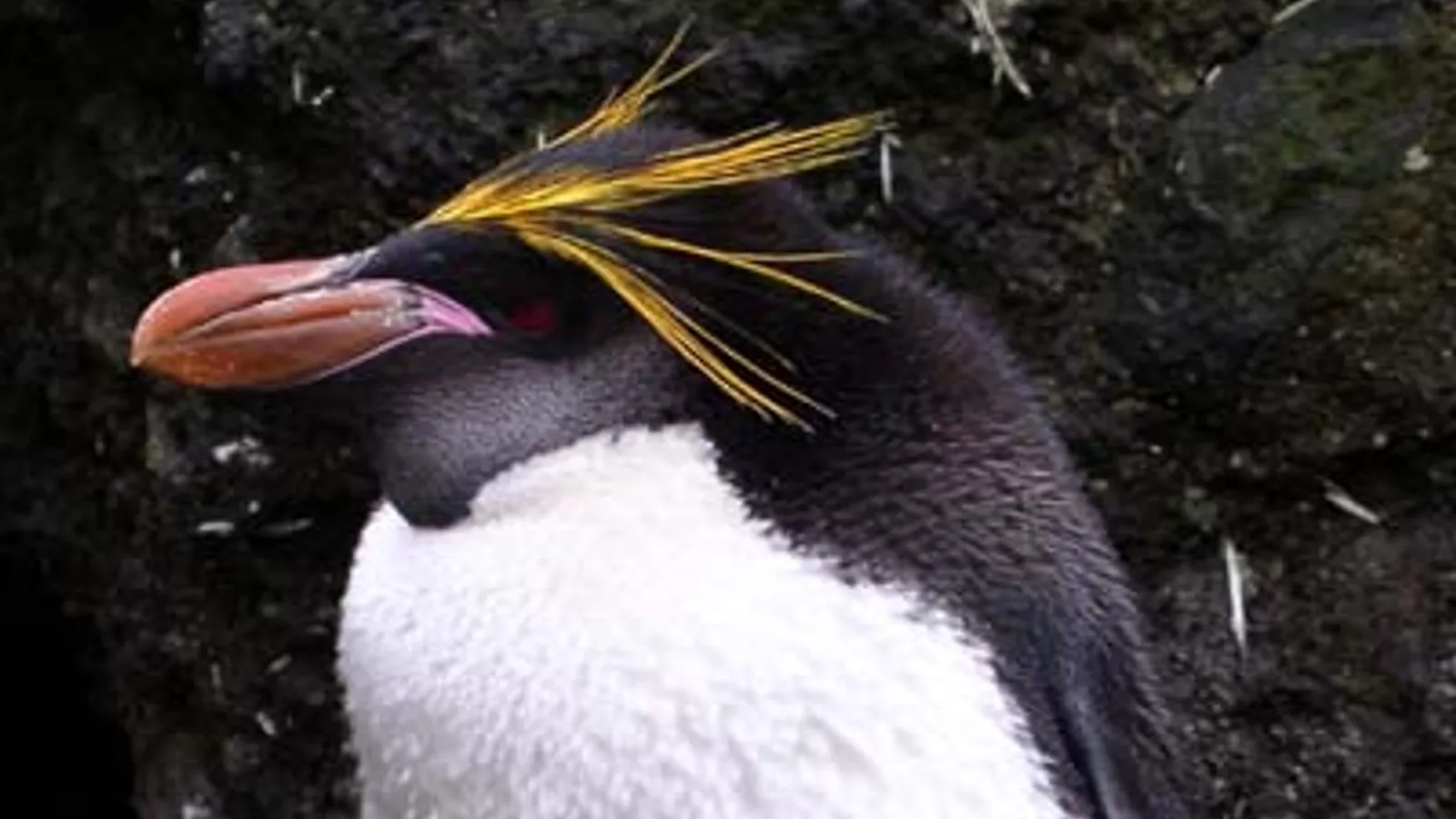
— Where the name comes from
Eudyptes is “good diver”, from eu and dýptēs; chrysolophus means “golden-crested”. The common name comes from the macaronis, the young Englishmen of the eighteenth century who came home from the Italian tour in showy wigs and feathers and were mocked for it: sailors saw that unruly yellow crest and recognised their countrymen’s ridiculous fashion.
— Facts
- Group
- Birds · Aves
- Order
- Penguins
- Habitat
- Rocky subantarctic islands; open sea out of season
- Range
- The Southern Ocean: South Georgia, Kerguelen, Crozet, Heard
- Size
- 70 cm, 3.5–6.4 kg
- Diet
- Krill, small fish, squid
- Lifespan
- 15 years in the wild
— Characteristics
- 01
Its colonies are the most crowded in the world: up to a hundred thousand pairs.
- 02
It climbs rock faces in hops, helped by bill and claws.
- 03
It spends more than six months a year at sea without touching land.
— What sets it apart
It is the most numerous penguin on the planet — around eighteen million birds are estimated — and it is nonetheless declining enough to count as vulnerable: a species can be destroyed even starting from numbers that look unassailable. It lays two eggs, but the first is much smaller than the second and is nearly always lost before hatching, often pushed out of the nest by the parents themselves. Why it goes on laying it, nobody knows: it is one of the open puzzles of ornithology.
