
Eastern chipmunk
Tamias striatus
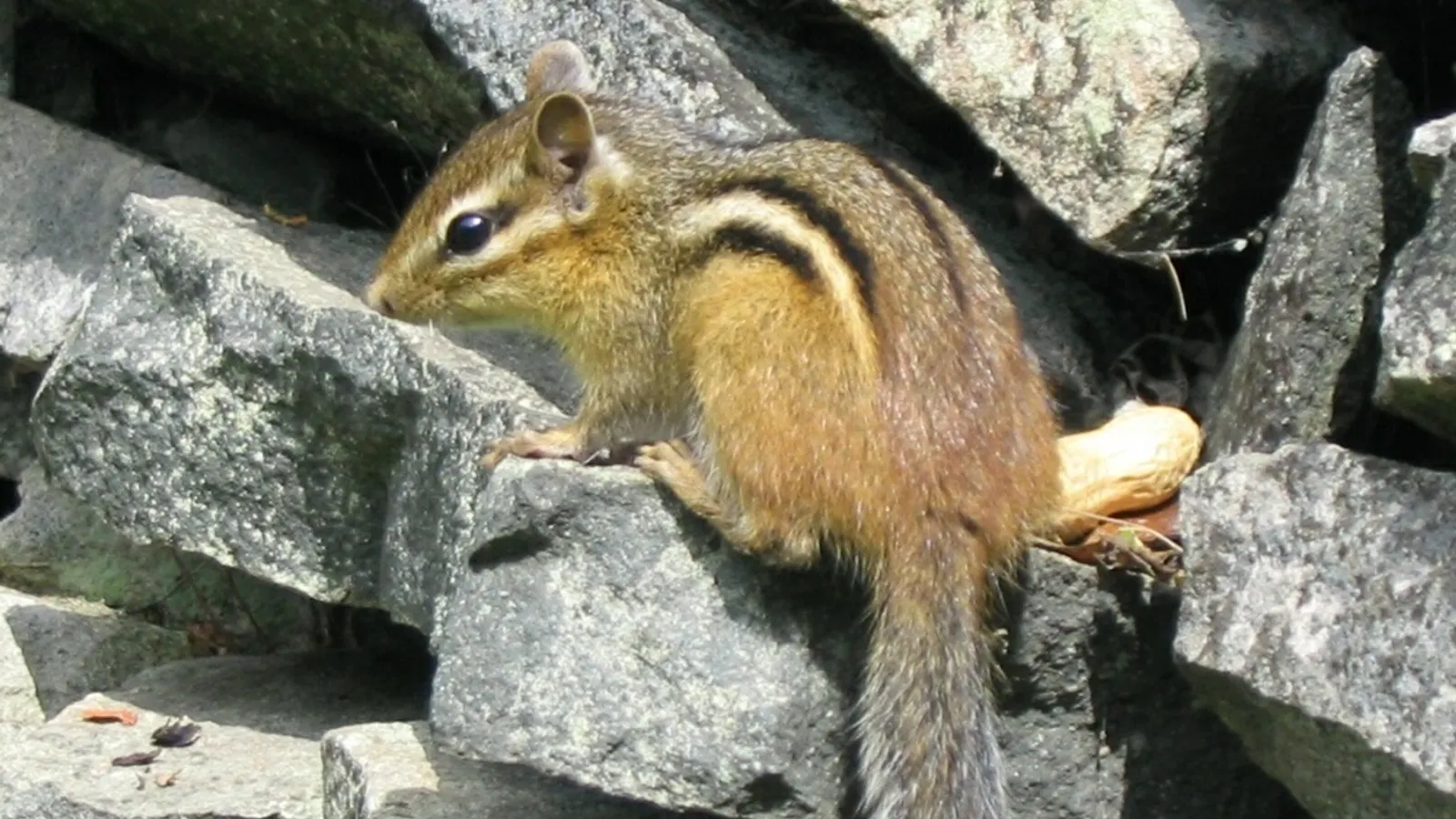
— Where the name comes from
Tamias is the Greek tamías, “the steward”, the one who manages the store: the name says exactly what this animal does, spending the autumn carrying and stockpiling seeds. Striatus describes the five dark bands along the back. The English chipmunk comes from the Ojibwe ajidamoo, which means “the one who comes down trees head first”.
— Facts
- Group
- Mammals · Mammalia
- Order
- Rodents
- Habitat
- Mature deciduous woodland with undergrowth and rock piles, parks, gardens
- Range
- Eastern North America, from southern Canada to Louisiana
- Size
- 21–30 cm including tail, 66–150 g
- Diet
- Omnivore — seeds, acorns, fungi, berries, insects, eggs
- Lifespan
- 3 years in the wild, up to 8 in captivity
— Characteristics
- 01
The cheek pouches stretch until they treble the width of the head.
- 02
It can lay in more than eight thousand seeds in a single winter.
- 03
It does not truly hibernate: it wakes periodically to eat from its own larder.
— What sets it apart
It does not fatten for winter: it does the shopping. Unlike marmots, which lay down fat and sleep for five months, the chipmunk stockpiles food in an underground chamber and passes the winter in intermittent torpor, waking every few days to eat, urinate and go back to sleep. The strategy has an advantage: it wakes in spring without being emaciated, and the males with the best-stocked larder can start looking for females weeks before the rest.
