
Siberian flying squirrel
Pteromys volans
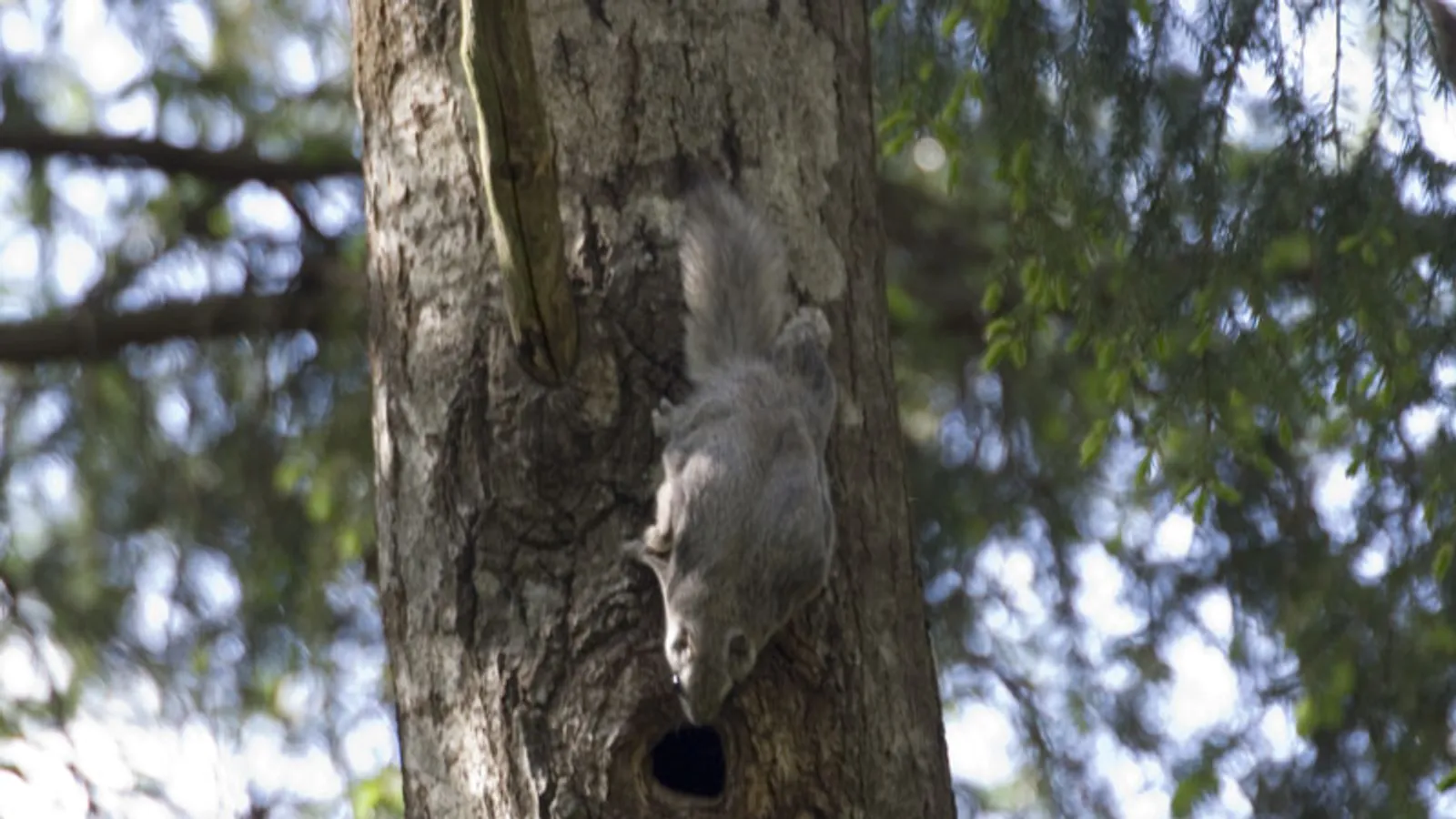
— Where the name comes from
Pteromys is “winged mouse”, from the Greek pterón and mŷs; volans is the Latin “flying”. Three words, two languages, and one mistake repeated three times: it does not fly. It glides, which is quite another matter — it generates no active lift, it loses height under control. It is the only flying squirrel that lives in Europe, and in Finland its presence has stopped more than one building site.
— Facts
- Group
- Mammals · Mammalia
- Order
- Rodents
- Habitat
- Mature boreal forest of conifers and birch, with hollow trees
- Range
- From Finland and the Baltic states across Siberia, northern China and Japan
- Size
- 13–20 cm of body plus 9–14 cm of tail, 95–170 g
- Diet
- Herbivore — alder and birch catkins, buds, seeds, leaves
- Lifespan
- 5 years in the wild
— Characteristics
- 01
The patagium is a membrane of skin stretched from wrists to ankles, held out by a cartilage rod.
- 02
It glides up to eighty metres, steering with its wrists and braking with its tail.
- 03
The huge eyes take up a larger share of the skull than in almost any other rodent.
— What sets it apart
In Finland this animal has legal force. It is protected under the European Habitats Directive, and its breeding sites may not be destroyed: since it nests in hollow trees in mature forest, finding its yellow-orange droppings at the foot of a trunk — unmistakable, they are made of alder catkins — is enough to halt a felling or a building project. A rodent of a hundred and fifty grams that, in practice, decides where one may build.
