
Patagonian mara
Dolichotis patagonum
— Where the name comes from
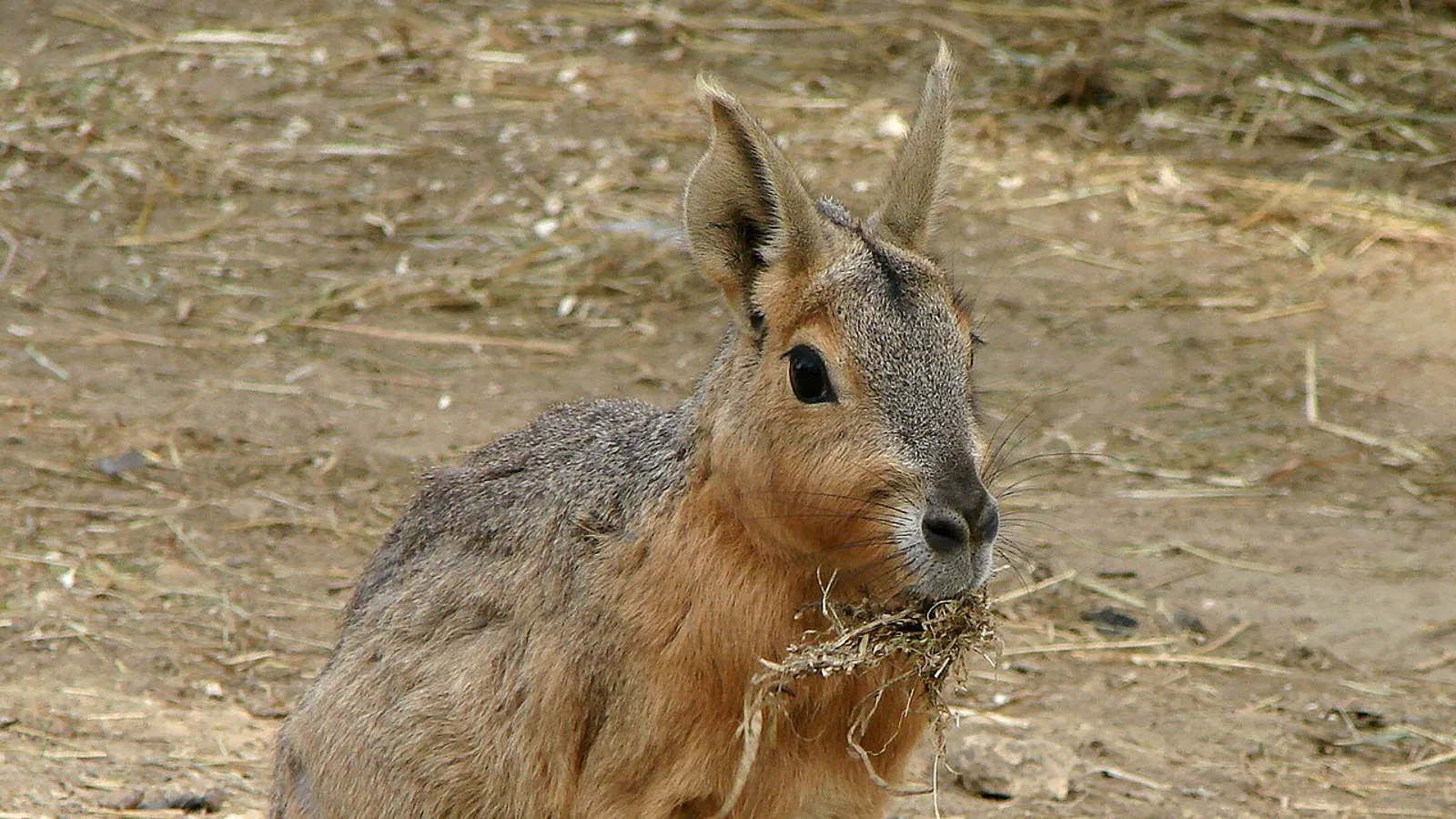
Dolichotis is “long ear”, from the Greek dolichós and oûs, ōtós; patagonum names Patagonia. Mara comes from Mapudungun, the language of the Mapuche. It looks like a hare with the legs of a small deer, and it is neither: it is a rodent related to the guinea pig and the capybara, and the likeness to lagomorphs is pure convergence.
— Facts
- Group
- Mammals · Mammalia
- Order
- Rodents
- Habitat
- Patagonian steppe, arid shrubland, open grassland
- Range
- Central and southern Argentina
- Size
- 69–75 cm of body, 8–16 kg
- Diet
- Herbivore — grass, shrubs, seeds
- Lifespan
- 10 years in the wild, up to 14 in captivity
— Characteristics
- 01
It runs at 45 km/h and jumps up to two metres high.
- 02
Pairs are monogamous for life, which is extremely rare among rodents.
- 03
Up to twenty pairs share a single communal den for the young.
— What sets it apart
It invented the crèche. The pairs are strictly monogamous and territorial, but when the young are born every family in the area brings them to one large communal burrow, where as many as thirty pups of different parents stay together. The mothers come by in turn, call, and suckle only their own offspring, recognising them by smell among all the rest. It is a solution that unites the advantages of the group — many eyes, many sentries — with fidelity in the pair, and among mammals it is nearly unique.
