
Red-rumped agouti
Dasyprocta leporina
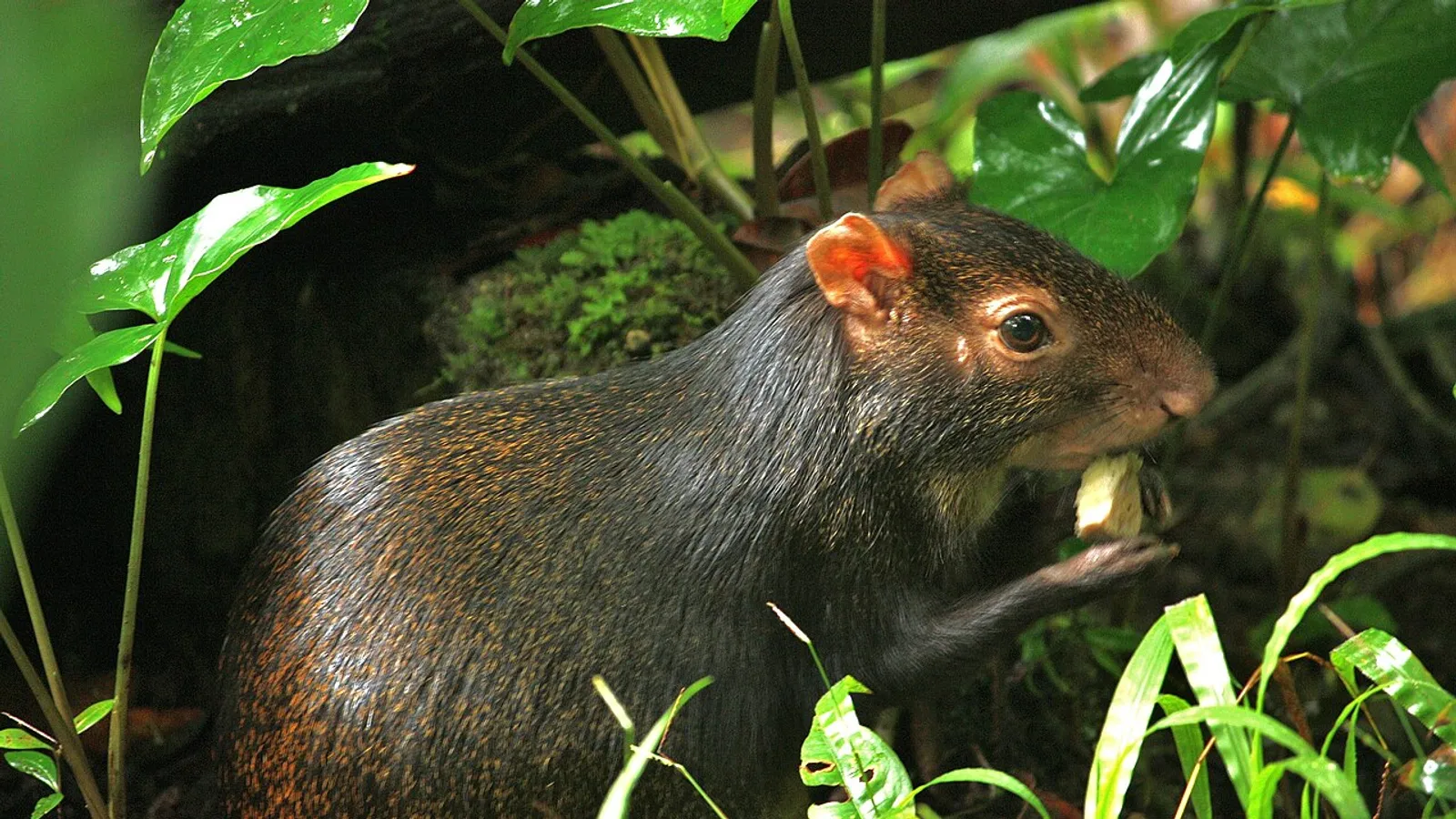
— Where the name comes from
Dasyprocta means, literally, “hairy rump”, from the Greek dasýs and prōktós — the tuft of elongated hairs on the haunches that the animal raises when excited. Leporina is the Latin “hare-like”. Agouti comes from the Tupi-Guaraní acutí. It is the third name in this archive built on an animal’s rear end, after the fossa and the aardwolf: 19th-century zoology had its obsessions.
— Facts
- Group
- Mammals · Mammalia
- Order
- Rodents
- Habitat
- Rainforest floor, secondary forest, plantations
- Range
- Northern Amazonia, the Guianas, Venezuela, the Lesser Antilles
- Size
- 49–64 cm, 3–6 kg
- Diet
- Fruit and seed eater — fallen fruit, seeds, nuts
- Lifespan
- 15–20 years in captivity
— Characteristics
- 01
It is the only animal able to open the woody fruit of the Brazil nut with its teeth.
- 02
It buries surplus seeds in hundreds of small scattered caches.
- 03
It walks on the tips of its toes, with the gait of a small ungulate.
— What sets it apart
Without it there would be no Brazil nuts. The fruit of Bertholletia excelsa is an extremely hard woody capsule holding some twenty seeds, and falling from fifty metres it stays shut: no other animal of the forest can open it. The agouti gnaws through, eats a few seeds and buries the rest in caches it partly forgets — and it is from the forgotten ones that new trees grow. One of Amazonia’s food industries depends entirely on the absent-mindedness of a rodent.
