
Lowland paca
Cuniculus paca
— Where the name comes from
Cuniculus is the Latin for rabbit, but also for the underground tunnel: the two things already sit together in Latin, and it is the same word behind the Italian coniglio. Paca comes from the Tupi páca. The result is a name that promises a rabbit and delivers a ten-kilo rodent, spotted with white, that swims and has a sounding box in its head.
— Facts
- Group
- Mammals · Mammalia
- Order
- Rodents
- Habitat
- Rainforest near watercourses, with burrows dug into banks
- Range
- From southern Mexico to Paraguay and northern Argentina
- Size
- 60–80 cm, 6–12 kg
- Diet
- Frugivore — fallen fruit, seeds, tubers, leaves
- Lifespan
- 13 years in captivity
— Characteristics
- 01
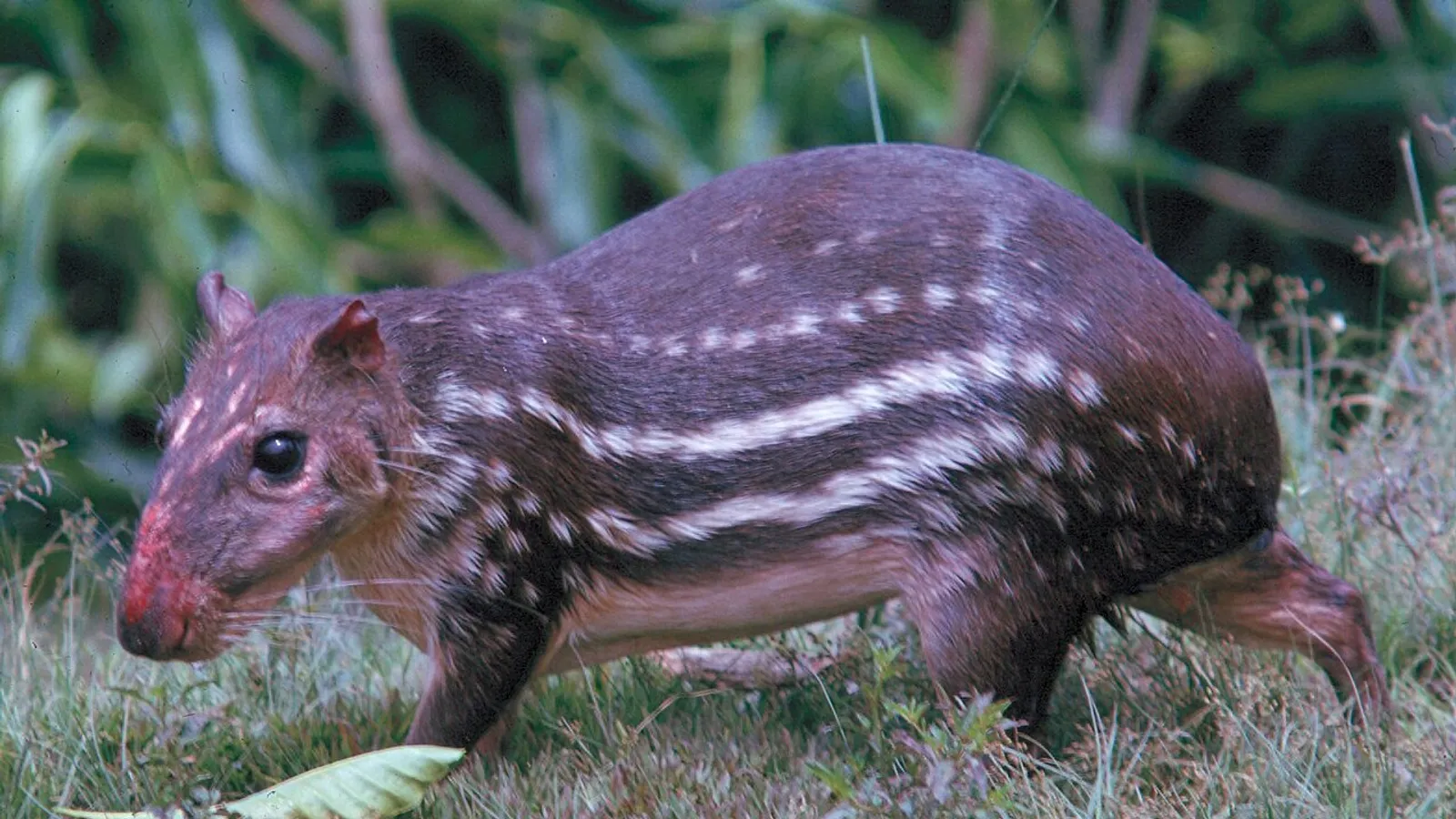
The brown coat carries four or five rows of white spots along each side.
- 02
It swims well and dives into water to escape predators, staying under for a long time.
- 03
Its meat is among the most sought after in tropical America.
— What sets it apart
Its head is built like a musical instrument. The zygomatic arches, which in every other mammal are simple bridges of bone, have expanded in this species into two large hollow chambers that open into the mouth and work as resonators: when it grinds its teeth the sound is amplified into a low, threatening rumble, audible at a distance. No other mammal in the world has bony resonators in the skull, and their presence makes a paca’s cranium instantly recognisable among all others.
