
Southern tamandua
Tamandua tetradactyla
— Where the name comes from
Tamandua comes from the Tupi tamanduá, which breaks down into taxi, “ant”, and monduar, “hunter”: the ant hunter. It is one of the rare cases in which the indigenous name became both the common name and the scientific genus, untranslated and undistorted. Tetradactyla is Greek and counts the digits of the forefoot: four, against the giant anteater’s five.
— Facts
- Group
- Mammals · Mammalia
- Order
- Sloths and anteaters
- Habitat
- Tropical forest, wooded savannah, plantations
- Range
- South America, from Venezuela to northern Argentina
- Size
- 53–88 cm long plus 40–59 of tail, 3–8 kg
- Diet
- Ant eater — arboreal ants and termites
- Lifespan
- About 9 years
— Characteristics
- 01
It has a prehensile tail, bare at the tip, and spends most of its life in the trees.
- 02
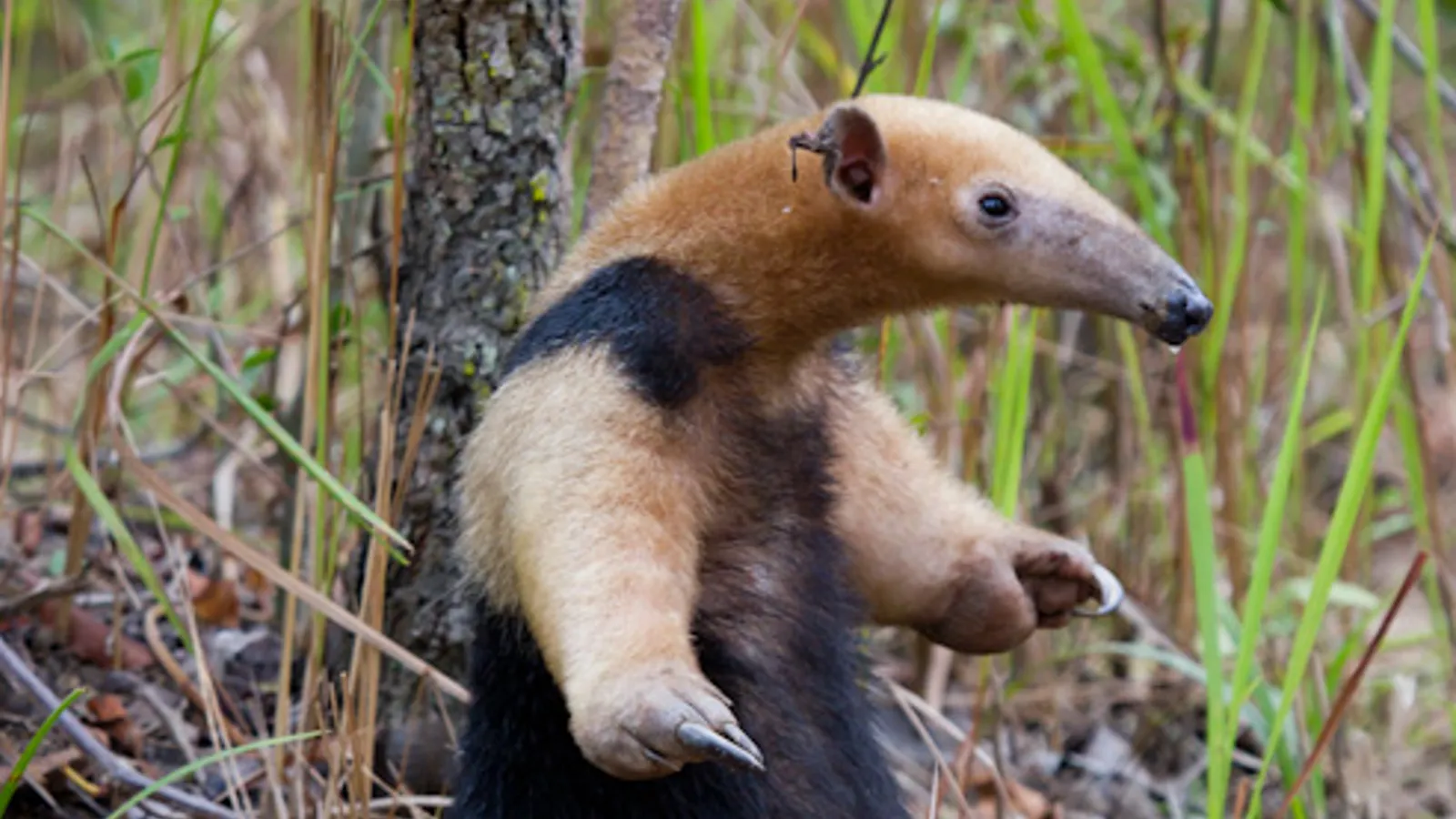
Threatened, it rears up on its hind legs propped on its tail, with claws spread.
- 03
It carefully avoids ants that spray formic acid, choosing the less well-defended species.
— What sets it apart
It never destroys a nest outright. It opens an ant colony, feeds for a few minutes — rarely more than one or two — and leaves before the soldiers arrive in force, then returns days later. The result is that it visits hundreds of colonies in rotation without ever wiping one out. It is a management of the resource that resembles grazing more than predation: the animal lives off its food by leaving it alive, because destroying it would mean going without.
