
Giant armadillo
Priodontes maximus
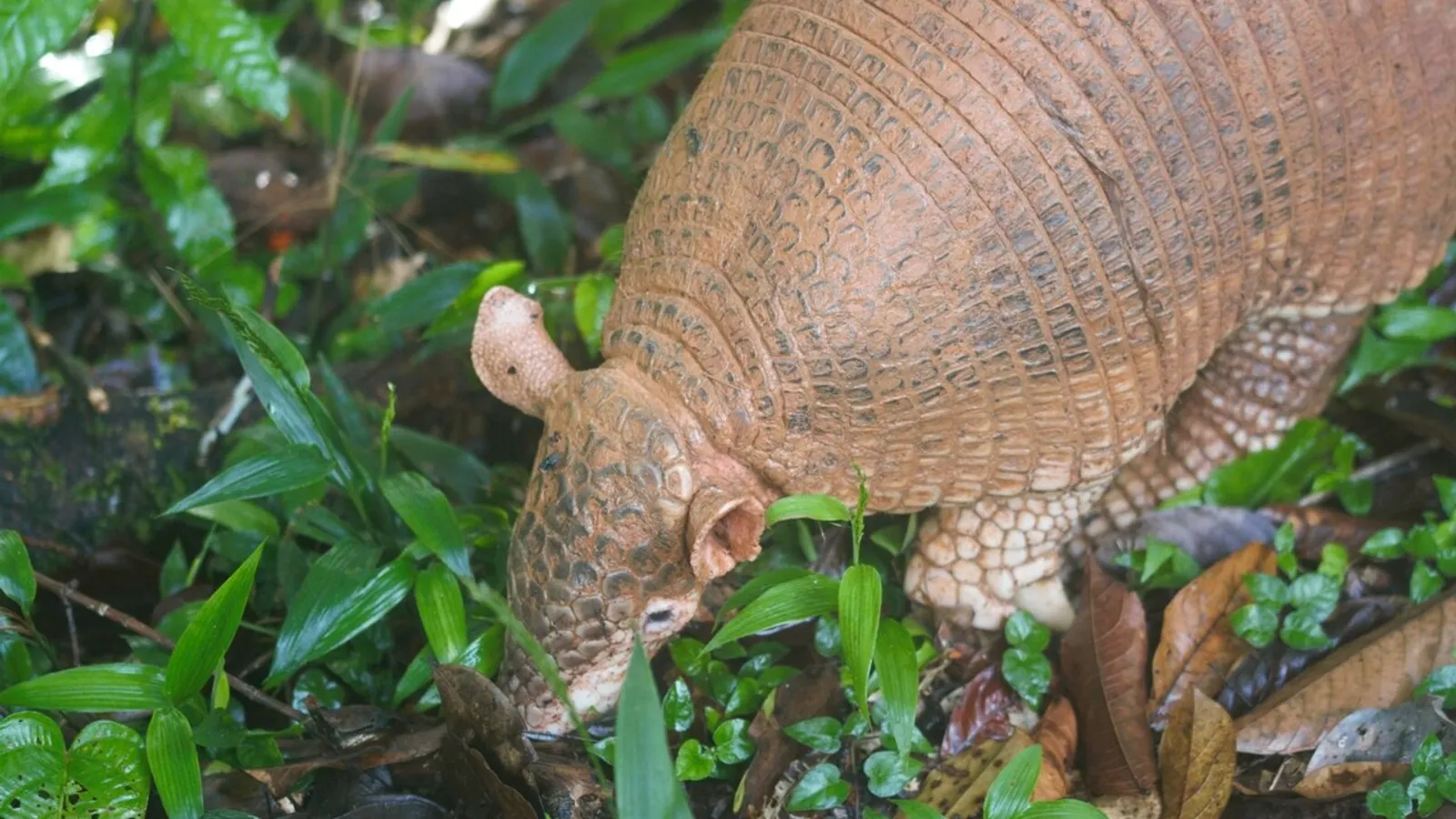
— Where the name comes from
Armadillo is Spanish and means “little armoured one”, a diminutive of armado: the conquistadors saw an animal that seemed to be wearing infantry armour. Priodontes is Greek instead, príōn, “saw”, and odoús, “tooth”, for the row of small even teeth; maximus, Latin, declares this the largest of all the species in the family.
— Facts
- Group
- Mammals · Mammalia
- Order
- Armadillos
- Habitat
- Tropical forest, savannah, bushland with termite mounds
- Range
- South America, from Venezuela to northern Argentina
- Size
- 75–100 cm long plus 50 of tail, 19–33 kg
- Diet
- Ant eater — termites above all, plus ants, worms and grubs
- Lifespan
- 12–15 years
— Characteristics
- 01
It has up to a hundred teeth, more than any other land mammal, all alike and without enamel.
- 02
The claw of the third digit passes twenty centimetres: the largest of any living animal.
- 03
It digs burrows that then serve as shelter for dozens of other species, from snakes to ocelots.
— What sets it apart
It is so rare and so nocturnal that for decades almost nothing was known of it: the first video of a wild youngster dates to 2019, obtained in Brazil after years of camera trapping. In the meantime it has become clear that its burrows are ecological infrastructure — they offer shade and humidity in scorching country, and over twenty-five different species have been photographed using them. An animal almost nobody has ever seen builds houses for half the fauna of the Cerrado.
