
Wild turkey
Meleagris gallopavo
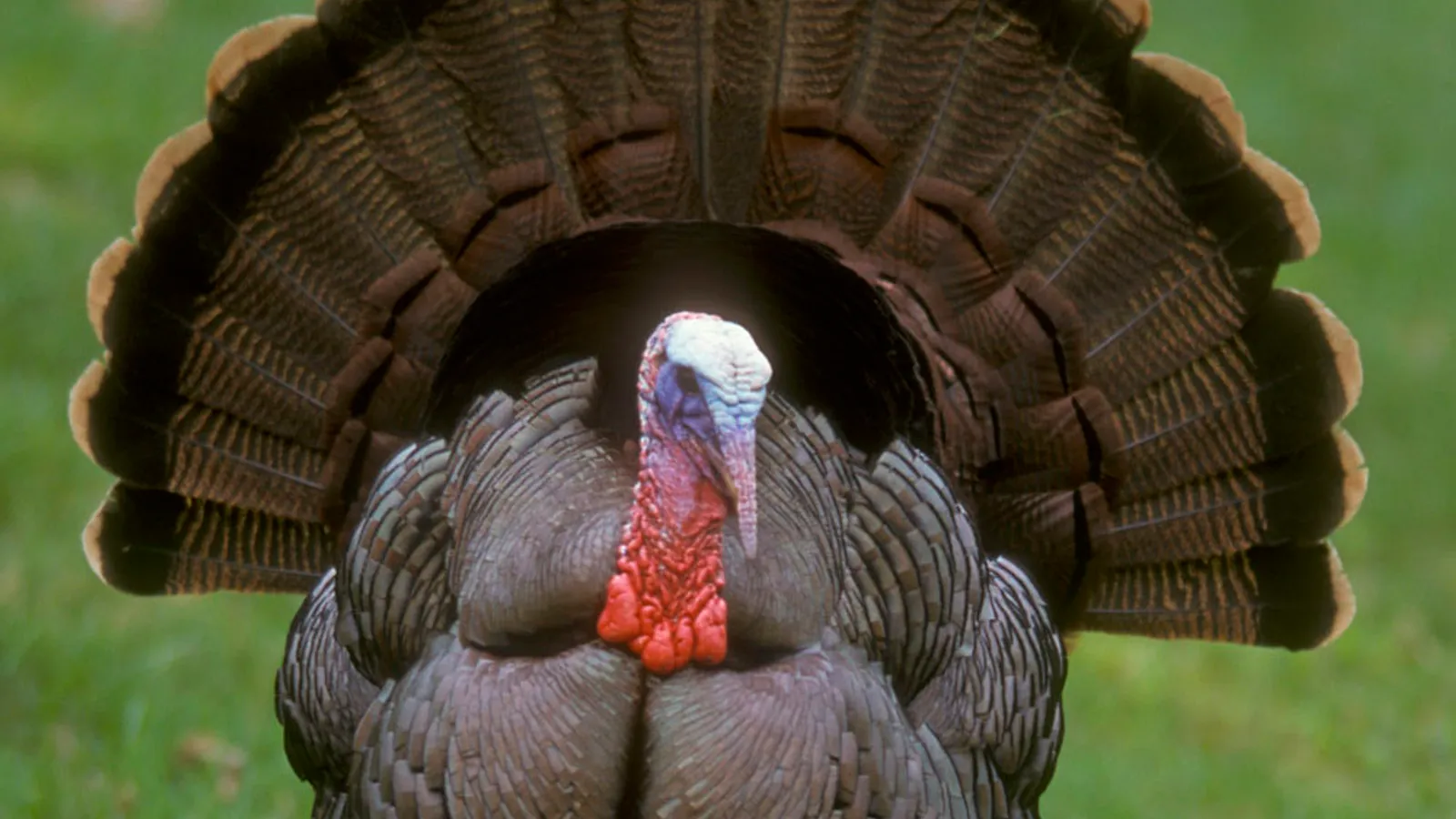
— Where the name comes from
Its name is a collection of geographical mistakes. Gallopavo is “cock-peacock”; Meleagris was the Greek name of the guineafowl, an African bird the first Europeans confused it with. The English called it turkey believing it came from Turkey, the French dinde thinking it Indian, the Turks hindi for the same reason, and the Portuguese peru. None of those places has anything to do with it: it comes from Mexico.
— Facts
- Group
- Birds · Aves
- Order
- Gamebirds
- Habitat
- Oak woodland, clearings, wooded farmland
- Range
- The United States and northern Mexico
- Size
- 100–125 cm, wingspan 125–145 cm, 2.5–11 kg
- Diet
- Acorns, seeds, berries, insects, small reptiles
- Lifespan
- 5 years in the wild
— Characteristics
- 01
It runs at thirty kilometres an hour and flies at eighty in short bursts.
- 02
The bare skin of the head changes colour — red, white, blue — with its mood.
- 03
It sleeps in trees, climbing to them in a heavy flight at dusk.
— What sets it apart
The domestic turkey was taken to Europe by the Spanish around 1520 and returned to America a century later in the holds of English colonists, who did not know they were bringing it home. Meanwhile the wild species was nearly wiped out: by about 1930 perhaps thirty thousand were left in the United States. The twentieth-century restoration, done by catching wild birds and releasing them elsewhere rather than using farmed stock, has brought back six million and counts as the greatest success of American wildlife management.
