
Meerkat
Suricata suricatta
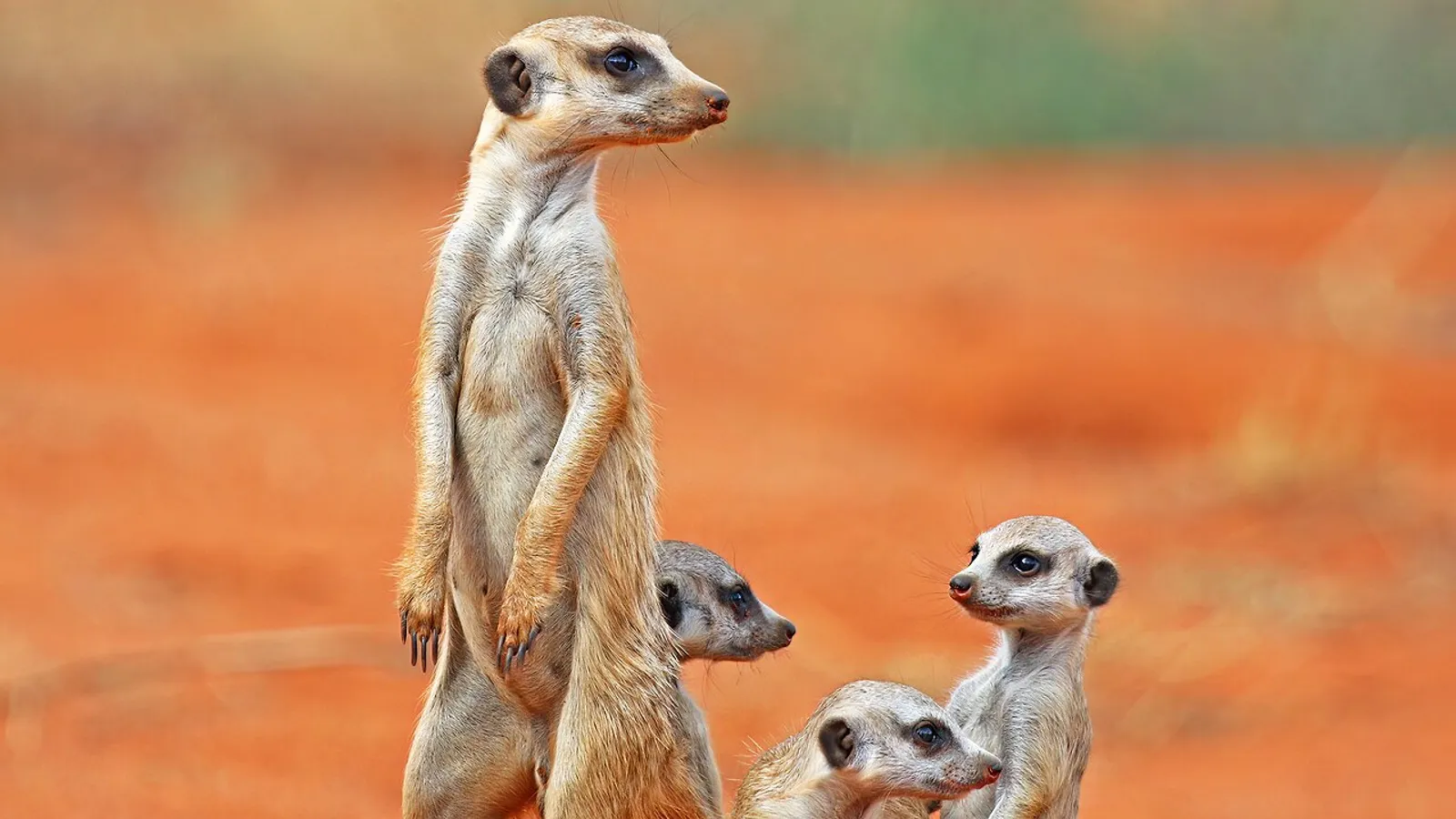
— Where the name comes from
The name comes from the French surikate, which takes it in turn from a Khoisan language of southern Africa, perhaps from the term for “rock cat”. In Afrikaans it is meerkat, literally “lake cat”, a Dutch misunderstanding: it is neither a cat nor a dweller by lakes. It is a small mongoose of the desert.
— Facts
- Group
- Mammals · Mammalia
- Order
- Carnivores
- Habitat
- Arid savannah and desert, on ground that is easy to dig
- Range
- Southern Africa: the Kalahari, the Namib, western South Africa
- Size
- 25–35 cm of body, 0.6–1 kg
- Diet
- Insectivore — beetles, scorpions, spiders, with small vertebrates
- Lifespan
- 6–10 years
— Characteristics
- 01
Lives in clans of up to fifty, with a dominant female who monopolises breeding.
- 02
One animal at a time stands sentry upright, with different calls for danger from above and from the ground.
- 03
It is immune to many scorpion venoms: it snaps off the sting and eats the rest.
— What sets it apart
Meerkats teach their young how to eat dangerous prey, and do it by stages: first they bring dead scorpions, then live ones with the sting removed, finally live and whole. It is one of the few documented cases of genuine teaching in the animal kingdom — an adult altering its own behaviour, at a cost to itself, so that a youngster learns.
