
Spotted hyena
Crocuta crocuta
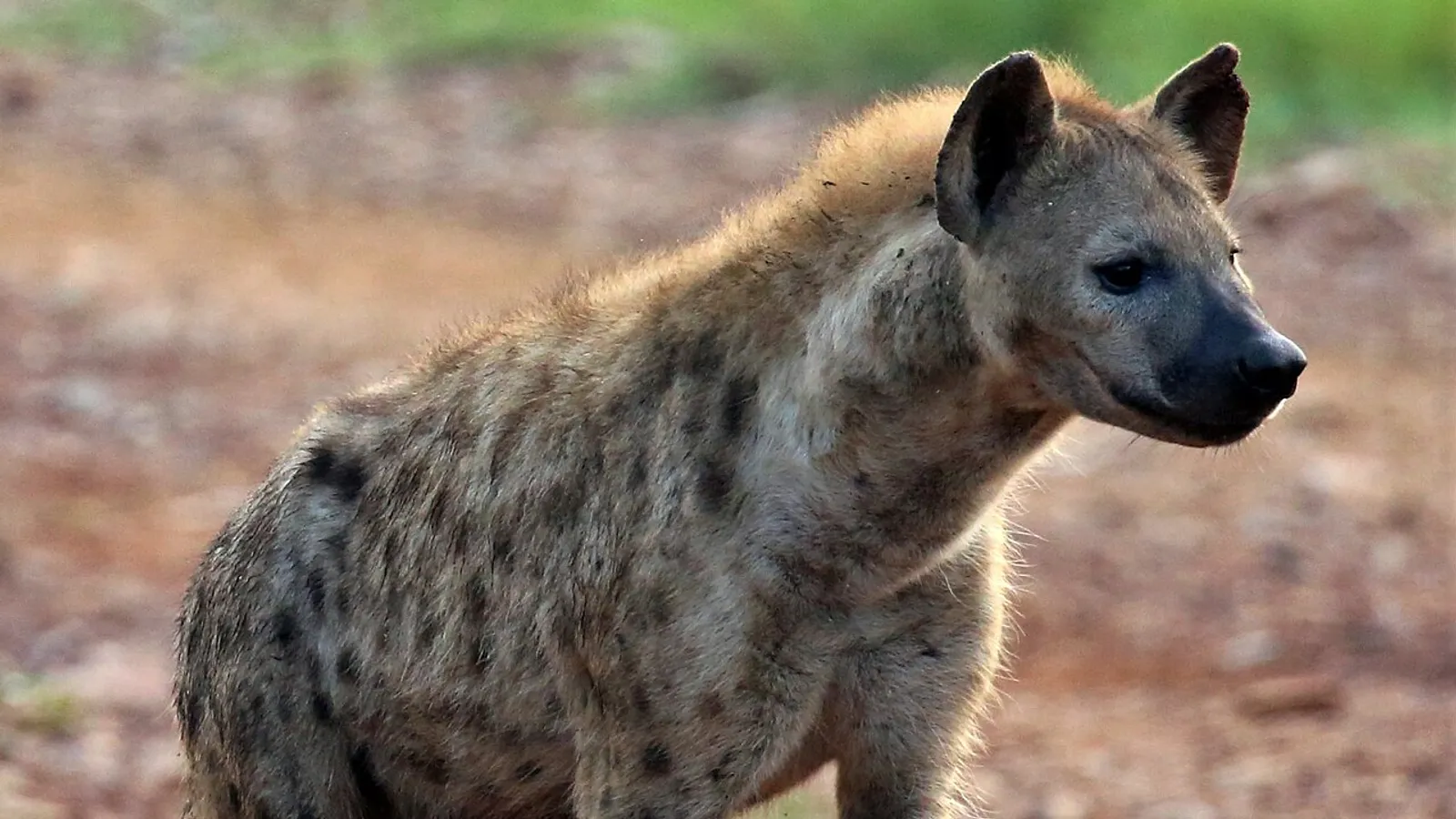
— Where the name comes from
Crocuta goes back to the Greek krokótas, the name of a mythical Indian animal described by Pliny, perhaps confused with the real hyena. The root recalls krókos, saffron, for the tawny coat. “Hyena” is from the Greek hýaina, the feminine of hŷs, “pig”, for a vague likeness about the snout.
— Facts
- Group
- Mammals · Mammalia
- Order
- Carnivores
- Habitat
- Savannah, bushland, semi-desert, mountains up to 4,000 m
- Range
- Sub-Saharan Africa
- Size
- 95–166 cm of body, 45–80 kg
- Diet
- Carnivore — an active hunter more than a scavenger, from wildebeest to buffalo
- Lifespan
- 12–20 years
— Characteristics
- 01
Lives in matriarchal clans of up to eighty: the females outrank every male.
- 02
The jaws crush bones no other predator can digest, drawing out marrow and minerals.
- 03
The famous “laugh” is a signal of submission or excitement, not of amusement.
— What sets it apart
In the spotted hyena the females have external genitals that mimic the male’s: an elongated clitoris through which, remarkably, they urinate, mate and give birth. The first birth is often fatal to mother and cub alike. It is one of the most disconcerting anatomies among mammals, and it fed the legend for centuries that hyenas changed sex at will.
