Common poorwill
Phalaenoptilus nuttallii
— Where the name comes from
Phalaenoptilus joins the Greek phálaina, “moth”, and ptílon, “feather”: its plumage is soft and mottled like a moth’s wing. Nuttallii recalls Thomas Nuttall, the English botanist and ornithologist who explored the American West in the early nineteenth century. The English name, poorwill, imitates the call it repeats at dusk.
— Facts
- Group
- Birds · Aves
- Order
- Nightjars
- Habitat
- Dry scrub, rocky desert, grassland with bushes
- Range
- Western North America to central Mexico
- Size
- 17–21 cm, 31–58 g
- Diet
- Moths, beetles and other night-flying insects
- Lifespan
- Not precisely known
— Characteristics
- 01
It is the smallest nightjar in North America.
- 02
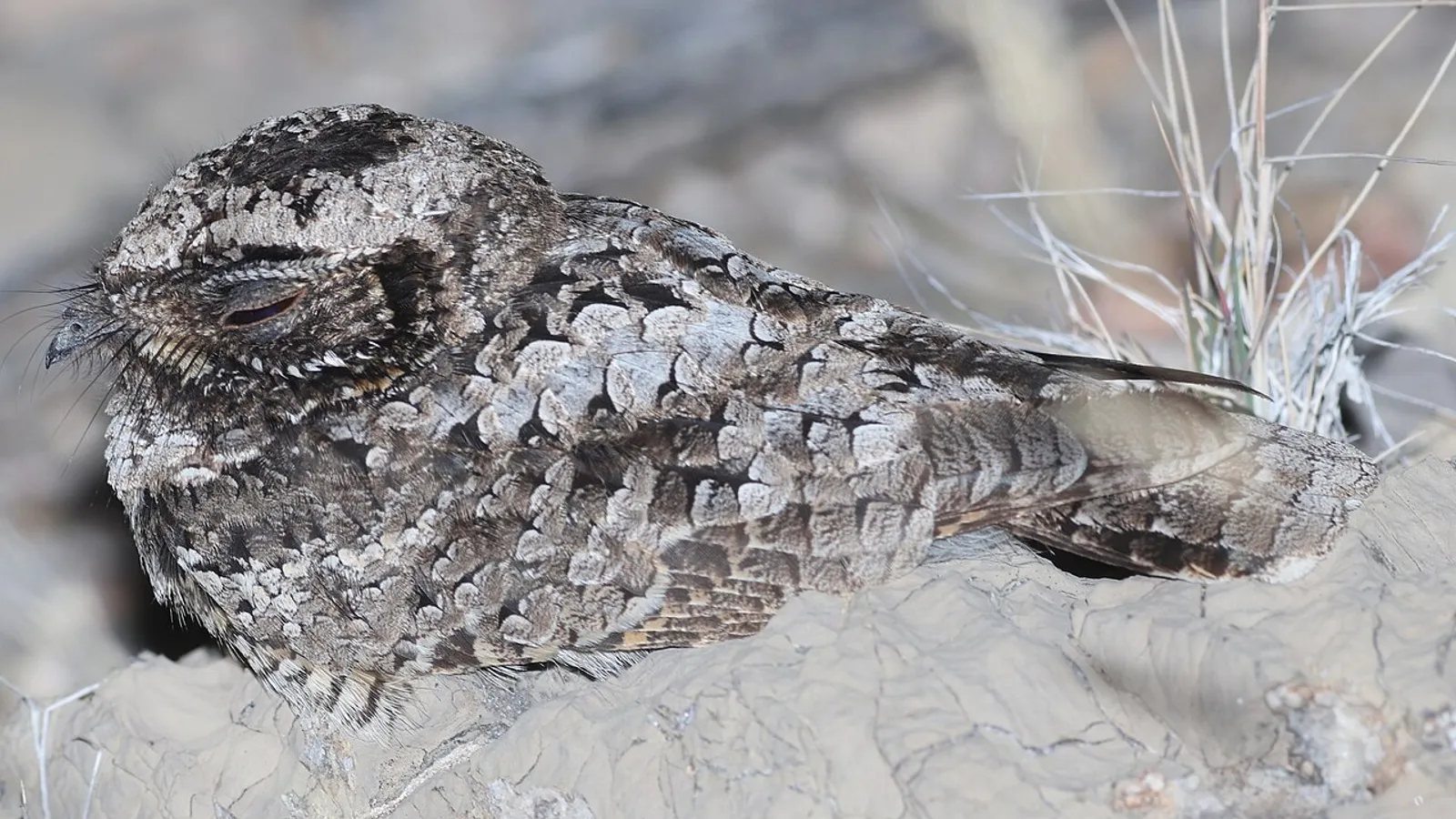
Its plumage makes it almost invisible among stones and dead leaves.
- 03
It hunts at dusk with short sallies from the ground.
— What sets it apart
It is the only bird for which true hibernation has been documented. In December 1946 the naturalist Edmund Jaeger found a common poorwill motionless in a rock crevice in the Californian desert: its body temperature had dropped to about 18 degrees, no breathing could be detected, and the bird stayed that way for weeks. It returned to the same crevice in the following winters. The discovery surprised scientists more than native peoples: the Hopi already called it hölchko, “the sleeping one”.