
Common ostrich
Struthio camelus
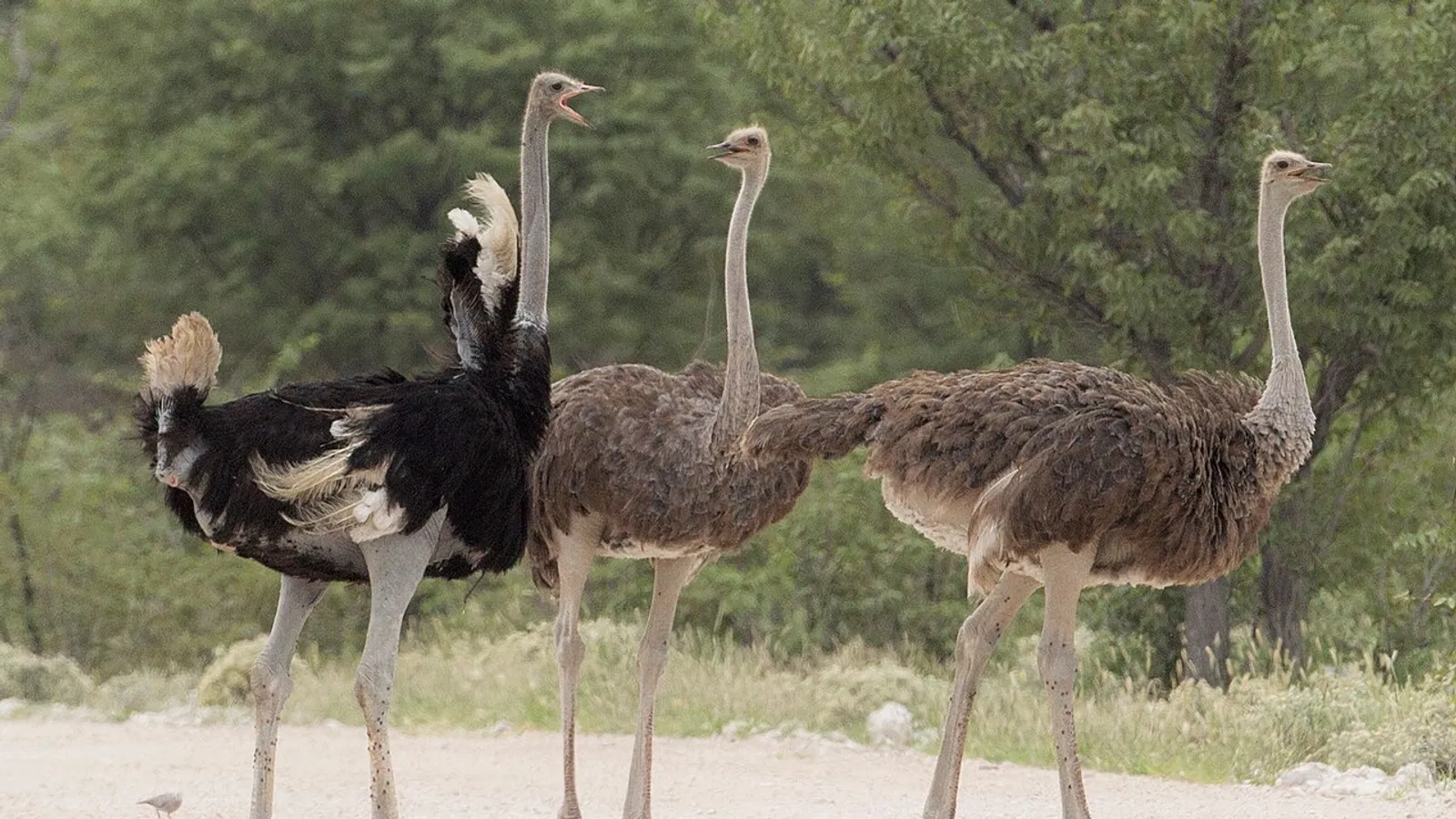
— Where the name comes from
From the Greek strouthós, which meant any bird at all but also, by antonomasia, the largest: megálē strouthós, “the great bird”. The Latin camelus, camel, records the long neck, the long legs and the life in the desert. The Romans called it struthiocamelus, “sparrow-camel”: two familiar animals stitched together to name an unfamiliar one.
— Facts
- Group
- Birds · Aves
- Order
- Ostriches
- Habitat
- Savannah, semi-desert and arid steppe
- Range
- Sub-Saharan Africa
- Size
- Up to 2.7 m tall, 90–150 kg
- Diet
- Omnivore — seeds, roots, insects, small vertebrates
- Lifespan
- 30–40 years
— Characteristics
- 01
The largest living bird, and flightless: the wings serve for balance and for display.
- 02
Runs at up to 70 km/h, the fastest two-legged animal in the world.
- 03
It has only two toes per foot, an adaptation unique among birds, almost a hoof.
— What sets it apart
The ostrich does not bury its head in the sand: the myth comes from its habit of lowering its neck to the ground to turn the eggs in a nest scraped into the soil, or of flattening itself to blend in when threatened — from a distance the body disappears and only a bush is left. The ostrich’s eye, five centimetres across, is the largest of any land animal: larger than its own brain.
