
Scarlet macaw
Ara macao
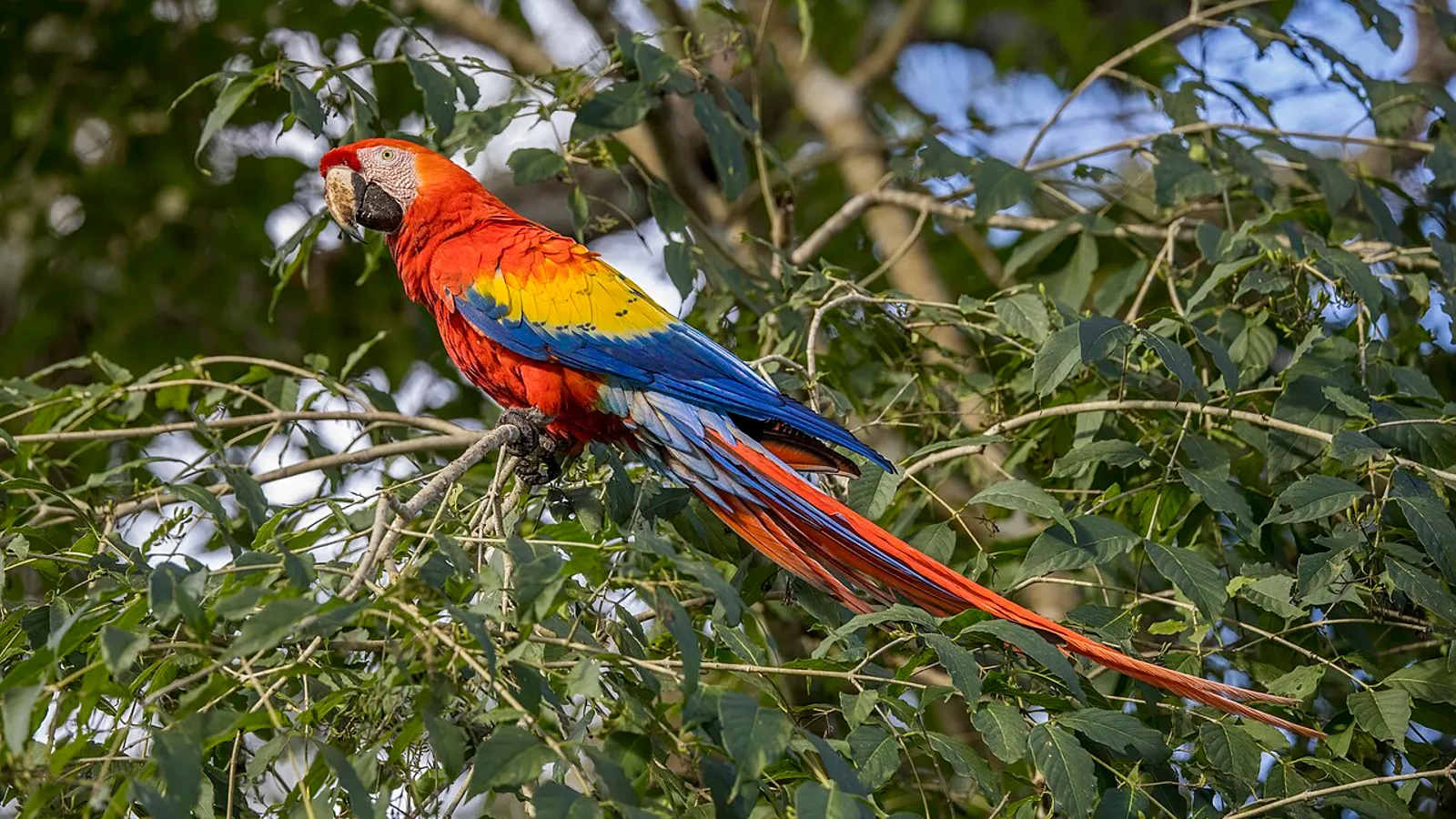
— Where the name comes from
Both the genus name, Ara, and the epithet macao come from the indigenous languages of South America — most likely from the Tupi-Guaraní ará, an imitation of the parrot’s harsh, carrying cry. It is one of the rare scientific names that keep intact the voice of the peoples who lived alongside the animal, instead of translating it into Greek or Latin.
— Facts
- Group
- Birds · Aves
- Order
- Parrots
- Habitat
- Rainforest and river margins
- Range
- From southern Mexico to Amazonia
- Size
- 81–96 cm including the tail, 0.9–1.5 kg
- Diet
- Fruit, seeds, nuts; and clay from the riverbanks
- Lifespan
- 40–50 years, up to 75 in captivity
— Characteristics
- 01
The plumage sets scarlet, yellow and blue against one another in a fierce contrast.
- 02
The heavy bill opens nuts that no other animal of the forest can crack.
- 03
Forms lasting pairs that stay together for life and always fly side by side.
— What sets it apart
Every morning dozens of macaws gather on the clay walls along Amazonian rivers to eat earth. It was long thought to neutralise the toxins of the unripe seeds they feed on; the better-supported idea today is that the clay is above all a source of sodium, scarce in the forest interior. The busiest walls become spectacular gatherings of colour, the clay licks.
