
Mute swan
Cygnus olor
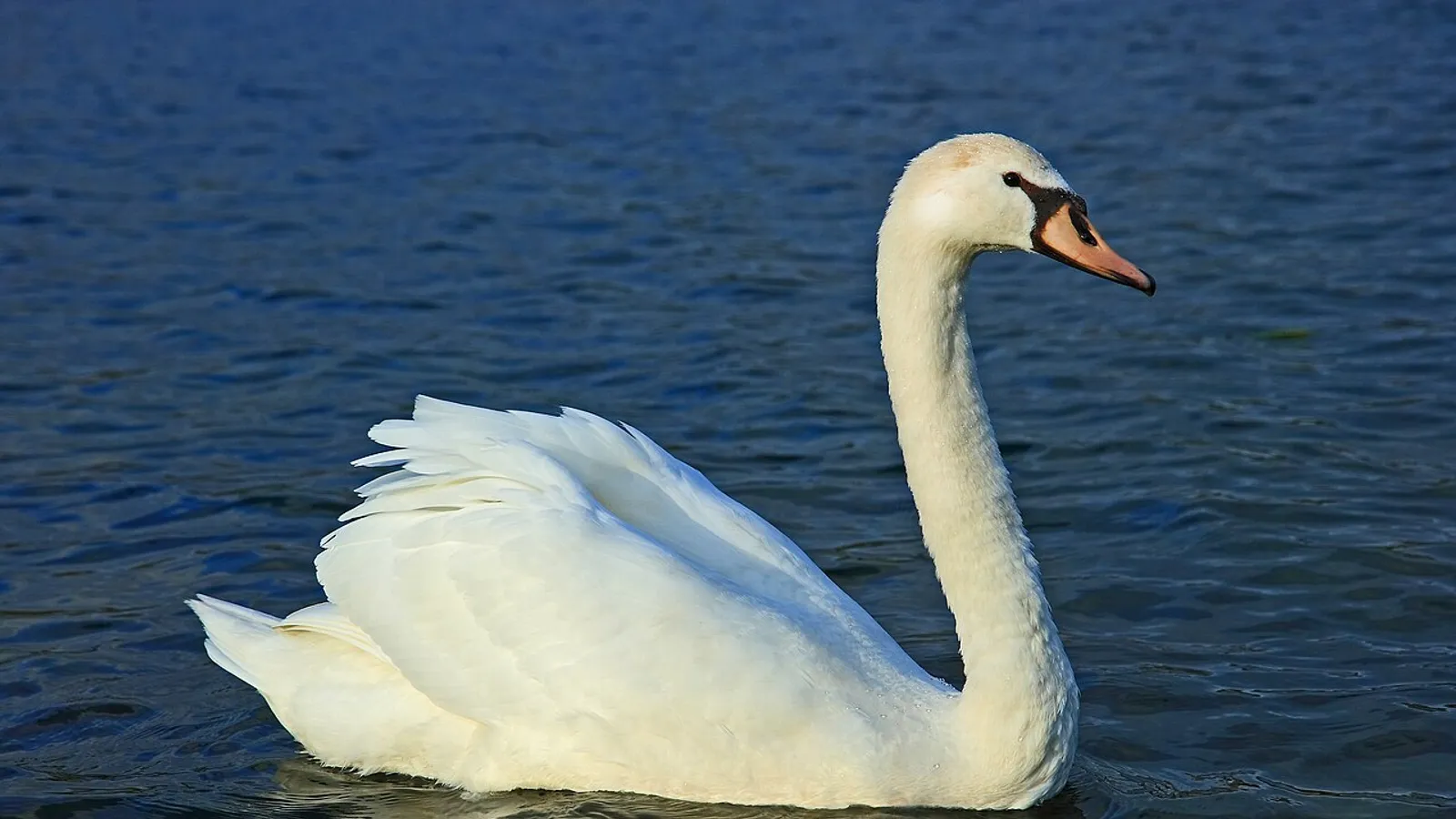
— Where the name comes from
The name says the same thing twice: Cygnus is Latin for swan, from the Greek kýknos; olor is “swan” again, the other Latin word for the same bird. The mute swan therefore carries a doubled name, swan-swan — as though one word were not enough to hold it.
— Facts
- Group
- Birds · Aves
- Order
- Waterfowl
- Habitat
- Lakes, ponds, slow rivers and wetlands
- Range
- Temperate Eurasia; introduced to North America and Oceania
- Size
- 1.4–1.7 m, wingspan up to 2.4 m; 10–12 kg
- Diet
- Herbivore — water plants, algae, grass
- Lifespan
- 10–20 years
— Characteristics
- 01
Among the heaviest flying birds in the world.
- 02
The neck has more vertebrae than a giraffe’s, to reach the bottom.
- 03
Forms lasting pairs and defends the nest with great aggression.
— What sets it apart
The “swan song” — the idea that the bird, mute all its life, dissolves into a heartbreaking melody before dying — is an ancient Greek belief, taken up by Plato and Aesop and never confirmed by nature. The mute swan is in fact the quietest of the swans: it communicates in hisses and snorts. The myth tells more about our need to give meaning to an ending than about the bird’s biology.
