
Rosy starling
Pastor roseus
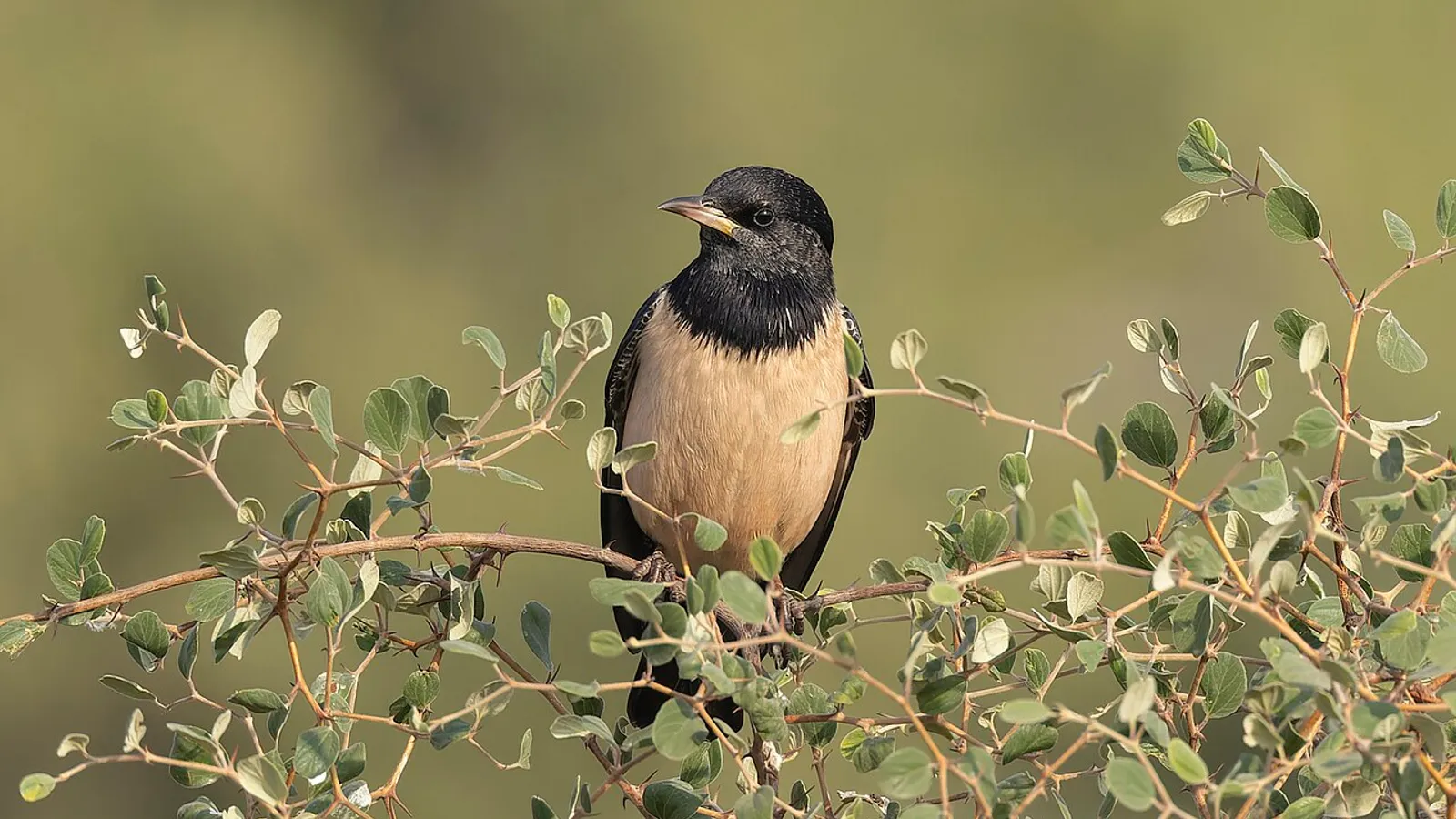
— Where the name comes from
Pastor is Latin, “shepherd”, and roseus means “pink”. The shepherd is due to its habit of following herds and flocks at pasture to catch the insects the animals stir up, sometimes perching on their backs.
— Facts
- Group
- Birds · Aves
- Order
- Passerines
- Habitat
- Steppe, dry pasture, farmland; nests in holes in rocks, walls and stone heaps
- Range
- Breeds from south-eastern Europe to Central Asia; winters in India
- Size
- 19–22 cm, 60–90 g
- Diet
- Mainly grasshoppers and locusts; fruit and berries
- Lifespan
- Not precisely known
— Characteristics
- 01
It has a pink body and a glossy black head, wings and tail.
- 02
It nests in huge colonies, often in different places each year.
- 03
It moves in tight flocks that change direction in unison.
— What sets it apart
It is a natural enemy of locusts, and people have enlisted it. Its colonies appear where grasshoppers abound, and a single starling can eat dozens a day, besides those it feeds to its chicks. In Xinjiang, in China, to fight locust outbreaks on the grasslands, stone walls and artificial nests have been built specifically to attract the colonies. In years when locusts explode, rosy starlings push much farther west than usual, and then small groups reach Italy too.