
European sea sturgeon
Acipenser sturio
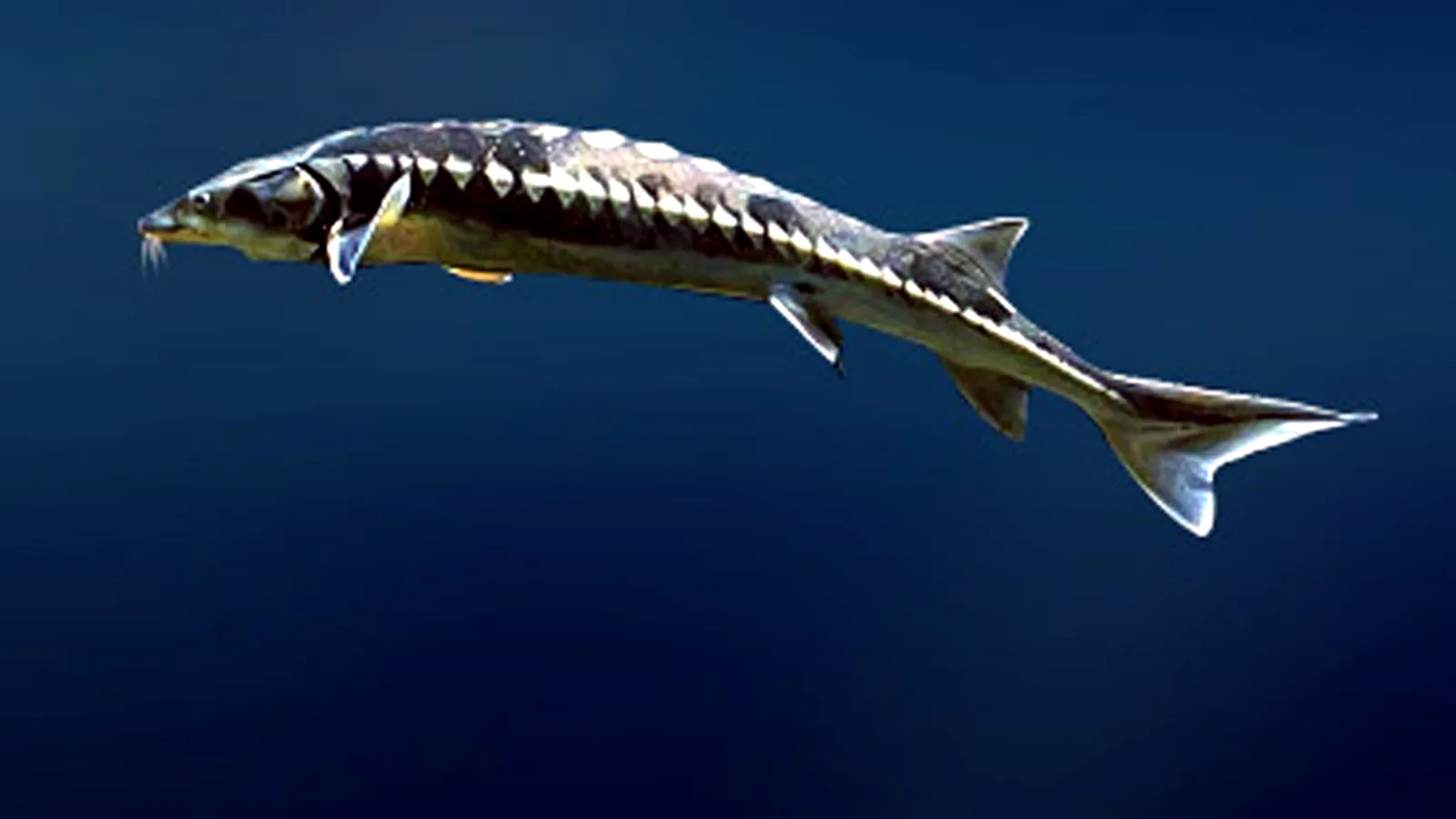
— Where the name comes from
Acipenser is the Latin name of the sturgeon; sturio is its late Latin form, of Germanic root, which gives the Italian storione, the English sturgeon and the German Stör. It is one of those names that cross half of Europe and two thousand years intact, because the animal — and its precious eggs — never stopped being sought.
— Facts
- Group
- Fish · Actinopterygii · Chondrichthyes
- Order
- Sturgeons
- Habitat
- A migrant: born in the river, grown at sea, climbing back to spawn
- Range
- European Atlantic coasts; today reduced to one relict population
- Size
- 2–3.5 m, up to 400 kg
- Diet
- Carnivore — invertebrates and fish of the bottom
- Lifespan
- Up to 100 years
— Characteristics
- 01
The body is armoured not with scales but with rows of bony plates, the scutes.
- 02
Under the snout are four sensitive barbels with which it searches the mud.
- 03
The mouth is a protrusible tube that vacuums prey off the bottom.
— What sets it apart
The sturgeon is older than the dinosaurs: its line has swum on almost unchanged for over 200 million years, a body plan so successful it never needed altering. And yet, having come through the mass extinctions unharmed, it risks disappearing in a few decades at our hands — its eggs, caviar, have made this one of the most threatened animal groups on the planet. An individual can live a century and breed for the first time only at fifteen.
