
Common starfish
Asterias rubens
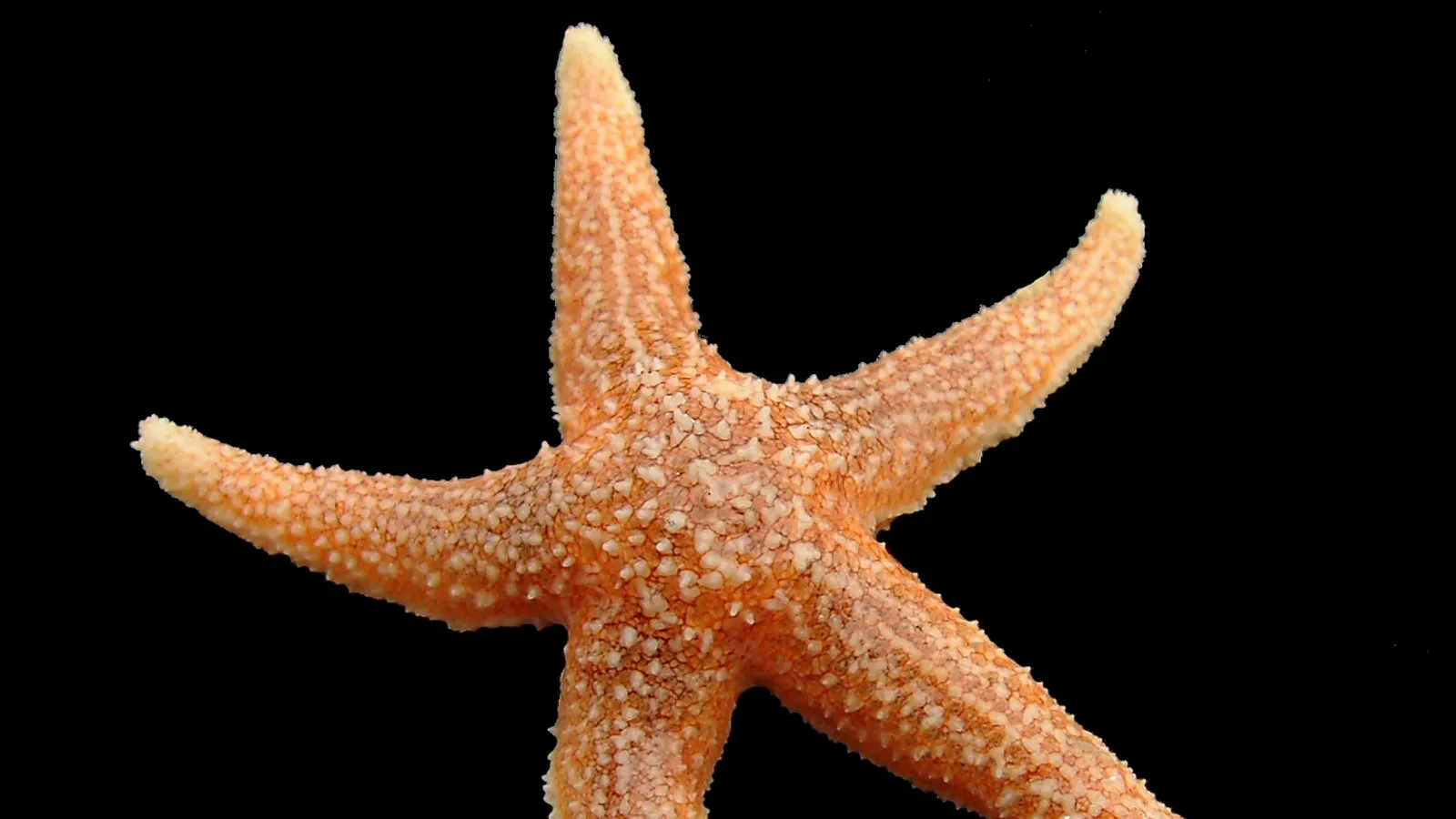
— Where the name comes from
From the Greek astḗr, star, with the Latin rubens, “reddening”. The name of the phylum, Echinodermata, means “hedgehog skin”: the surface is held up by chalky ossicles set into the dermis.
— Facts
- Group
- Echinoderms · Echinodermata
- Order
- Sea stars
- Habitat
- Rocky bottoms and mussel beds
- Range
- The north-eastern Atlantic, the North Sea, the Baltic
- Size
- 10–30 cm across
- Diet
- Carnivore — mussels, oysters
- Lifespan
- 5–10 years
— Characteristics
- 01
It moves on hundreds of hydraulic tube feet driven by seawater.
- 02
It regrows lost arms; from one arm with part of the disc a whole animal can form.
- 03
It has a primitive eye at the tip of each arm.
— What sets it apart
To open a mussel the starfish grips and pulls with its tube feet, for hours, until the adductor muscle gives by a single millimetre. Then it pushes its stomach out through its own mouth, works it into the gap and digests the mollusc inside its own shell, finally drawing the stomach back in. It does not need the prey to open: it only needs it to be distracted.
