
Cheetah
Acinonyx jubatus
— Where the name comes from
The Italian ghepardo comes, by a long detour, from the French guépard, which goes back to the old Italian gattopardo — a cat crossed with a pardo, the leopard. The genus Acinonyx is from the Greek akinētos, “motionless”, and ónyx, “claw”: claws that do not fully retract, unique among cats. Jubatus is Latin for “maned”, after the mantle the cubs wear along the back.
— Facts
- Group
- Mammals · Mammalia
- Order
- Carnivores
- Habitat
- Open savannah, semi-arid grassland, shrubland
- Range
- Sub-Saharan Africa, with a relict population in Iran
- Size
- 110–150 cm of body, 21–72 kg
- Diet
- Carnivore — gazelles, impala, small ungulates
- Lifespan
- 8–12 years in the wild
— Characteristics
- 01
The fastest land animal: it touches 100 km/h within seconds, but only for a few hundred metres.
- 02
The flexible spine works as a spring, stretching each stride to as much as seven metres.
- 03
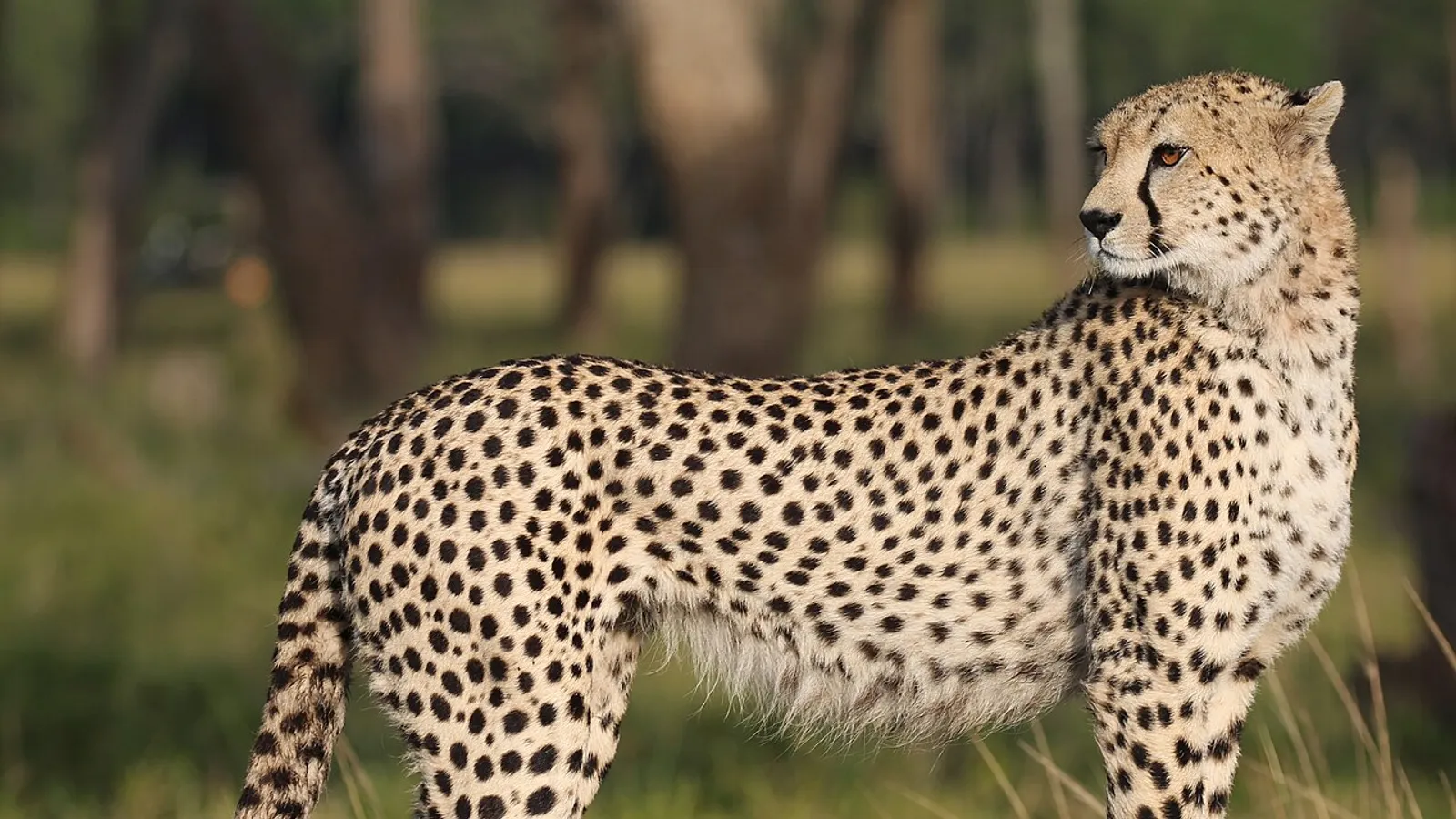
The black “tear marks” under the eyes cut glare, like the eye black of a football player.
— What sets it apart
The cheetah’s run is so extreme as to be almost a problem: after a chase its body temperature climbs to dangerous levels and the animal has to stop, panting, for as much as half an hour before it can eat. In that gap lions and hyenas routinely steal its kill. It is a hunter built for one short instant of perfection, and made to pay for it immediately afterwards.
