
Leopard
Panthera pardus
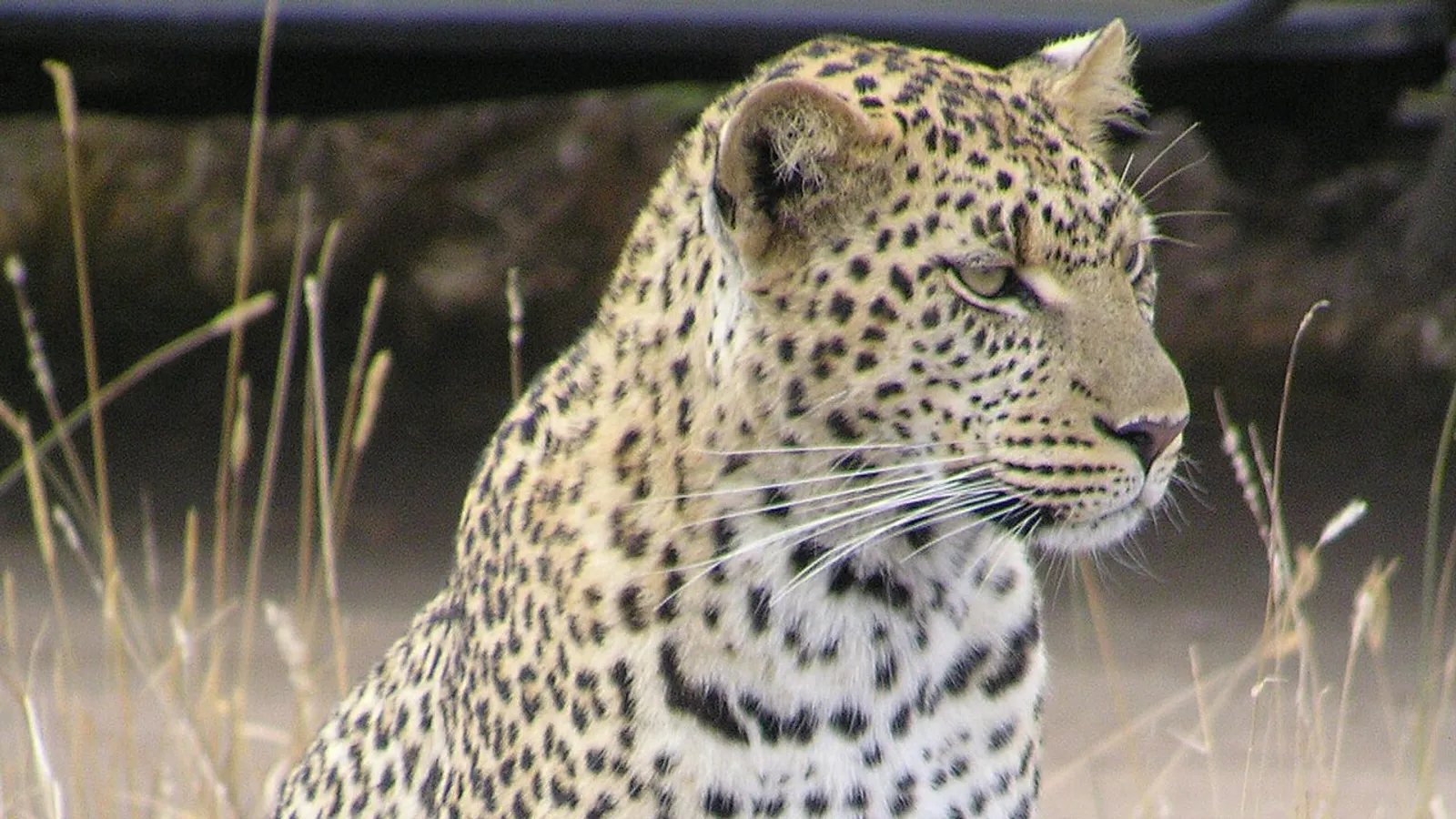
— Where the name comes from
From the Greek leópardos, made of léon, lion, and párdos, the spotted panther: the ancients took it for a hybrid of the two. The Latin pardus keeps the same root. The name therefore comes of a zoological mistake — an animal imagined as a cross rather than a species of its own.
— Facts
- Group
- Mammals · Mammalia
- Order
- Carnivores
- Habitat
- Rainforest, savannah, mountains, semi-desert — the most adaptable of cats
- Range
- Africa and southern Asia, from the Caucasus to the Russian Far East
- Size
- 90–190 cm of body, 30–90 kg
- Diet
- Carnivore — from insects to antelope, over ninety prey species
- Lifespan
- 12–17 years
— Characteristics
- 01
Hauls prey heavier than itself up into a tree, out of reach of lions and hyenas.
- 02
The rosettes break up its outline in the tangle of light and shade in the undergrowth.
- 03
The black form — the “panther” — is the same animal with excess melanin; the rosettes still show in raking light.
— What sets it apart
It is the big cat with the widest range in the world, and it manages it by disappearing. It lives on the edges of African and Asian cities, hunts stray dogs and monkeys in the suburbs, and is photographed only by camera traps. In Mumbai a hundred or so leopards live in the national park inside the metropolis: millions of people share the city with them and hardly know it.
