
Jaguar
Panthera onca
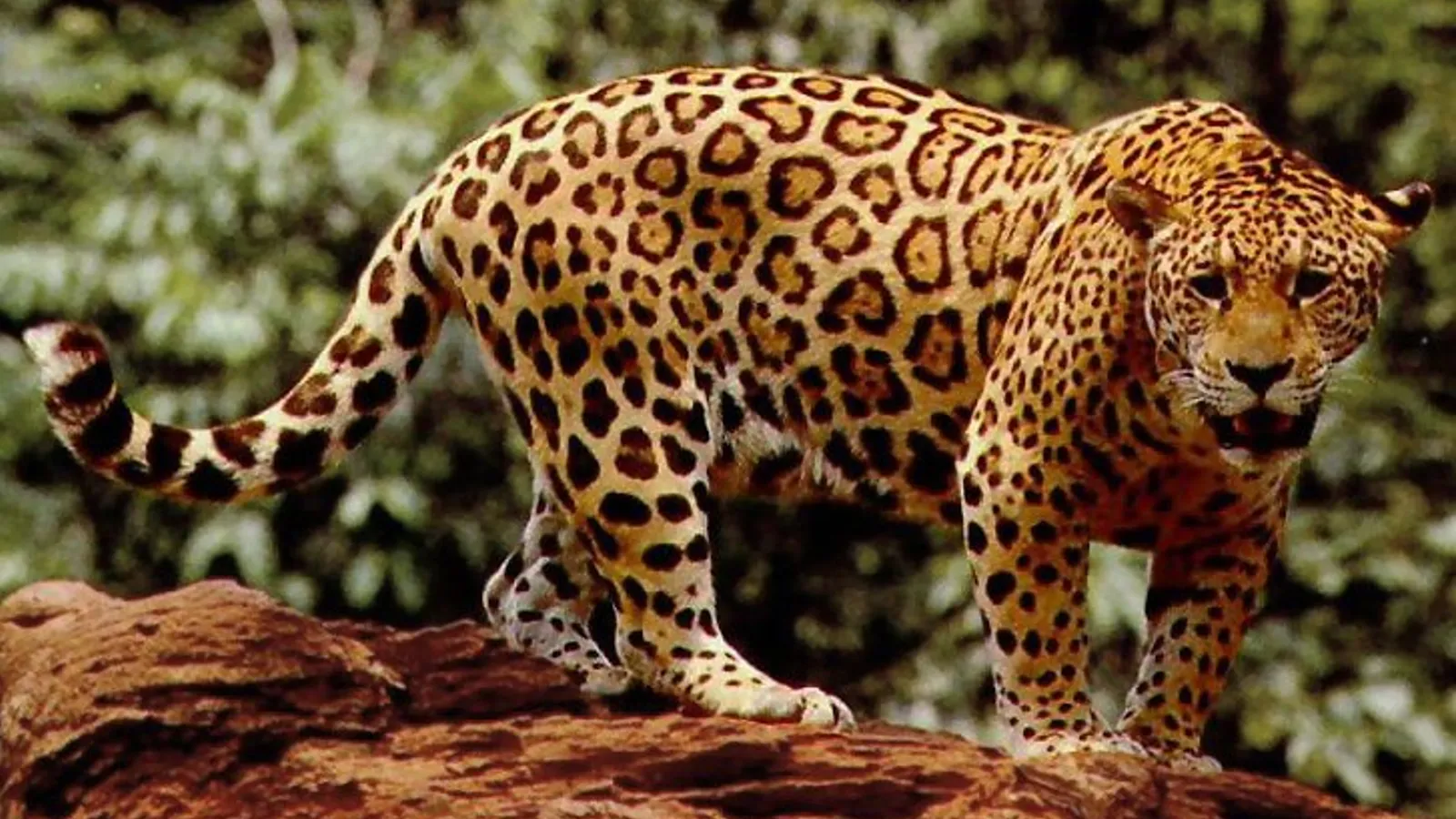
— Where the name comes from
From yaguar, in Tupi-Guaraní yaguareté: “the beast that kills with a single bound”. Onca goes back to the Latin lynx by way of the Spanish onza. The American name reached Europe with the conquistadors, and brought the animal’s reputation with it.
— Facts
- Group
- Mammals · Mammalia
- Order
- Carnivores
- Habitat
- Rainforest, wetland, gallery forest along rivers
- Range
- Central and South America, with its heartland in Amazonia and the Pantanal
- Size
- 110–185 cm of body, 56–100 kg
- Diet
- Carnivore — caimans, capybara, turtles, fish
- Lifespan
- 12–15 years
— Characteristics
- 01
It has the most powerful bite, for its size, of any big cat.
- 02
Unlike other cats it likes water: it swims well and hunts caimans in the rivers.
- 03
The rosettes of its coat enclose one or more black dots, absent in the leopard’s.
— What sets it apart
Where the other big cats kill by throttling at the throat, the jaguar has a method of its own: it bites straight through the skull, between the ears, punching through bone and brain. It is a technique born of its armoured prey — turtles and caimans — against which a grip on the throat is not enough. Its bite opens shells as no other predator on the continent can.
