
Alpine ibex
Capra ibex
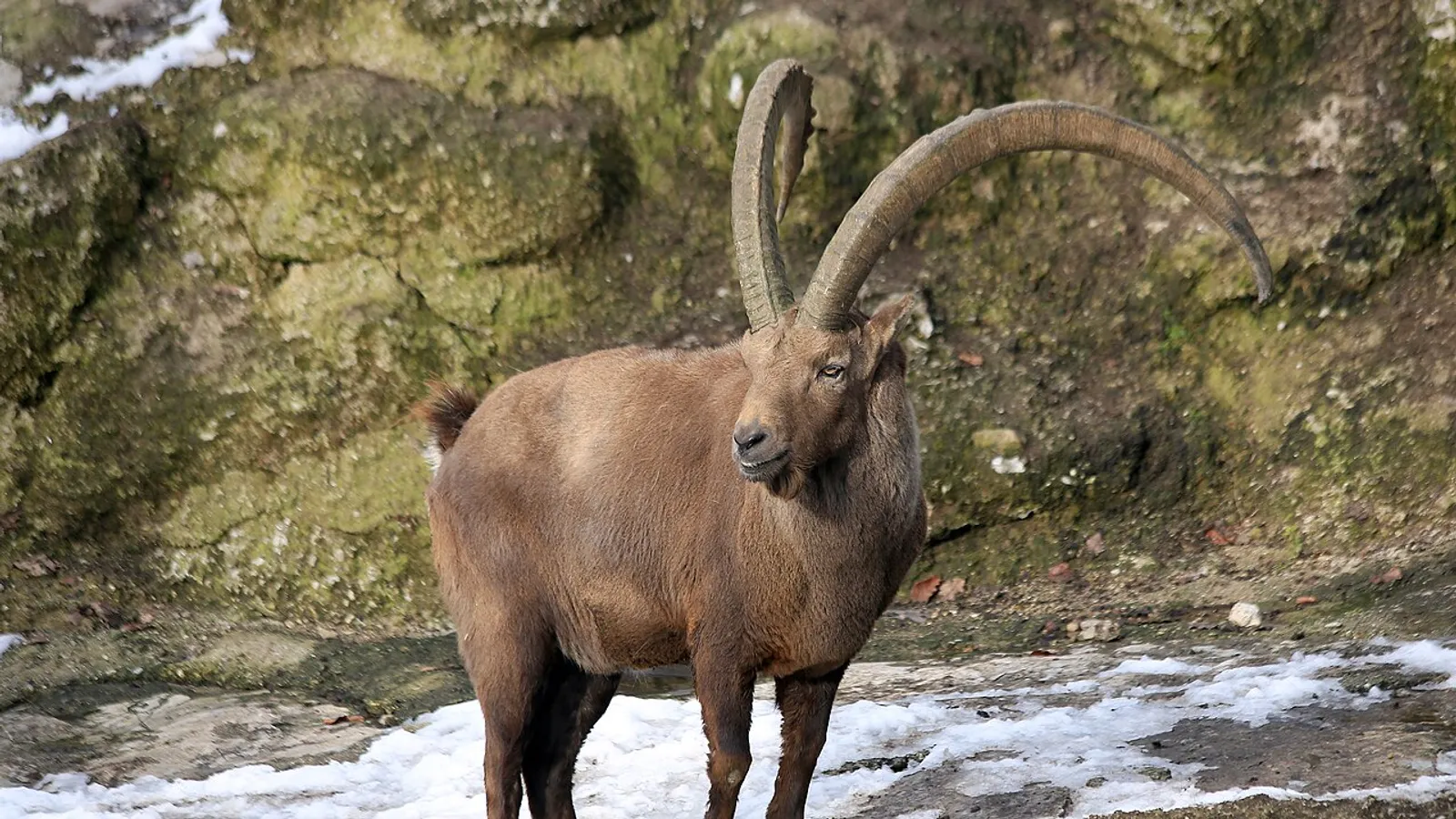
— Where the name comes from
Capra is Latin, unchanged; ibex is Latin too, the name of the animal, perhaps of pre-Roman Alpine origin. The Italian stambecco comes from the German Steinbock, “rock buck”, from Stein, stone, and Bock, buck: the animal is entirely in that name, a goat built for vertical rock.
— Facts
- Group
- Mammals · Mammalia
- Order
- Even-toed ungulates
- Habitat
- High-altitude grassland and rock faces, 1,600–3,200 m
- Range
- The European Alps
- Size
- 90–170 cm of body, 40–120 kg for the male
- Diet
- Herbivore — alpine grasses, lichens, shrubs
- Lifespan
- 15–20 years
— Characteristics
- 01
The hooves have sharp rims and rubbery pads: they grip holds a few centimetres wide.
- 02
The male’s horns, curved and knobbed, grow throughout life to as much as a metre.
- 03
It licks the sheer walls of dams for salt, climbing the vertical face to do it.
— What sets it apart
The Alpine ibex was driven to the brink by poachers: by the early 19th century a single nucleus survived in the Gran Paradiso massif, a few hundred head protected by the King of Sardinia as his personal hunting reserve. Every Alpine ibex alive today, from the Maritime Alps to the Dolomites, descends from that colony. The species owes its survival to a monarch’s sporting whim.
