
Red deer
Cervus elaphus
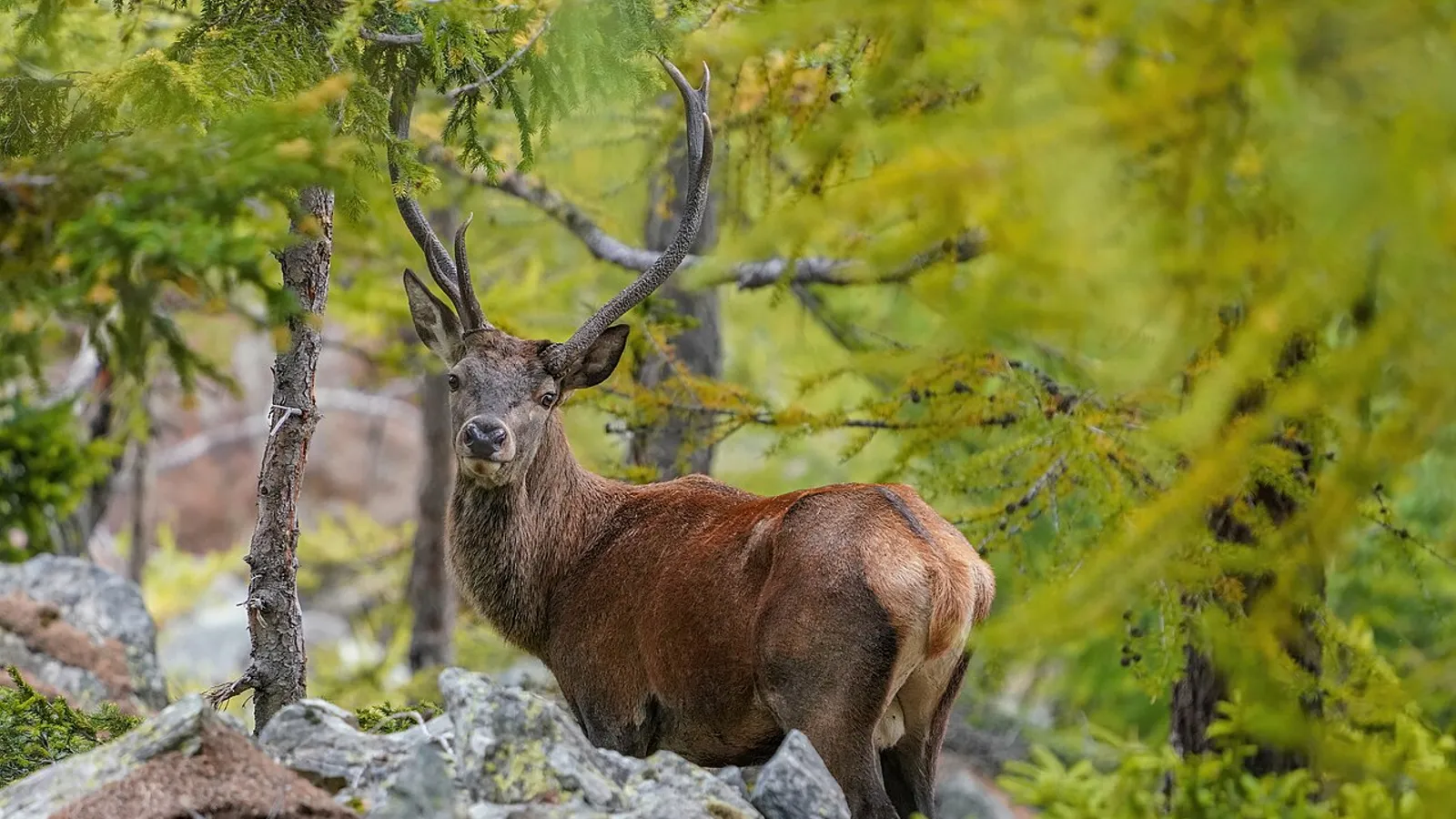
— Where the name comes from
Cervus is Latin, from the Indo-European root *ḱer-, “horn” or “head”, the same one behind “horn” and “cerebral”; elaphus is the Greek élaphos, deer. The name says the same thing twice in two languages: the animal is, before anything else, what it carries on its head.
— Facts
- Group
- Mammals · Mammalia
- Order
- Even-toed ungulates
- Habitat
- Broadleaf and coniferous woodland, clearings, moorland
- Range
- Europe, western Asia, North Africa; introduced elsewhere
- Size
- 160–260 cm, 100–350 kg for the male
- Diet
- Herbivore — grasses, shoots, bark, acorns
- Lifespan
- 10–18 years
— Characteristics
- 01
The male’s antlers fall and regrow every year: the fastest-growing bone among mammals.
- 02
In autumn the stags’ bellowing carries for kilometres through the woods during the rut.
- 03
Stags challenge one another with locked antlers in trials of strength that rarely turn lethal.
— What sets it apart
A stag’s antlers are not permanent horns but living bone, which grows back from nothing every spring under a velvet rich in blood vessels. At full tilt an antler can lengthen by more than two centimetres a day: no other mammalian bone tissue grows so fast. Every year the deer builds and then throws away a small forest of bone on its own head.
