
Moose
Alces alces
— Where the name comes from
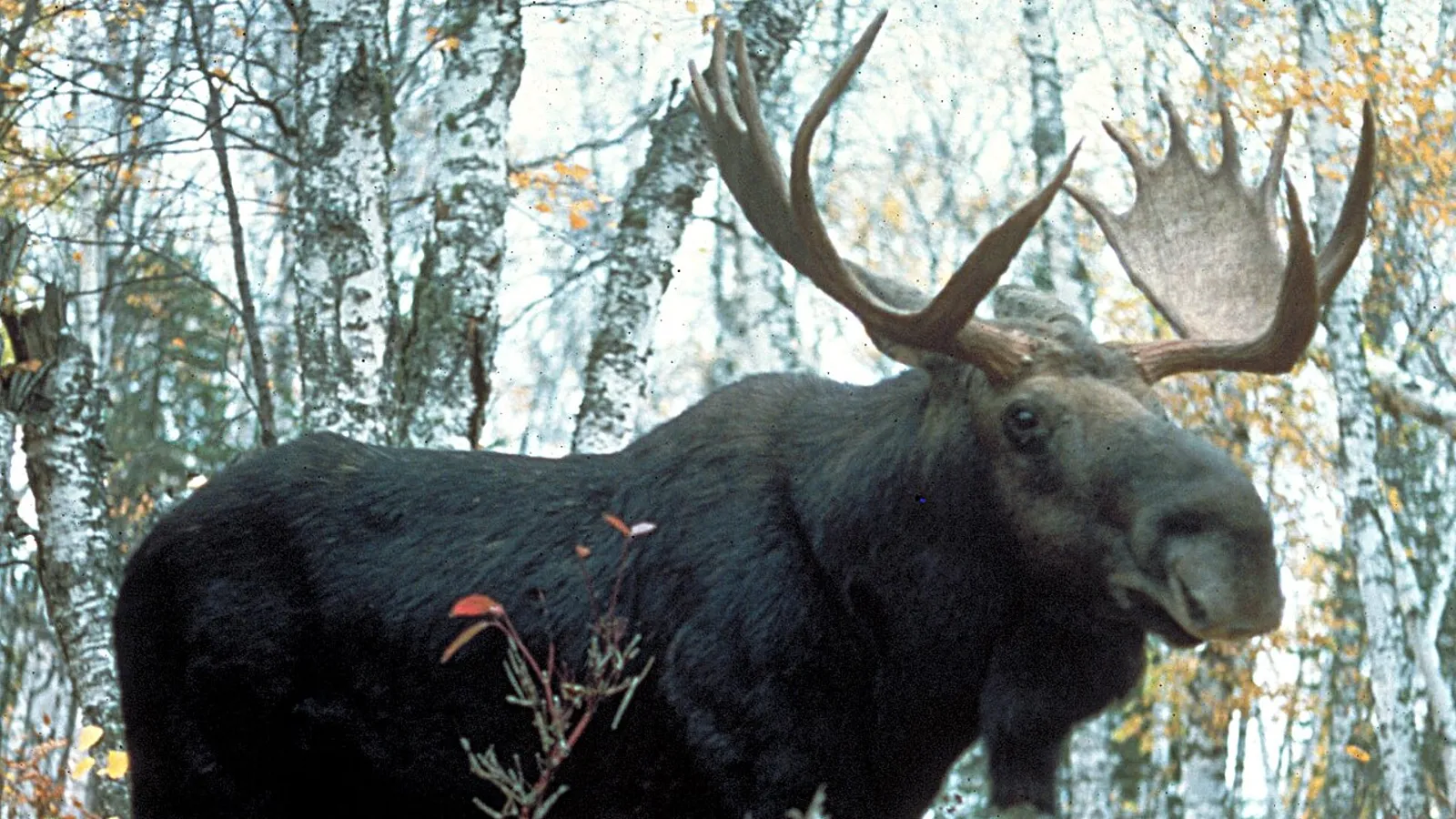
Alces is the Latin for the animal, related to the Greek álkē and to Germanic roots: the same family that gives the English elk. In North America, though, it is the moose, from the Algonquian moz, “the one who strips”, for the way it tears off bark. It is the largest living deer.
— Facts
- Group
- Mammals · Mammalia
- Order
- Even-toed ungulates
- Habitat
- Boreal forest, taiga, marshes and lakes with water plants
- Range
- Northern Europe, Siberia, Canada, Alaska, the northern United States
- Size
- 240–310 cm, 380–700 kg
- Diet
- Herbivore — water plants, shoots, bark, twigs
- Lifespan
- 15–25 years
— Characteristics
- 01
The male’s antlers are flat and palmate, up to two metres from tip to tip.
- 02
It dives and grazes on the bottom of lakes, staying under for as much as half a minute.
- 03
The prehensile upper lip strips leaves and bark with precision.
— What sets it apart
The moose is an extraordinary swimmer for its size: it crosses lakes and arms of the sea, and dives to five or six metres to reach the plants on the bottom. Its nostrils work almost as valves, closing underwater. A half-tonne animal grazing like an underwater goose is one of the least likely sights in the boreal forest.
