Reindeer
Rangifer tarandus
— Where the name comes from
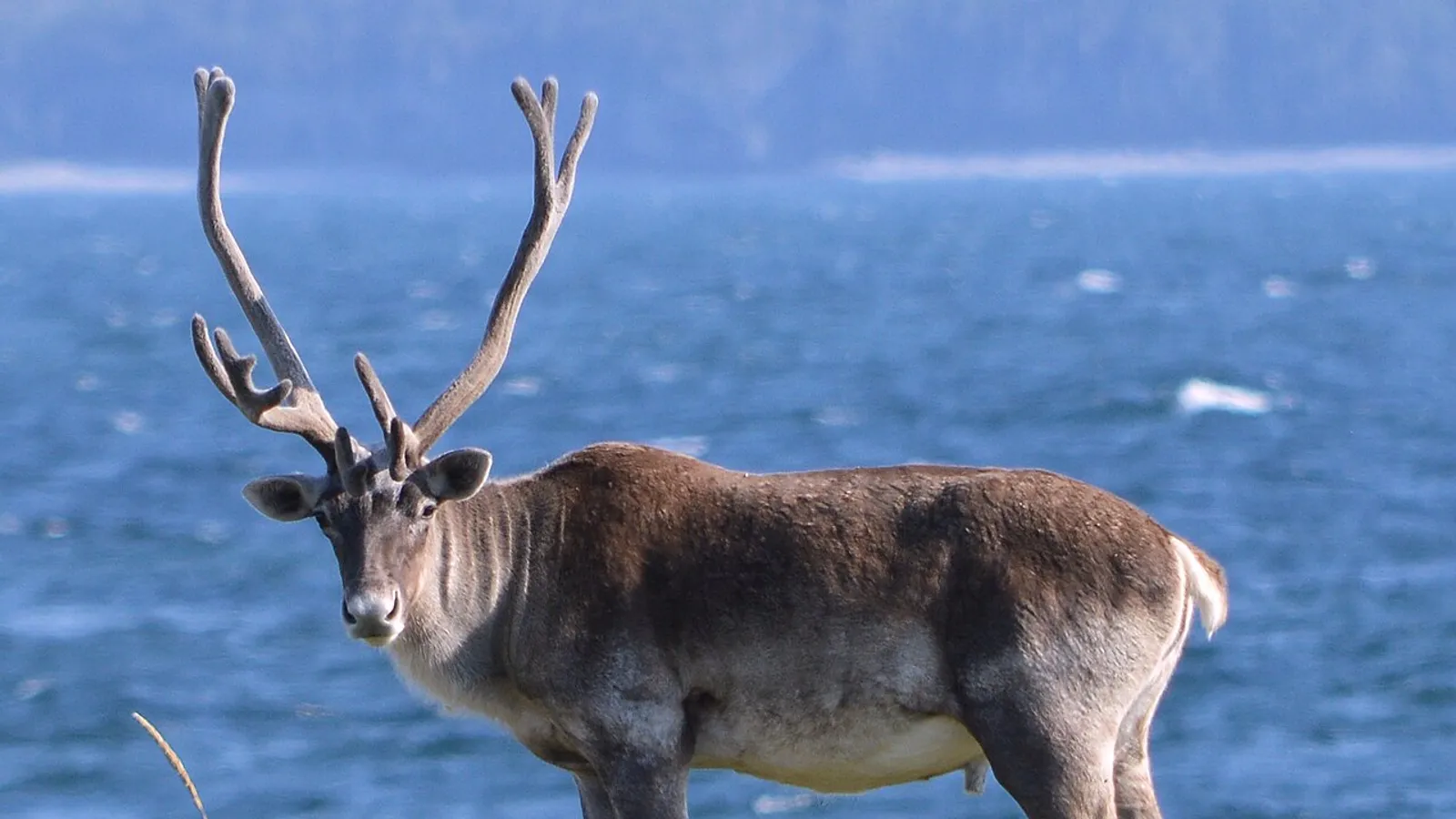
Rangifer is medieval Latin, perhaps from a Sámi language; tarandus is the name Aristotle gave to a northern deer. “Reindeer” comes from the Scandinavian hreinn. In North America the wild subspecies is the caribou, from the Algonquian qalipu, “the one who paws”, for the way it clears lichen from the snow.
— Facts
- Group
- Mammals · Mammalia
- Order
- Even-toed ungulates
- Habitat
- Tundra, taiga, boreal forest
- Range
- The Arctic and sub-Arctic across the northern hemisphere
- Size
- 160–210 cm, 60–180 kg
- Diet
- Herbivore — mostly lichens in winter, grasses and shoots in summer
- Lifespan
- 12–15 years
— Characteristics
- 01
It is the only deer in which the females also carry antlers.
- 02
The eyes change colour with the season: gold in summer, blue in winter, to see in the polar half-light.
- 03
It makes the longest overland migrations in the world, over 5,000 km a year.
— What sets it apart
The reindeer sees ultraviolet, and in the Arctic that saves it: against snow, which reflects UV, lichens, urine and wolf fur show up as dark marks on a luminous sheet, where a human eye would see nothing but even white. And in winter the back of its eye shifts from gold to blue, trading sharpness for the capture of more light in the long polar dusk. It is the only mammal known to change the colour of its own eyes this way.