
Wild boar
Sus scrofa
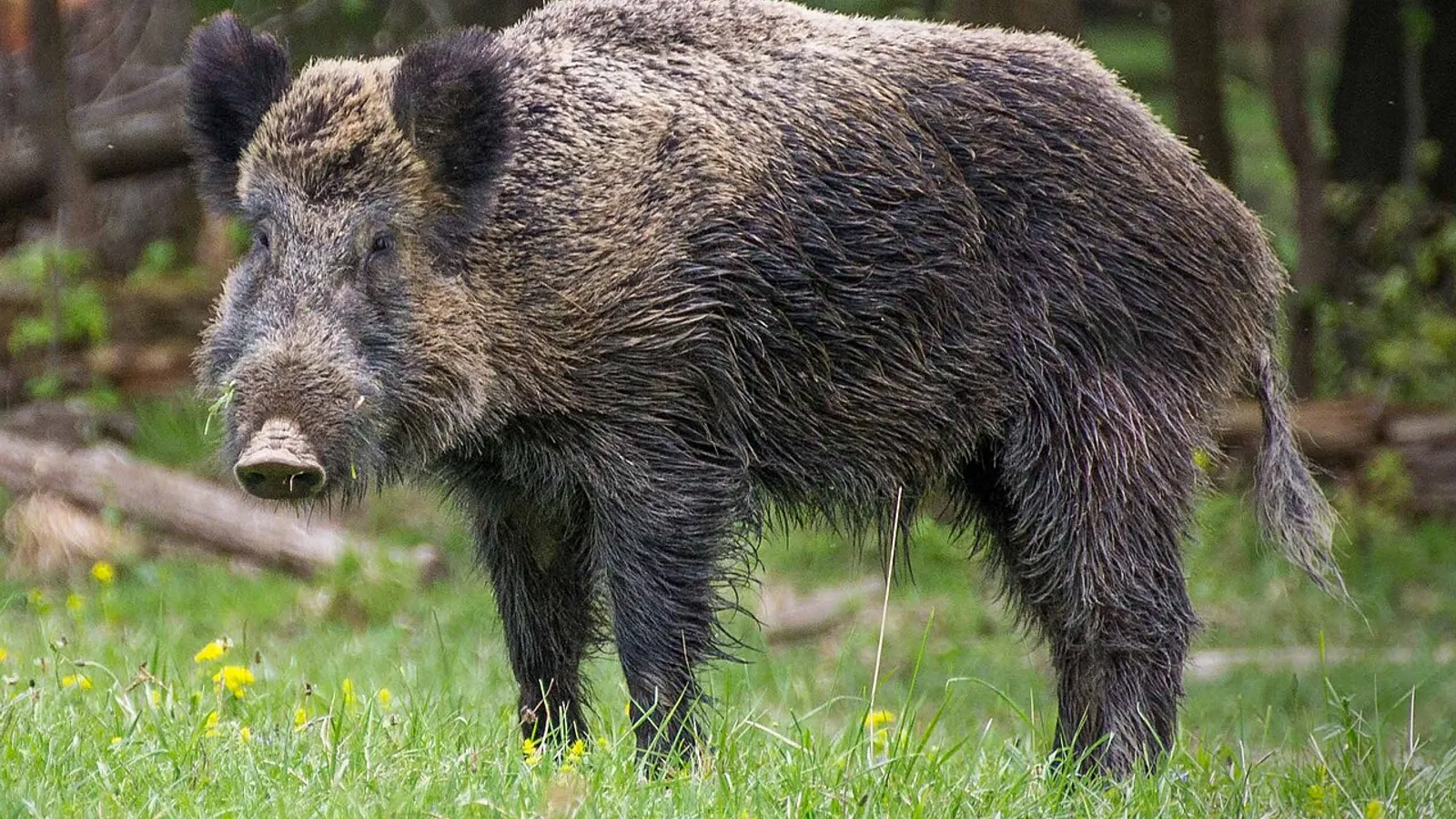
— Where the name comes from
Sus is Latin for “pig”, from the Indo-European root *sū- that perhaps imitates the grunt; scrofa is the sow. The Italian cinghiale comes from the Latin singularis, “solitary” — porcus singularis, the pig that lives alone — because old males leave the group and wander by themselves. It is the wild ancestor of every domestic pig.
— Facts
- Group
- Mammals · Mammalia
- Order
- Even-toed ungulates
- Habitat
- Woodland, scrub, farmland, and increasingly city outskirts
- Range
- Eurasia and North Africa; introduced to every continent but Antarctica
- Size
- 90–180 cm, 50–200 kg
- Diet
- Omnivore — acorns, roots, tubers, invertebrates, carrion
- Lifespan
- 10–14 years
— Characteristics
- 01
The snout is a precision tool: it ploughs the ground, scenting food tens of centimetres down.
- 02
Males grow tusks, curved canines that keep growing all their lives and sharpen themselves.
- 03
The young are born striped, camouflaged in the undergrowth, and lose the stripes in the first months.
— What sets it apart
The wild boar is among the most cognitively gifted of ungulates: it passes mirror self-recognition tests, uses tools and, as has been discovered, washes its food before eating. In one Swiss zoo the animals routinely carry dirty apples to the water to clean them. That is a level of deliberate cleanliness we associate with primates, not with the proverbial dirty pig.
